Tegu Info From The Wilds Of Guyana
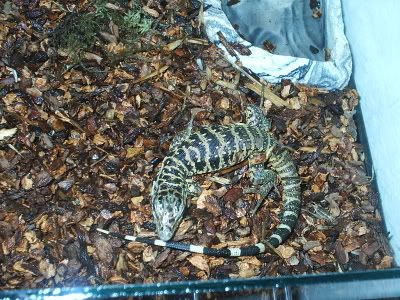
Congratulations on the purchase of your new Golden Tegu. In my opinion, those are the coolest lizards in the New World. They are voracious predators with incredible intelligence. I can sit and watch them figure things out for hours. They’re amazing!
My wife and I live and work in Guyana, South America, and we run COBRA Wildlife Exporters. We have the pleasure of watching tegu, and other animals, roam around our yard freely.
Throughout its range, the Golden Tegu is among the top few of the food chain and they are largely view as a nuisance animal in populated areas. These animals get large enough to inflict a severe bite if handled incorrectly and, when adults, are able to kill full-grown roosters and small mammals. The main concern for residents who share space in the fact tegu LOVE eggs and are quite ingenious when it comes to developing ways in, under and around fences, wire mesh or zinc put in place to separate tegu from chickens.
In remote regions, the tegu is viewed as a food source. When we lived in the remote Northwest District, we watched gold miners catch adult tegu with a fishing hook on a spring rod, baited with chicken fat. Along with Iguana, they provide much needed protein and are almost always cooked in curry.
One more cool fact about them is their speed. I travel through the jungle a lot on a dirt bike and when I spook tegu on the side of the trail, they take off running on only their back legs, with their front legs held behind their shoulders. In the blink of an eye, they can match my speed of 15-20MPH before they jump into the bushed.
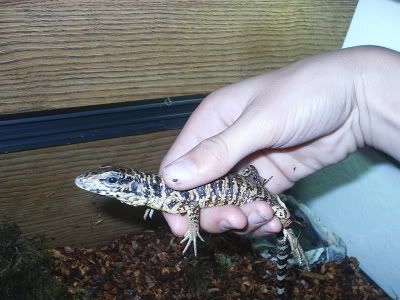
In our quarantine station, we house 100s of them at a time and they do well in warm enclosures, out of direct sunlight. It is important to house animals of like size together. Right now, June – August, the hatchlings are emerging from the termite mounds, where their mother dug into and laid the eggs. Because of the nasty disposition the larger animals develop, it is best to get a young animal and handle it often, while it grows. Constant human contact will keep it handleable. (is that a word?

In Guyana, our food options are limited. We use a simple recipe of 2 cups of dog chow, soaked in three cups of water. Once fully hydrated, we blend it and add six eggs to the mixture. Lastly, we stir in rice and feed the tegu in the mornings. In the USA, you have a multitude of options and the place you purchased the animal should be able to provide all the care information.
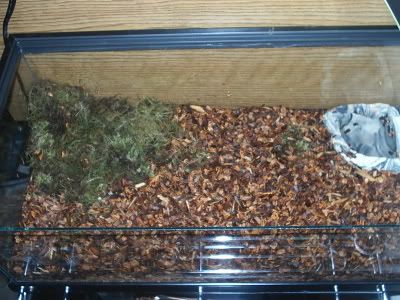
Guyana has a reasonably constant temperature and an extremely high humidity. Be sure to mimic those conditions. Also, we are sure to provide as many hides as possible. We opt for fresh wood chips of assorted sizes, and 24”X24” ¼” plywood squares scattered about the holding areas. Also, we find our animals love to soak so we have several dishes deep enough and large enough for the animals to swim and fully submerge themselves.
Again, congratulations of picking one of the coolest reptiles out there. I have friends who have raised large adults and they feed on full-grown rats. A pretty gory sight but that’s what the animal was designed for! Good luck and enjoy your pet!