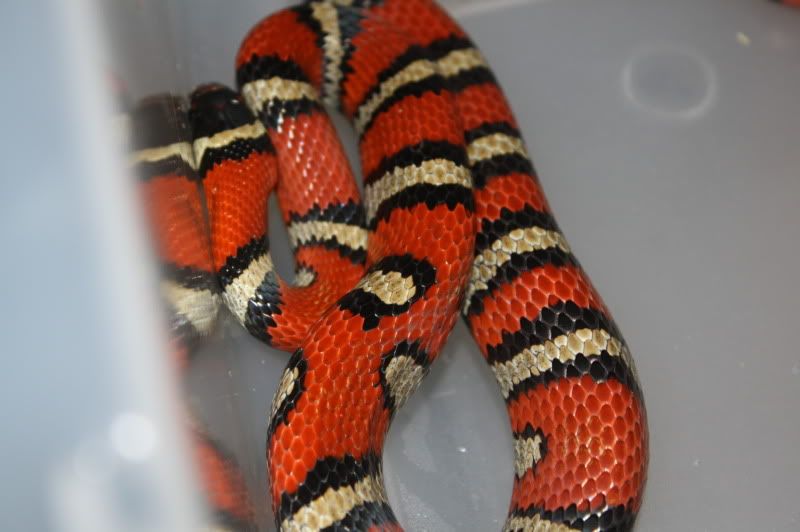
Heck, many moons ago I got real interested in the taxonomy of the big triangulums and had a desire to get my hands on some micropholis (among others). Never had any luck. The only one I could find who had even HAD some recently was Ernie Wagner. And even then, he told me that the identification on them was rather "iffy". A lot of the importers at the time were getting these animals (central and south American triangulums) from whatever country was allowing exports at the time, but the animals themselves were being collected from all over Central and South America and then shipped to the export country of the day to be exported to the importers in the USA. So when they came in, the importers would label the animals based on what they LOOKED like, as they really had no idea of the actual origin of the animals.
I purchased absolutely every writing I could find about triangulums and the more I read about the "differences" between the various flavors of neotropical milk snakes, the more confusing it became.
It was right about then that I lost interest in the taxonomy of L.triangulum ssp.

I came to the conclusion that unless you went down there and collected them yourself and if there were such minor differences between the subspecies that just about no one could really tell one from the other without knowing the location source, then why bother?
Icing to that cake was when I saw so many aberrantly patterned Sinaloans magically become transformed to "Nelsoni" when the amelanistic nelsons hit the market.
Not to try to take this too far off topic, but tell me, how come such minor differences in triangulums can justify subspecific status yet there are differences much more dramatic among the corn snakes and they are ALL considered as the same subspecies? What is the rule of thumb being used here?