• Responding to email notices you receive.
    **************************************************
    In short, DON'T! Email notices are to ONLY alert you of a reply to your private message or your ad on this site. Replying to the email just wastes your time as it goes NOWHERE, and probably pisses off the person you thought you replied to when they think you just ignored them. So instead of complaining to me about your messages not being replied to from this site via email, please READ that email notice that plainly states what you need to do in order to reply to who you are trying to converse with.

  • IMPORTANT! PLEASE READ!! About the Google Adsense ads being displayed

    =====================
    Posted 08/15/2025
    =====================


    Yeah, I know. They are a pain in the butt. But they pay the bills to keep my server running. Just a fact of life, I am afraid.

    Want to get rid of them? Simple. Just become a Contributor level member or above and they will be gone. -> Please click HERE."

    Is that too much for me to ask of you to keep this site running? Well, sorry about that. I too wish I could get everything for free. But alas.....

    =====================
    Addendum: 01/10/2026
    =====================


    Google Adsense ad revenue for December, 2025 was just $30 over the cost of the lease for the server running this site. So, in effect, the money providing the incentive for me to continue running this site is coming SOLELY from the paid memberships and sponsorships here. Which honestly ain't much....

Carnivorous Plants

I agree with everything Gordon has offered. I would like to add that in my own collection, depending upon the particular plant and it's locale of origin, I also use pumice and/or orchid bark mixed with pure sphagnum or peat or sand. No vermiculite and only a little perlite.

It's not a good pic, but here's an example of VFT & the sphagnum I use. I can't base it on scientific fact, but I do think the sphagnum on top of the peat/sand/sphagnum/whatever mixture helps keep the roots & foliage cooler in the hot sun.

Of course the sphagnum can also strangle a plant so that growth has to be kept under control, too. On the bright side, you can easily start & propagate your own sphagnum garden from thinning!

Think of it like a snake or any other herp. You want to replicate the plant's natural environment ... excess perlite or vermiculite just don't enter into that equation :)
 

Attachments

  • vft2.jpg
    vft2.jpg
    170.5 KB · Views: 183
Yeah, I'm going to go with a sand and peat moss mix. Not too keen on that perlite stuff any longer. I did drill some more holes into the sides of that tub so maybe the water level won't rise too high the next time he had a heavy rain.

Sundews are really rather common in areas around here and the odd thing is that I've see them growing in what looks like the darkest, richest, muckiest looking medium imaginable in ditches alongside roadways. It doesn't look in any way particularly nutrient poor at all. The only reason the other plants don't crowd them out is because those ditches are cut and scraped fairly often. Matter of fact, the sundews are growing in between tire treads from the maintenance crews in many areas. In another area I found they are doing logging and land clearing prior to some kind of construction, and I imagine the sundews there aren't going to be around for very much longer. A common practice all across Florida.

Matter of fact, I think some developers would pave driveways with gopher tortoise shells if they thought they could get away with it.

I read somewhere that sundew seeds will remain viable for 50 years, so I guess everytime the ditches are scraped, that just exposes seeds that were laying dormant and a new crop of 'dews pop up. One of my earlier memories of finding sundews was a long while back when Connie and I were on a trip down here to north Florida closer to Jacksonville when we were kicking around an area that looked like it had been clear cut fairly recently. The ground was very moist and literally covered with sundews. I don't believe they could have done very well there while the forest was in place and heavily shaded, but apparently dormant seeds were everywhere in the ground that once exposed to direct sunlight again got them to popping out of the ground.

Some of the fly traps have come back from being burned back by direct sunlight, so when I'm near them and smack a darn yellow fly trying to bite the hell out of me, I feed the dead flies to any trap waiting for a meal. Something pretty satisfying about doing that, to be honest. I wish the yellow flies were directly attracted to those plants. I'd probably buy a zillion of them to get rid of those flying piranhas.
 
Matter of fact, I think some developers would pave driveways with gopher tortoise shells if they thought they could get away with it.
Of course they would! Anything for the almighty dollar. That's why carnivorous plants are so rare here now and thankfully federally protected by at least 3 states, not that it actually might help ... competency of the feds and all that jazz.

I would so love to see wild Drosera, VFT's, Sarracenia, Darlingtonia! I've made trips to AL, SC and NC to see natural populations. You and Connie are so lucky to have seen the sundews!

Glad to hear some of the traps are recuperating. I wonder if moving them to a little more shady spot for further recuperation and regeneration might not be a good idea, if you are able.

Of course feeding winged piranhas is always a win-win. Me, I'm always telling them to eat every freakin' fire ant and wood roach that even comes close!
 
There is supposed to be an introduced population of VFTs not far from me near a town called Hosford, but I haven't tried to find it yet. We're not far from Sumatra, FL, where there are fields of pitcher plants all along the road. Been a while since I've been on route 65, though. We used to go out that way hunting for blotched kings a long while back. And to be quite honest about it, pitcher plants just don't interest me much at all.

Florida could not really care less about plants nor animals when it comes to development. If anyone thinks that an endangered plant will stop a development project, they are sadly naive. Heck, they won't even stop road maintenance machinery from dredging ditches where they are found.
Actually, I believe the only insectivorous plants that are protected in Florida are the pitcher plants and the red colored thread sundew. I doubt the non-native introduced VFTs are protected in any manner. Maybe some of the butterworts are protected as well, but they are so nondescript that most people probably never even notice them. I may have walked past (or even ON) zillions of them, but I've never noticed them at all. I'm sure someone on a bulldozer would certainly never notice any such plants his treads run over.

You would think that land developers would need to prepare an impact assessment that included an inspection for endangered and/or threatened plant and animal species, wouldn't you? But I'll bet any mention of such a thing is strictly taboo in the halls of the state legislature.
 
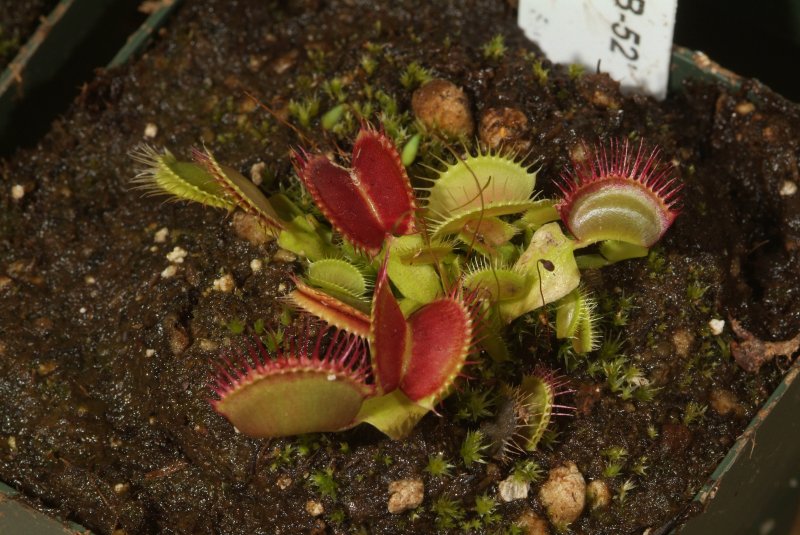
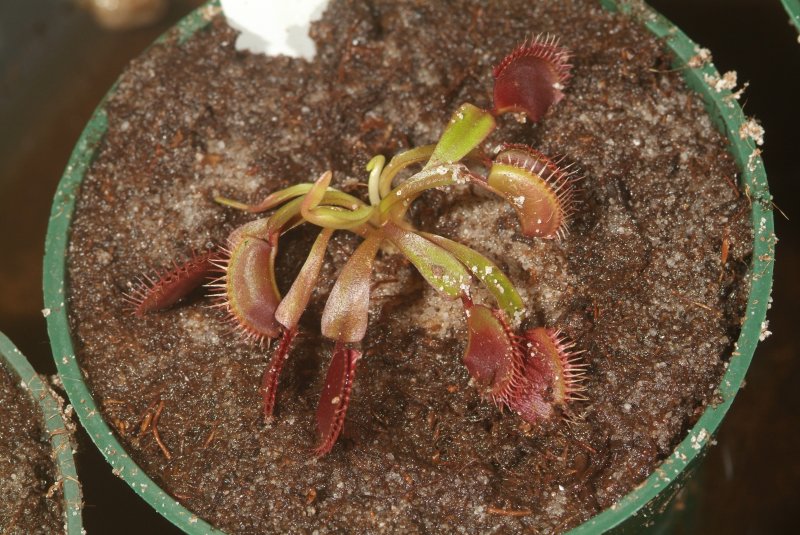
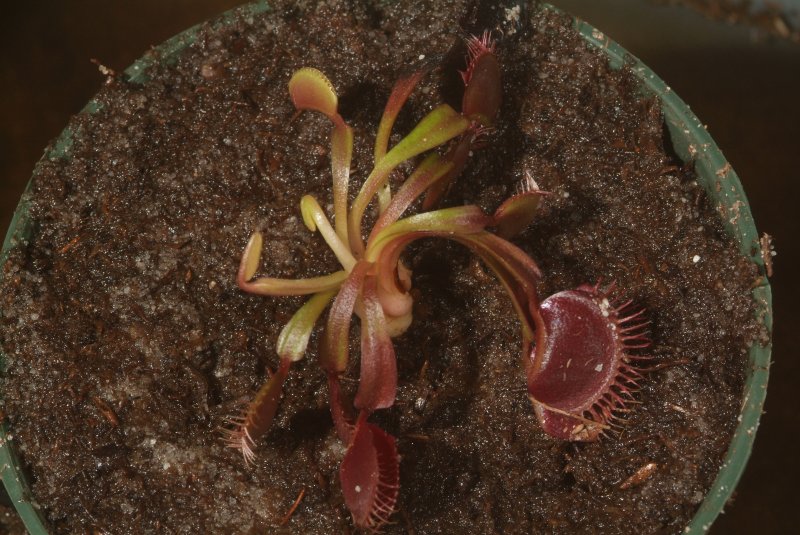
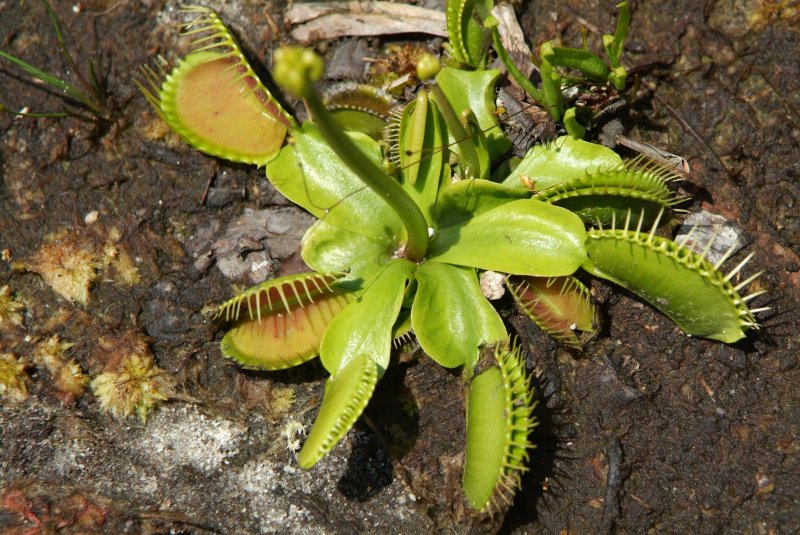
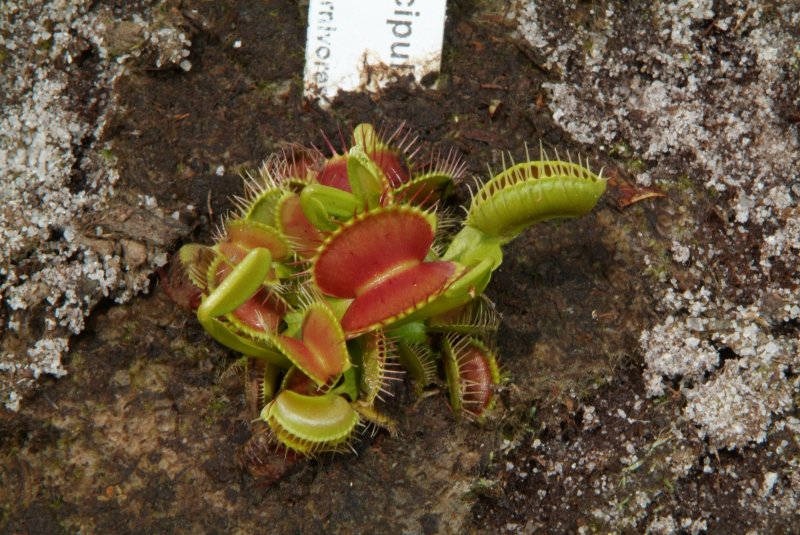
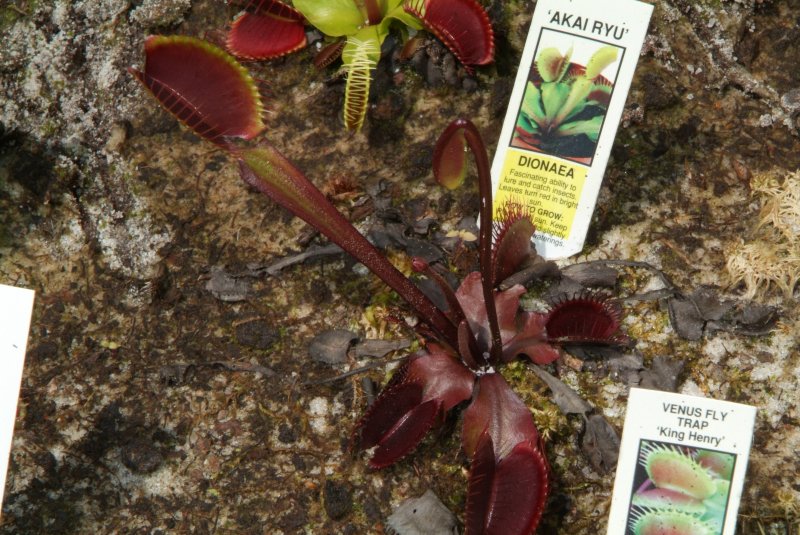
The venus fly traps and sundews I bought a while back seem to be doing real well in the mini bogs we set up, so I decided to buy a few more.

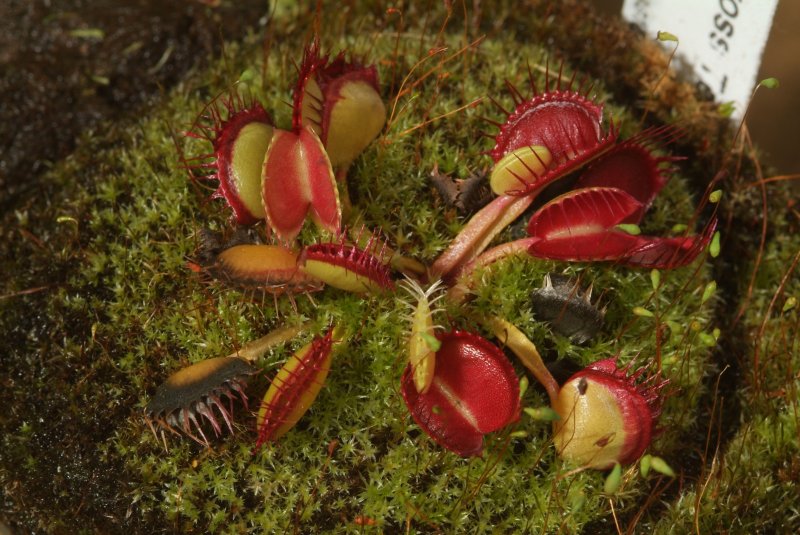
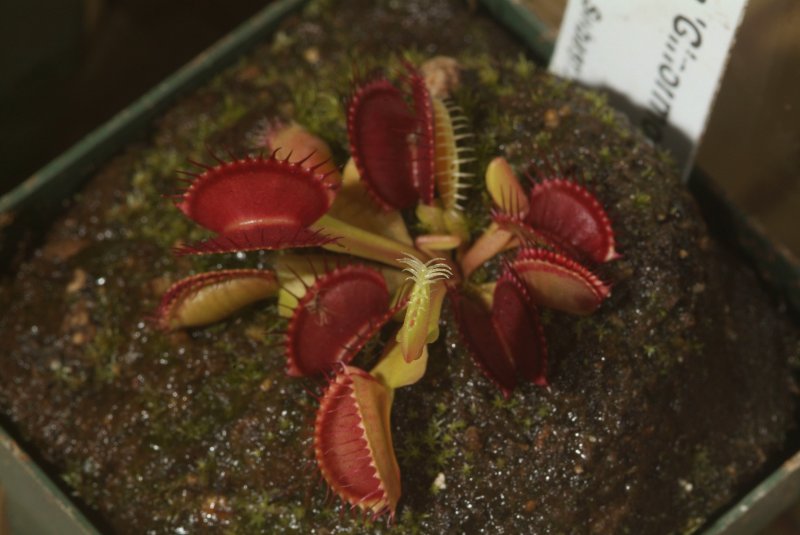
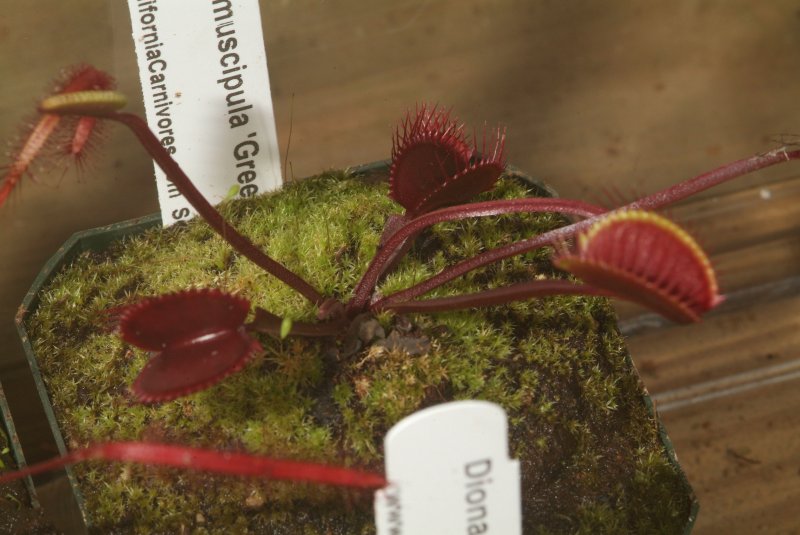
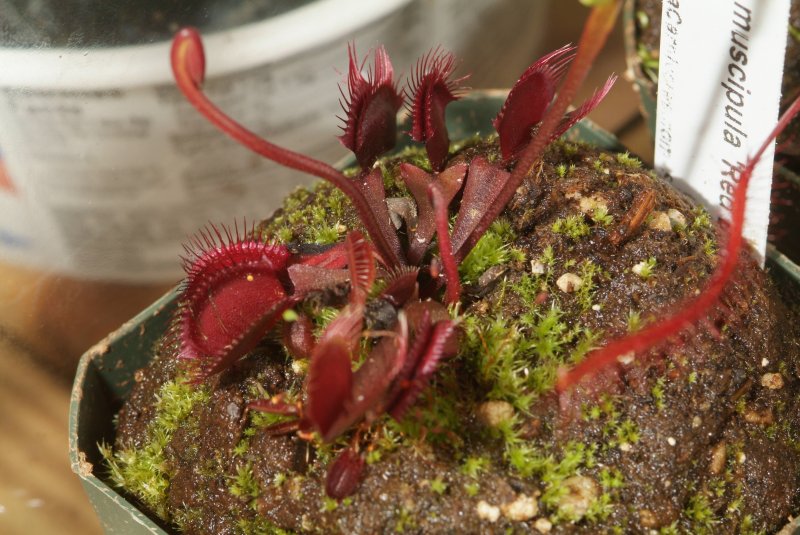
These potted venus fly traps are right colorful, pretty nice sized, and look in excellent shape.

vft_40.jpg


vft_41.jpg


vft_42.jpg


vft_43.jpg


vft_44.jpg


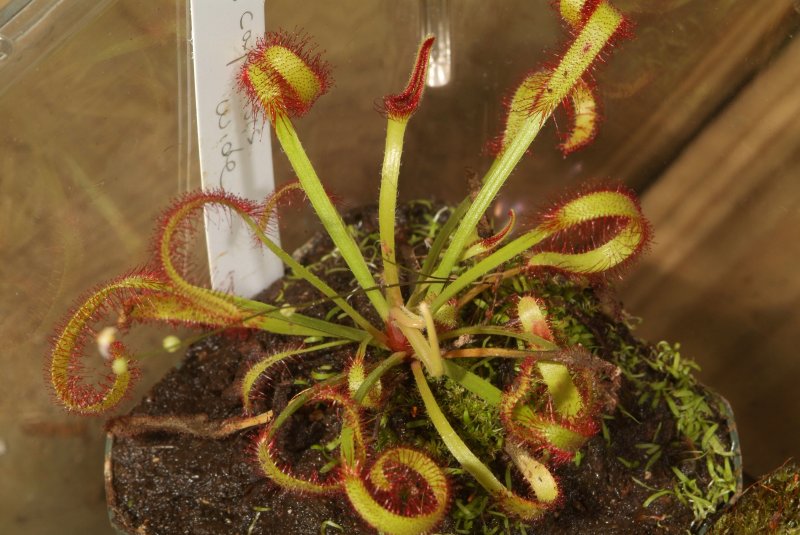
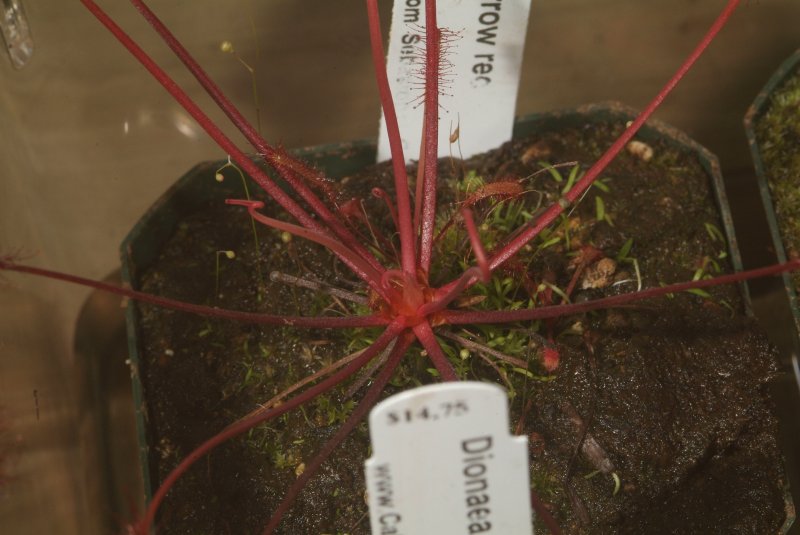
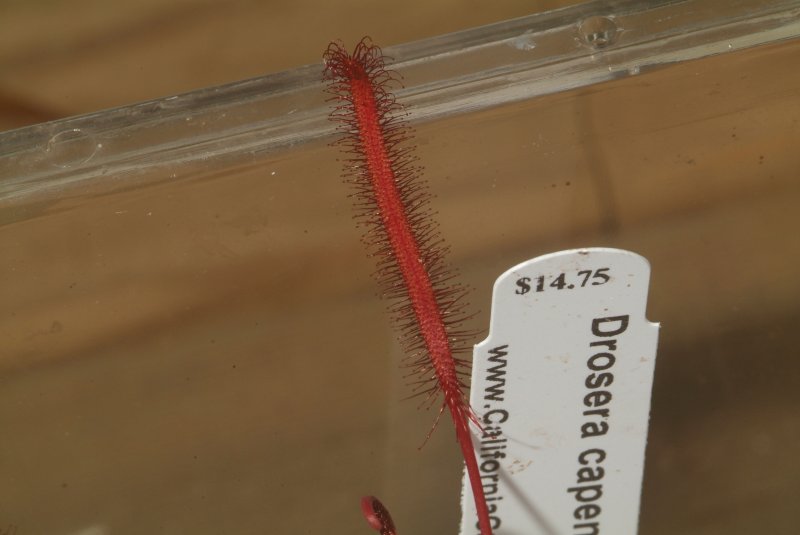
The sundews don't look to shabby neither.

sundew_40.jpg


sundew_41.jpg


sundew_42.jpg
 
I also bought some bare root fly traps that are smaller, but they should do OK in the little pots I set them up in.

vft_45.jpg


vft_46.jpg


I'm letting them all gradually get acclimated to the sunlight before putting them out in the mini bogs. Don't want to burn them like I did that first batch I got.
 
Gorgeous plants! I kept carnivorous plants----Nepenthes gracilis, Drosera capensis, some sort of American pitcher plant, and venus fly traps----for years. Sadly, my collection didn't survive my move last year. Moving them from a southern window to a northern one was far more drastic than I thought it would be. I got my plants from California Carnivores and found their service to be excellent.

I love the sundews in particular. They've always been my favorite.
 
Yeah, well between the nearly three months of daily rain over the Summer, which I think kept the mini-bogs too wet, low amount of sunshine during that period, and some critter who decided to root around in those mini-bogs, everything is looking pretty puny now. But with the soil drying out a bit and more sunlight, they seem to be bouncing back a bit. I guess I'll just have to see who things look in the Spring after they go through the Winter months.

The Drosera put out a lot of seed stalks, so I'm curious to see if I have little sundews coming up in the Spring.
 
Well, the mini bogs appear to be coming back nicely this spring. I lost some things because I didn't have the drain holes deep enough to account for the amount of settling the soil would do. So I drilled a few more somewhat deeper, and the soil isn't as mushy as it was before. Also had some varmint root around in one of the bogs and scattered a bunch of the flytraps here and yonder. Perhaps he even ate some of them.

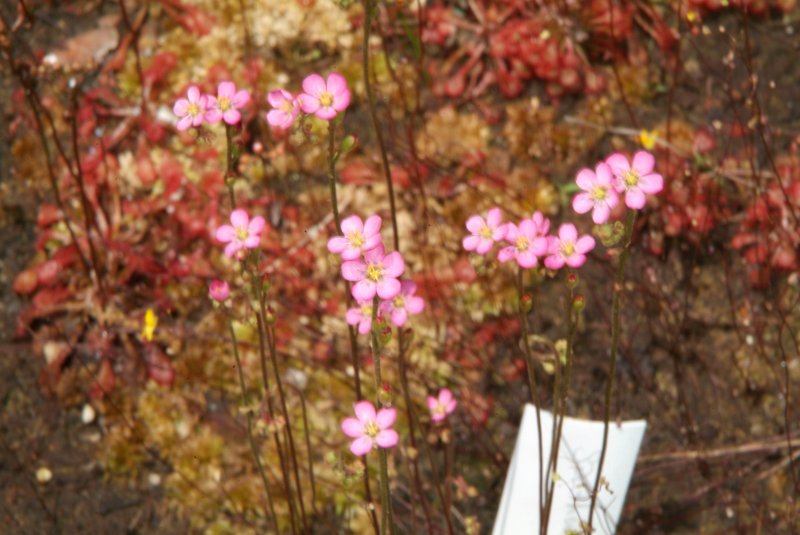
One of the mini bogs has sprouted a whole slew of little yellow flowers on string thin stalks.

yellow_flowers_04_2014_01.jpg


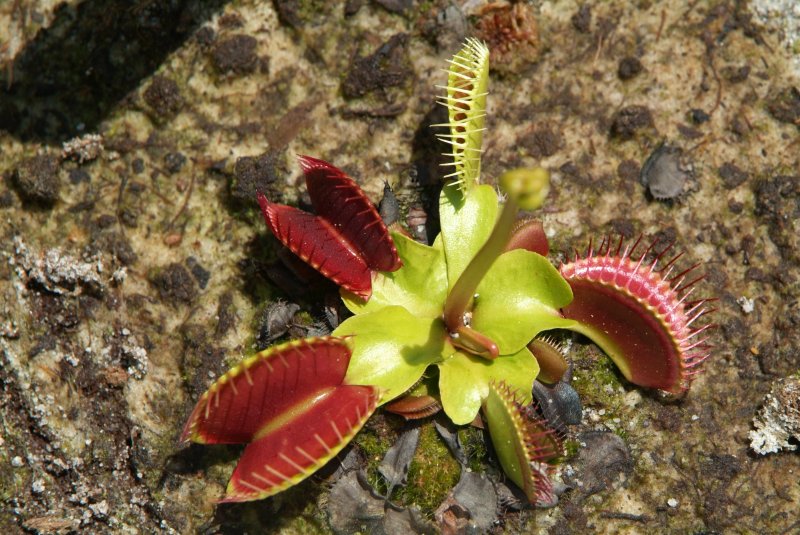
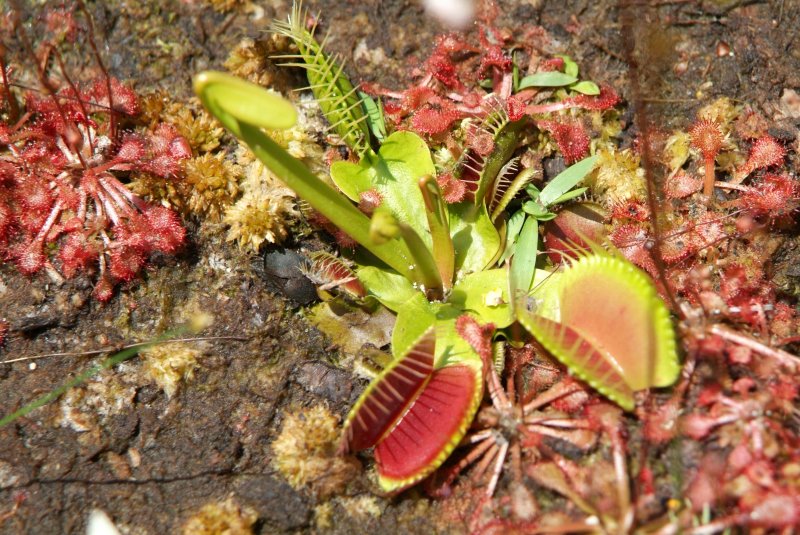
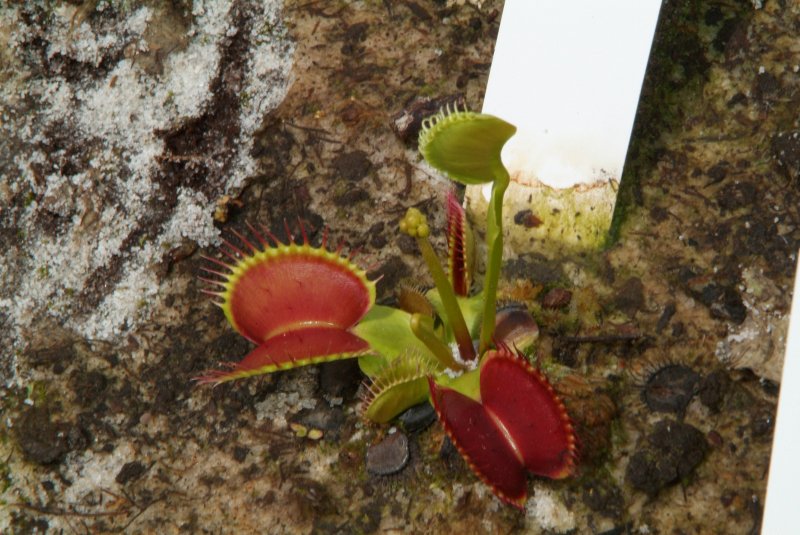
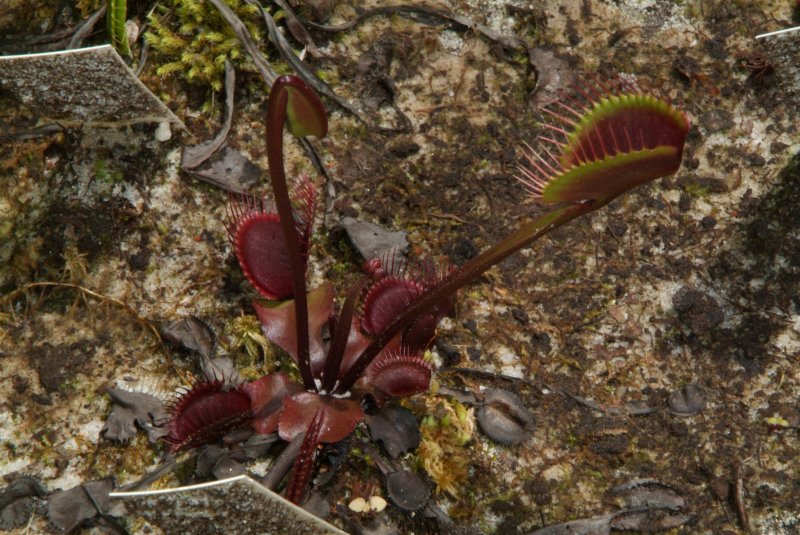
Anyway, I took a bunch of photos of the flytraps and sundews....

flytrap_04_2014_01.jpg


flytrap_04_2014_02.jpg


flytrap_04_2014_03.jpg


flytrap_04_2014_04.jpg


flytrap_04_2014_05.jpg


flytrap_04_2014_06.jpg


flytrap_04_2014_07.jpg
 
Looking very good. The little yellow flower is Utricularia subulata. Pretty little thing but a real weed at times as some of those Drosera can be.
 
Looking very good. The little yellow flower is Utricularia subulata. Pretty little thing but a real weed at times as some of those Drosera can be.

I had to look that one up. So it's a bladderwort? Also a carnivorous plant? I thought bladderworts were basically aquatic. So how does this terrestrial form actually capture insects?
 
There are actually a very large number of terrestrial species, some of them quite spectacular. These small species are quite adept at catching small soil critters with their small traps.
 
I had someone comment on one of my other forums about some bladderworts that eat nematodes. Heck, having some that would eat nematodes would be pretty handy to have, as nematodes can be a real pest in the garden. But would those plants be able to survive in the enrichened soil of a typical garden plot?
 
Had the camera in hand when I walked past the mini bogs with the venus fly traps in them, so.......

flytrap_04232014_01.jpg


flytrap_04232014_02.jpg


flytrap_04232014_03.jpg


flytrap_04232014_04.jpg


flytrap_04232014_05.jpg


flytrap_04232014_06.jpg


flytrap_04232014_07.jpg


Looks like several of them are going to flower this year. The sundews are going berserk producing flower stalks.

sundews_04232014_01.jpg
 
Later this afternoon Connie and I were catching small grasshoppers off of the fruit trees and feeding them to the venus flytraps. Country (huckleberry) living doesn't get any better than this!
 
Looks like Mr. Toad figures that those flytraps and sundews need a little help catching bugs....

toad_flytraps_01.jpg
 
Back
Top