• Responding to email notices you receive.
    **************************************************
    In short, DON'T! Email notices are to ONLY alert you of a reply to your private message or your ad on this site. Replying to the email just wastes your time as it goes NOWHERE, and probably pisses off the person you thought you replied to when they think you just ignored them. So instead of complaining to me about your messages not being replied to from this site via email, please READ that email notice that plainly states what you need to do in order to reply to who you are trying to converse with.

  • IMPORTANT! PLEASE READ!! About the Google Adsense ads being displayed

    =====================
    Posted 08/15/2025
    =====================


    Yeah, I know. They are a pain in the butt. But they pay the bills to keep my server running. Just a fact of life, I am afraid.

    Want to get rid of them? Simple. Just become a Contributor level member or above and they will be gone. -> Please click HERE."

    Is that too much for me to ask of you to keep this site running? Well, sorry about that. I too wish I could get everything for free. But alas.....

    =====================
    Addendum: 01/10/2026
    =====================


    Google Adsense ad revenue for December, 2025 was just $30 over the cost of the lease for the server running this site. So, in effect, the money providing the incentive for me to continue running this site is coming SOLELY from the paid memberships and sponsorships here. Which honestly ain't much....

Is it too late for handling?

johelian

New member
Joined
Nov 20, 2006
Messages
51
Reaction score
0
Points
0
Age
44
Location
UK
Heya all,
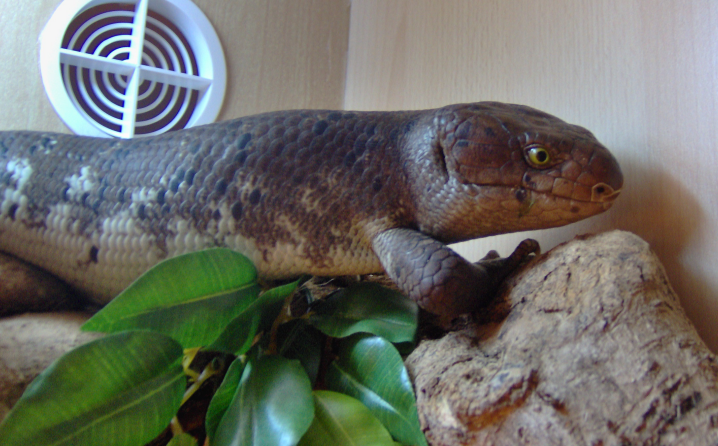
I very recently obtained a pair of Corucia zebrata, who I am told are between 3 and 5 years of age. Now, I must admit, I lapsed on this one and have no idea whether or not they are imported or CB, but they are in great shape. The only issue is that they are not keen to have me anywhere near them. Im not sure if this is aggression or fear; the larger of the two, presumed male, can be openly aggressive making lunges at anyone who gets close and doesnt go away quickly enough, whereas the female alternates between flight and the odd lunge. Hers however arent accompanied by huffing as his are, which makes me wonder if its aggression or curiosity (she will take food from my hand, so she clearly isnt terrified); Im a bit reluctant to leave my hand in range to find out!

My question is - is it likely to be too late for these two to become accustomed to human presence and/or handling? Since Id like to breed the species one day Im not really looking to handle them on a regular basis, but I dont want their behaviour to develop into aggression that means I cant service the cage. Once they are out of the cage they are mellower.

Here are some pictures of the two;
Female1.png


MonkeyTails3-18thNov06.png

Any information people could give me regarding sex, species or age (or anything else I might find useful as a new corucia owner) would be greatly appreciated.
 
Hi, Jo

Generally, they are very aggressive in their "territory", but are mellower once you get them out (as you have discovered). They seem to be VERY intelligent, and I think once they get used to your scent you should be able to handle them with less risk (but never zero -- you'll always have to be on guard). And just because they get used to YOUR scent and let YOU handle them doesn't mean they will allow anybody ELSE to handle them...

Also, the males seem to become VERY aggressive once their females are pregnant, protecting the females. (Another way I can tell if I have pregnant females). And ALL members of a group become aggressive when a new baby is born, protecting the baby (even unrelated females in the group). (BTW: I try to handle the babies at least once a week from birth so they will be used to it. But don't handle them too much, because then they smell "different" when you put them back in the cage, and the adults can be aggressive with them... You can rub them with cage bedding before you put them back in so they will smell "normal" to their parents again. Captive borns *seem* to generally be less aggressive with humans. Generally.)

So, yes, they will probably calm down with handling. (Unless the one in the bottom photo is a female, and she is pregnant, in which case the one in the top photo, which appears to be a male, will probably be aggressive. The females seem to behave "normally", and are not *especially* aggressive, until their babies are born. Then most of them go psycho on you until the babies are upwards of a year old! Just another of their "endearing" behavioral traits...) :) So if you are going to breed them, you may not get to handle them as much...

As for servicing the cage, I make sure I know where ALL of the inhabitants of a cage are before I reach in for food or water dishes, and am always ready to react. I have one "psycho" male who I have to push back with a roll of paper towels sometimes when I reach into the cage. And when I need to clean a cage, I use a large stick: grab each inhabitant by the tail and drag them onto the stick and kind of control them with their tails so they can't turn around and bite you while transferring them into a temporary enclosure (large plastic storage box). Alternately, you can try grabbing them behind the head, but I find I usually get shredded by their wicked claws if I do that... the stick technique is safer.

-- Celeste
 
Hi Celeste,
Many thanks for the reply, I really appreciate it! :)

I believe the first of the pictures is actually female, since it has quite a small head compared to its huge neck and body - its definitely very bulky compared to the second. Im going to try and get a better picture of it at some point, but Im trying not to disturb her too much at the mo (they went for a vet check this week, and I think thats enough stress for now).

I have another development though, which Im not too sure about. The other day we discovered what we believe is an unfertilised egg deposited in the cage. A friend showed us a pic of an undeveloped embryo recently that was passed along with the birth of a healthy baby skink; it looks very much like that, only with no discernible physical body in it. Its an orange, jelly like substance, about 2" in length. Is our diagnosis correct? Is this an unusual thing to happen do you know? (our friend has seen blue tongues pass these "slugs" but not monkey tails, so Im assuming its possible). I believe this came from the slimmer of the two, since the other is still huge and the smaller looks a little slimmer than before. She also reacted very violently when I removed the egg and tried to bite. Is this unusual behaviour? The larger of the two didnt react at all to the situation.

Many thanks again for your advice :)
 
Sounds just like a "slug", or undeveloped embryo. My first female delivered one of those last year. It looked just like you describe. She was young (I guessed about 3 years old at the time), and I suspect she was just too young to breed. I kept the slug in the refrigerator intending to dissect it, but never got around to it. And from what I've read, it's fairly common, so I wouldn't worry about it if I were you, though I am sorry for your loss of a potential baby. My female (Salome) also became extremely aggressive for about two or three weeks after delivering the slug. I guess whatever protective instincts get activated in the mother by the birth of a live baby also get activated (at least for a while) by the passing of an undeveloped embryo. BTW: you might be interested in reading Brian's post on measurements on Corucia fetuses -- it turns out that Corucia are *placental* reptiles! The babies are actually attached to the mother by an umbilical cord and placenta, and are not just eggs that hatch inside the mother. Fascinating!!! So both of yours are females?
 
Hiya Celeste,
I believe they are both females, yes - although I havent seen many others to compare, I have had pretty consistent responses regarding both pictures. Ive only used one picture of the larger one though, since I pretty much guessed that it was probably female, and just concentrated on the smaller, so what I may do is take some more pics of the larger one to compare just to be sure. I am in the process of hunting out a male at the moment though.

Thanks for reassuring me; I had never seen anything like that before, and its not been mentioned in any of the literature I have read so it was a bit of a shock! At least it has put to rest any doubts about the sex of the smaller skink. The skink that passed it seems a little lethargic at the moment; is there anything I should do at all to help? Could it be connected to the loss of the slug? The larger is relatively more active,
 
I haven't noticed any particular lethargy after they give birth (or pass a slug) -- usually they become quite aggressive and protective, and are eating to make up for lost time, so no they do not generally seem lethargic... I hope she is well. I she eating?

Again, *all* of mine are a bit lethargic right now, I assume waiting for the days to get longer and the humidity to get higher. I suppose its a bit odd that nocturnal (or crepuscular) animals should be sensitive to light cycles, but they seem to do this every winter (for whatever reason), so I'm not too concerned.

-- C
 
Back
Top