• Responding to email notices you receive.
    **************************************************
    In short, DON'T! Email notices are to ONLY alert you of a reply to your private message or your ad on this site. Replying to the email just wastes your time as it goes NOWHERE, and probably pisses off the person you thought you replied to when they think you just ignored them. So instead of complaining to me about your messages not being replied to from this site via email, please READ that email notice that plainly states what you need to do in order to reply to who you are trying to converse with.

  • IMPORTANT! PLEASE READ!! About the Google Adsense ads being displayed

    =====================
    Posted 08/15/2025
    =====================


    Yeah, I know. They are a pain in the butt. But they pay the bills to keep my server running. Just a fact of life, I am afraid.

    Want to get rid of them? Simple. Just become a Contributor level member or above and they will be gone. -> Please click HERE."

    Is that too much for me to ask of you to keep this site running? Well, sorry about that. I too wish I could get everything for free. But alas.....

    =====================
    Addendum: 01/10/2026
    =====================


    Google Adsense ad revenue for December, 2025 was just $30 over the cost of the lease for the server running this site. So, in effect, the money providing the incentive for me to continue running this site is coming SOLELY from the paid memberships and sponsorships here. Which honestly ain't much....

Desert Females?

I really have almost zero experience with "snake-ivores". Only ones that come to mind are: BlackHeaded python, coral & kings. Is there another common snake eater out there that is slipping my mind? Or are we talking about anything that is willing to eat a snake, lizards, birds, etc. for ball python feeders?

As far as studying Deserts, I honestly don't know how far people have taken this. They may have decided, like you mentioned, not worth the investment of time and money to pursue it. Perhaps if we had any biologist here who needed a research paper, wink wink.

I generally try to avoid snake-ivores so they don't try to eat their mates during breeding season; although I do have black heads and ringed pythons. I also do not keep anything venomous but there are a number of hots that would eat snakes almost exclusively.

A friend of mine from the pet shop days went on to work on a PhD in genetics. Last I saw him he was living in L.A. (going to UCLA) so I don't see him often, but I will talk to him the next time I see him. He may have some input for us.
 
My gasp was in deference to the ball python breeders ... not of any sensibility I have about feeding snakes to other snakes. I have several friends that have cobras and other snake eating snakes; for whom I save a dead small snakes & bearded dragons for.

I picked up on that. Hard to tell from a forum post though.

At the pet shop we would order house geckos for customers to feed. never dealt with feeding snakes, but I would have no problem with it; I try to view things from a biological standpoint when feeding animals to other animals (although I try to pre-kill when I can, for humane purposes).

As far as feeding ball pythons; Given the choice, I think sending the cull off to be fed to something is better than throwing them away; at least they die to give something else life. Just my opinion.

I used to feed the cull from my parent's Budgerigar breeding to my snakes when I was a kid; I figure they would at least serve some purpose. Pretty much the same thing.
 
A friend of mine who breeds corn snakes gives me the kinked and stillborn babies to feed to my Mexican Black King snake. She's not big enough - yet - to handle a baby BP though, unless it's really underdeveloped.

Also I've seen a few BP's advertised as "reduced pattern female normals" that were really deserts.
 
I used to feed the cull...
Ever notice how few BP breeders will admit to culling? Even deformities, if it will live, a lot of them try to sell it; or at least give it away. I guess I can understand it on one level; but on another, it just doesn't make much sense.

Also I've seen a few BP's advertised as "reduced pattern female normals" that were really deserts
If that's true, it's pretty low, IMO. I'd rather see them culled than mislabeled and sold to unsuspecting people, just so the breeder can get a little cash out of them.
 
It doesn't take long for a low value snake to out eat its worth...There are snakes that are far more prolific
Absolutely true, 3-4 feedings on a normal BP is a wash if you sold it in many cases. So when it comes to feeder snakes, what do think is a common feeder snake? Garters? Is someone around breeding snakes for feeders or do you think this a scope them up from the wild thing?

Picking projects that have big payoff are how you get/keep your job, especially in the climate now, so it would be really tough to justify doing.
Understandable, jobs are always a nice thing to have. Solving the Desert mystery isn't going to pay the bills most folks, so they appear to be dissolving into the pet realm.

I believe Indigo Snakes eat other snakes ... not that those are common. ...I have a friend that has a theory that desert females should be able to lay eggs if bred at over 2000g.

Shows how little I know about Indigos. Great looking snakes, but seems to be a lot of red tape to get one?? I have heard the 2k grams thing before on Deserts, but surely someone had a 2000k female a couple years ago to test it then?

and ringed pythons.
Are you keeping ringed pythons or are you also breeding them? Trying to find a baby bismark is a chore and a half usually.

Given the choice, I think sending the cull off to be fed to something is better than throwing them away; at least they die to give something else life. Just my opinion.

I have an Enchi Calico Pastel female that I honestly am at my wits end with. I might have to find someone who has an animal in need of food.
 
Common feeder snake? Depends on what is being fed, lol. Alligators and monitors are pretty indiscriminate. Cobras, as well, as long as the size is appropriate. I've used baby corns for coral snakes. Sorry to have taken the desert thread down this path. It wasn't really intentional.
 
Are you keeping ringed pythons or are you also breeding them? Trying to find a baby bismark is a chore and a half usually.
I have an unrelated pair of high contrast rings I intend to breed when they are large enough.
They seem to be a slower growing snake, although they started out the size of worms. I anticipate they should be ready in a year or 2... probably 2.
They were costly and are not very friendly; they bite and flee, plus if you grab them they musk. These guys have been some of the best feeders of any snake I have ever kept.

Sorry to have taken the desert thread down this path. It wasn't really intentional.
feeder snakes and culling is a reality, and Honestly that is likely where the female deserts end up (if they don't go to the big pet retailers/wholesalers).
 
They were costly and are not very friendly; they bite and flee, plus if you grab them they musk.

That's a bummer! Musking pythons? Boy - I spend way to much time in the ball python world, kind of sad. Never been able to ask any one their first hand experience before with them. I've seen some super dark adults and some like you said high contrast ones. 2 years to wait still, you are a patient man!
 
That's a bummer! Musking pythons? Boy - I spend way to much time in the ball python world, kind of sad. Never been able to ask any one their first hand experience before with them. I've seen some super dark adults and some like you said high contrast ones. 2 years to wait still, you are a patient man!

They hatched in 2012.
they are now big enough to eat a lg hopper/sm mouse.
It's just 2 snakes, I have others to play with in the meantime.
They are a nice burnt orange color (and black) like their parents.
They act kinda like a wild garter snake that bites.
They are nervously tolerant of very gentle handling now that they have a little size, but just barely.
Don't get me wrong, they are neat animals, not totally bummed out, just not completely sure if I want to get more than the 2 I have.

I had an idea on the female desert front: If there is something to the 2k breeding size, why not cross a male with a sub-saharan (those ones that get huge) and raise up a female desert/sub-saharan to 3k or more prior to breeding attempts?
As I recall, the oviduct size was an issue with desert girls and a bigger snake may have an advantage in larger oviduct size. Just a hypothesis; I don't know if it is a scientifically sound theory about organ size: any biologists care to comment?
 
Ever notice how few BP breeders will admit to culling? Even deformities, if it will live, a lot of them try to sell it; or at least give it away. I guess I can understand it on one level; but on another, it just doesn't make much sense.
From a breeder perspective "culled" is not synonymous with "euthanized", it simply means the animal isn't used in the breeding program, often due to a defect that isn't wanted in future generations. In the dog/cat world it just means the animal is spayed or neutered, and sold off as a pet at a lower price than a breeder or show-quality animal. In the horse world stallions are gelded, and the mares simply aren't bred, but the animal still has a use for the recreational horse owner.

If desert female BP's, het males, normals, etc. are sold off or given away as feeders for people who keep cobras, indigos, etc... well, those snakes have to eat too.
 
There is no wrong path at all! Happy to go down any path the thread takes us all except for the SA Wardega path:thumbsup:

http://www.youtube.com/watch?v=YoB8t0B4jx4

I love that video!

From a breeder perspective "culled" is not synonymous with "euthanized", it simply means the animal isn't used in the breeding program, often due to a defect that isn't wanted in future generations. In the dog/cat world it just means the animal is spayed or neutered, and sold off as a pet at a lower price than a breeder or show-quality animal. In the horse world stallions are gelded, and the mares simply aren't bred, but the animal still has a use for the recreational horse owner.

If desert female BP's, het males, normals, etc. are sold off or given away as feeders for people who keep cobras, indigos, etc... well, those snakes have to eat too.

I beg to differ ... I am a breeder of boas and bearded dragons, among a few other species of snakes. Culling definitely means euthanize; I cull misformed, non-eating & severe neuro issues bearded dragons, also I cull severely kinked snakes.
 
They hatched in 2012.
they are now big enough to eat a lg hopper/sm mouse.
It's just 2 snakes, I have others to play with in the meantime.
They are a nice burnt orange color (and black) like their parents.
They act kinda like a wild garter snake that bites.
They are nervously tolerant of very gentle handling now that they have a little size, but just barely.
Don't get me wrong, they are neat animals, not totally bummed out, just not completely sure if I want to get more than the 2 I have.

I had an idea on the female desert front: If there is something to the 2k breeding size, why not cross a male with a sub-saharan (those ones that get huge) and raise up a female desert/sub-saharan to 3k or more prior to breeding attempts?
As I recall, the oviduct size was an issue with desert girls and a bigger snake may have an advantage in larger oviduct size. Just a hypothesis; I don't know if it is a scientifically sound theory about organ size: any biologists care to comment?

I think I've had my share of squirmy/musky snakes from garters to hon. milk snakes, I might just have to observe them from a distance instead for a while.:)

I honestly don't know very much about the inner pipework of snakes. Like you said, it would be good for a biologist to chime in on the much "larger" snake hypothesis.
 
From a breeder perspective "culled" is not synonymous with "euthanized", it simply means the animal isn't used in the breeding program, often due to a defect that isn't wanted in future generations.

I beg to differ ... I am a breeder of boas and bearded dragons, among a few other species of snakes. Culling definitely means euthanize; I cull misformed, non-eating & severe neuro issues bearded dragons, also I cull severely kinked snakes.

in the budgerigar world it meant both: deformed babies were culled (euthanized) and older, healthy birds that did not have the show quality traits being selected for, were culled from the breeding program by selling them off as pets.
I fed the culled, deformed babies to my king and hognose snakes in the 90's when my parents were still breeding birds. Most of the time the parents would throw the deformed baby from the nest and/or kill it, sometimes eat it. Nature is brutal sometimes.

when the need arises in my own snake breeding program, I will probably have to do it too. the simple truth is that any breeding program will eventually yield a deformed baby... in nature they would be eaten; we just humanely euthanize them.
 
I think I've had my share of squirmy/musky snakes from garters to hon. milk snakes, I might just have to observe them from a distance instead for a while.:)

my wife does not like the rings for the same reasons.
She said she may like them more if the babies sell ($500-$600 each ain't a bad payday).
She still prefers the ball pythons and sanzinia because they are really calm.
 
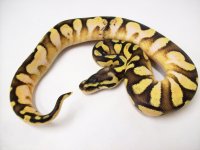
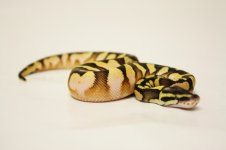
So here is my Shakespearean, "to cull or not to cull", in the death sense. I think she is an absolutely gorgeous snake so it makes it even harder. Her head is narrower than most and eyes are much smaller than normal, one being extra small. If it was just a case of eyes and head sizes I would keep her as a pet, but she is a horrible eater and I have to assist her every time. I go back and forth every time I have to feed her.

Also, not a kinked tail, just looks that way in on of the pictures.
 

Attachments

  • Enchi Calico Pastel (2).jpg
    Enchi Calico Pastel (2).jpg
    132.3 KB · Views: 86
  • Enchi Calico Pastel (3).jpg
    Enchi Calico Pastel (3).jpg
    64.5 KB · Views: 80
Last edited:
That's a nice looking animal, but with the eye issues and the feeding issues, if it lived in my house it would be certainly spending the night with the kingsnakes.
 
From a breeder perspective "culled" is not synonymous with "euthanized"
How about we meet at culled is not always synonymous with euthanized? For many years, pups that had certain flaws (according to breed standards - not referring to deformities) were killed...in some cases, it was simply a matter of them being the wrong color. That changed significantly when people started finding out about the practice, and outrage ensued.
 
That's a nice looking animal, but with the eye issues and the feeding issues, if it lived in my house it would be certainly spending the night with the kingsnakes.

i think I would have to agree.
it is a gorgeous snake but all those issues may indicate a more significant underlying genetic problem that may inevitably lead to it's death.
Culling that beauty would be a tough decision but I think it may be for the best, speaking from a significant genetic weakness standpoint.
May be worth trying the pairing again to see if you can get one that looks as good but has normal physical features.
 
That's a nice looking animal, but with the eye issues and the feeding issues, if it lived in my house it would be certainly spending the night with the kingsnakes.
I would keep assist-feeding and keep her as a pet, though I do understand why many would choose to cull her. If she did eventually start to eat on her own I would give her to a pet-only home with the caveat that she come back to me if they couldn't keep her any more.

How about we meet at culled is not always synonymous with euthanized?
I would agree with that.
 
Back
Top