DoubleD1996
DoubleD1996
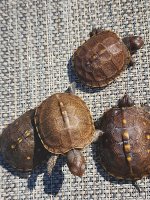
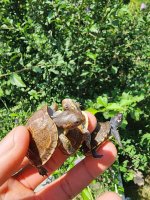
2026 Captive Born Hybrid Eastern Box Turtles.
Shipping: Mon—Thurs
Level of Keeping: Difficult.
email: [email protected]
Eastern Box Turtle Three Toe Hybrid. Although a natural occurrence in the wild, this was not intentional. The father reached sexual maturity and was in with the group of Eastern Box Turtles resulting in babies with even more phenomenal coloration. 75% Eastern 25% 3 toe.
Disclaimer: These guys are not beginners friendly and don't make the best pets for children.
Natural Range:
Eastern box turtles range from southern maine, east coast of Florida, Illinois and Tennessee.
They are found in areas such as Forest, Fields and wetlands which should give you a general idea of how to set them up.
Husbandry:
Currently, I am keeping these babies in a closed chamber system in an inch of water. Simply an enclosure within an enclosure to maintain humidity.
This isn’t necessary. The key take away is high humidity at this stage in life. These guys dry out easily. My motto; you want grapes not raisins.
I'm currently rearing them in water, but they can be set up on a substrate with a 75% organic soil 25% sand mix topped with something like cypress mulch, or leaf litter. A shallow water dish should be offered as they can easily drown.
In the wild, they seek out these microclimates with high humidity such as leaf litter or under logs for moisture, and inverts.
The best place for these guys is outdoors once they reach appropriate size, as they do well outdoors year round in most parts of the US with a proper set up.
Indoors they will need a basking area(flood light bulb with thermostat) around 90 degrees F with UV. Although I don't stress too much on UV at this stage as they spend most of their time hiding, but it's not a bad idea to offer along with calcium dusted foods.
Diet:
These guys are omnivores, I'd go as far as saying predators. They are not tortoises. Greens aren't enough to sustain them and should be offered in a varied diet.
They are currently feeding on earthworms, soldier fly larvae, mealworms, dubia roaches, and a bit of chicken heart.
At this stage, they are focused on growth, and not unlike a child they don't entertain vegetation/fruit as much. So, their diet is mostly protein, but as they mature you can introduce things like mulberry(fruit/leaves), clover, dandelion greens, strawberries, blueberry, rose of Sharon etc.
Please reach out at anytime with questions or concerns. A conversation must be had as I want the best situation for these remarkable creatures.
Eddie
Shipping: Mon—Thurs
Level of Keeping: Difficult.
email: [email protected]
Eastern Box Turtle Three Toe Hybrid. Although a natural occurrence in the wild, this was not intentional. The father reached sexual maturity and was in with the group of Eastern Box Turtles resulting in babies with even more phenomenal coloration. 75% Eastern 25% 3 toe.
Disclaimer: These guys are not beginners friendly and don't make the best pets for children.
Natural Range:
Eastern box turtles range from southern maine, east coast of Florida, Illinois and Tennessee.
They are found in areas such as Forest, Fields and wetlands which should give you a general idea of how to set them up.
Husbandry:
Currently, I am keeping these babies in a closed chamber system in an inch of water. Simply an enclosure within an enclosure to maintain humidity.
This isn’t necessary. The key take away is high humidity at this stage in life. These guys dry out easily. My motto; you want grapes not raisins.
I'm currently rearing them in water, but they can be set up on a substrate with a 75% organic soil 25% sand mix topped with something like cypress mulch, or leaf litter. A shallow water dish should be offered as they can easily drown.
In the wild, they seek out these microclimates with high humidity such as leaf litter or under logs for moisture, and inverts.
The best place for these guys is outdoors once they reach appropriate size, as they do well outdoors year round in most parts of the US with a proper set up.
Indoors they will need a basking area(flood light bulb with thermostat) around 90 degrees F with UV. Although I don't stress too much on UV at this stage as they spend most of their time hiding, but it's not a bad idea to offer along with calcium dusted foods.
Diet:
These guys are omnivores, I'd go as far as saying predators. They are not tortoises. Greens aren't enough to sustain them and should be offered in a varied diet.
They are currently feeding on earthworms, soldier fly larvae, mealworms, dubia roaches, and a bit of chicken heart.
At this stage, they are focused on growth, and not unlike a child they don't entertain vegetation/fruit as much. So, their diet is mostly protein, but as they mature you can introduce things like mulberry(fruit/leaves), clover, dandelion greens, strawberries, blueberry, rose of Sharon etc.
Please reach out at anytime with questions or concerns. A conversation must be had as I want the best situation for these remarkable creatures.
Eddie