• Responding to email notices you receive.
    **************************************************
    In short, DON'T! Email notices are to ONLY alert you of a reply to your private message or your ad on this site. Replying to the email just wastes your time as it goes NOWHERE, and probably pisses off the person you thought you replied to when they think you just ignored them. So instead of complaining to me about your messages not being replied to from this site via email, please READ that email notice that plainly states what you need to do in order to reply to who you are trying to converse with.

  • IMPORTANT! PLEASE READ!! About the Google Adsense ads being displayed

    =====================
    Posted 08/15/2025
    =====================


    Yeah, I know. They are a pain in the butt. But they pay the bills to keep my server running. Just a fact of life, I am afraid.

    Want to get rid of them? Simple. Just become a Contributor level member or above and they will be gone. -> Please click HERE."

    Is that too much for me to ask of you to keep this site running? Well, sorry about that. I too wish I could get everything for free. But alas.....

    =====================
    Addendum: 01/10/2026
    =====================


    Google Adsense ad revenue for December, 2025 was just $30 over the cost of the lease for the server running this site. So, in effect, the money providing the incentive for me to continue running this site is coming SOLELY from the paid memberships and sponsorships here. Which honestly ain't much....

Almost Done - Need Finish Ideas

sjenkins

New member
Joined
Sep 23, 2003
Messages
17
Reaction score
0
Points
0
Location
Dyersburg, TN
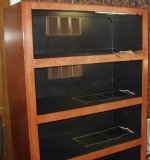
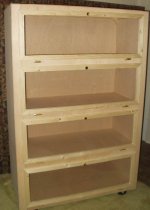
Well I am almost done with my bookcase style enclosure. It is 6'x4'x2' with four seperate enclosures 17" tall. It is built from 3 sheets of 1/2" birch plywood with a full frame of 1x2's. The 1/8" plexiglass doors are also framed in 1x2's. Heating will be provided by 2'sections of heat tape in every cage controlled by 1 Big apple proportional thermostat, running through seperate dimmers for each enclosure. The dimmers are needed to adjust the temps for my colubrids, who are sharing this cabinet with 2 Columbian boas. I planned on staining/urethaning the whole cage with water based products, but have heard that the water based urethanes do not hold up well. I will be maintaining 50-60% humidity levels and I need something that I will not have to re-apply every year or so. Any ideas?
 

Attachments

  • Resize of Rotation of P4180013.jpg
    Resize of Rotation of P4180013.jpg
    56.7 KB · Views: 256
Wow that is nice! I wish that I could make cages that look that good.

I know nothing about woodworking or staining so I'm no help to you whatsoever.

So when you Git R Done, post a finished picture of it.
 
I would look into a marine grade varnish, the stuff they use on exposed wood on boats. That should give you a longer life. Seen it on tv once, I have never actually used it. Good Luck!!
 
Sam, that cage unit looks great! Lucky snakes :hehe:

I've never used marine grade varnish like Bill mentioned, so I don't know if that would do the trick, but if it's used for marine applications... I tried the water-based polyurethane on an actual bookcase once and wasn't impressed. I haven't used oil-based polyurethane on any cages, but I did put seven coats of it on a bay window sill two years ago. It took forever, but I didn't want overflow from watering the plants to wreck it. So far it hasn't left a single stain, even after a house-sitter WAY over-watered a plant and left a pond of water on the sill for several days. I figure if it held up to that, that it would hold up well to high humidity applications, but it's just a hunch.

Good luck with whatever you decide, and like I said, I think it's looking great so far.
 
Remember, the slower-drying (and more waterproof) varnishes and finishes can have a lot of toxic gases in them that release during curing (and after).... so make sure to wait a good long while for anything nasty to "off-gas" before you put a reptile in there. Some people wait as long as a month after just to make certain.
 
That is a beautiful cage. I love furniture style caging.
As for the finish, I always use Minwax oil based stain and polyurethane. I've been using it for years and it works very well. As mentioned though the fumes are a concern. You must let the cage cure before putting it in service.
I try to build most of my cages in the summer, then I can sit them outside to bake in the sun for 3-5 days. In the colder months I let them cure 2-4 weeks or until I can no longer smell any fumes.
I've never had any ill effects with this method.

On the floor of the cages though I no longer bother to stain them or seal them with polyurethane. I used to use 5 coats of poly on the cage floors to seal them, now I use linoleum. I get a cheap version in cut rolls at Lowe's for 75 cents per square foot or so. I don't use any of the pretty patterns, that makes the price go up and with the substrate you never see the linoleum anyway.
I cut a piece about an inch too big both ways then attach it with contact cement and trim the edges. It's far superior and easier to clean than polyurethaned wood.
I'm looking for a smooth linoleum with no squares or ridges or anything in a solid color like forest green. If I can find that I'm going to start doing the interior walls too.
 
Wow Sam, Beautiful enclosure.
Marine grade varnish is great, but it is sort of addresses problems I don't think you are concerned with. Exterior marine grade varnishes, Spar Varnish is a good national brand and good to work with, are formulated to be sun/UV resistant, hence the amber color. They are like sun block for wood protecting it from sun damage. They do seal the wood from water but any good sealer / polyurethane / varnish will do that. You want something that is easy to work with, protects your new piece of furniture from harm and protects your reptiles.

Furniture finishers would stain the piece first then apply a coat or two of sanding sealer. This will raise the grain and enable you to sand it smooth. As far as a finish, I think the best thing to use is Oxford Hybrid Spar Varnish. The high gloss and depth of-clarity of Oxford Hybrid Spar Varnish is exceptional. It features a traditional amber varnish color, but with all the benefits of a water-based coating-fast-drying, low odor, nonflammable, water cleanup, and VOC compliance. If you want something less glossy regular interior polyurethane will do the trick. And as Clay said, Minwax makes a good one.
 
Thanks for all the compliments and advice from everyone! Unfortunately I have not had much time to work on it so it's still not finished. I decided to uses stain/poly on the outside and a black semi gloss on the inside. I also plan on using linoleum for the floor as Clay mentioned. Clay, I know your a big fan of heat tape, which is also what I'm using. Do you put the heat tape below or above the linoleum? I was worried about "cooking" the linoleum and giving off fumes if the heat was below. Also you mentioned buying linoleum 1-2" longer than needed. Do you cut and fold the excess and glue to the walls? Do you have any pics of a cage with linoleum? Here is an updated pic showing one of it's future occupants.
 

Attachments

  • Resize of cage.jpg
    Resize of cage.jpg
    85.8 KB · Views: 145
i myself like to use poly-acyrlic by minwax. it comes in different glosses as well. and the toxic factor is really not an issue(never had a problem with any of my animals) good luck ,ted
 
Do you put the heat tape below or above the linoleum? I was worried about "cooking" the linoleum and giving off fumes if the heat was below. Also you mentioned buying linoleum 1-2" longer than needed. Do you cut and fold the excess and glue to the walls?

I put the heat tape on top of the linoleum. Putting it underneath would raise the possibility of overheating due to lack of air flow.
I also silicone it to the linoleum. This prevents substrate from getting under it and keeps the snakes from trying to use it as a hide.

I buy the linoleum in big pieces. The rolls are 8 feet long and I'll but 6 feet at a time, meaning one piece 6x8. Then I just cut pieces out as I need them. The reason I cut it bigger than needed is to avoid having to worry about getting it perfectly centered. I just put down the contact cement and attach the linoleum to the bottom so that at least a little is hanging over all the way around. Then I take a razor knife and trim the excess so the entire floor is covered.
In the joints where the floor meets the walls I usually use liquid nails. This increases the strength of the joint and also helps seal in.
 
Personally, I would put the heat tape under the linoleum. Heat tape does not need air space to breath. Numerous cage manufacturers (ie Boaphile etc) use this same method with their in cage heating systems. I have used Flexwatt in numerous situations where it was sandwiched inbetween with no air space with out ever a problem.

Also, if you space it properly, you can use the self adhesive vinyl 12 inch square flooring but make sure you properly adhere the Flexwatt to the flooring first. Good luck!

Griz
 
I've never sandwiched Flexwatt tight like that, I've just always been concerned about the potential heat build up.
One thing about the Boaphile cages though, he uses a different type of flexwatt than is regularly available. It's a low wattage type. A panel of his 21"x22" draws 17 watts, whereas 2 feet of 11" wide regular flex pulls 40 watts.
He does use the 11" in his racks, and says this about it on his website:

Our racks are built using the 11" - 20 Watt per lineal foot material. Because of this higher wattage a ½" air gap is allowed for this Flexwatt allowing the heat to disperse properly as is recommended.
I just prefer to let it breathe for my own peace of mind.

I have used the 12x12 vinyl floor tiles though. Apparently you really need to prepare the surface well by sanding the plywood. I applied the tiles and the next day went to install the lights. When I flipped the cage on its top the tiles started falling away. I went ahead and used them, but I glued them down with contact cement.
I had the same problem applying the tiles to a concrete floor in what is now my snake room. The adhesive backing just wasn't strong enough and I had to use contact cement there too.
 
A few notes:

Avoid any finish that says exterior, marine, or Spar. I won't get into all of the details, but there are direct tradeoffs between water resistance and resistance to specific outdoor elements (i.e. sunlight and expansion/contraction).

For an indoor reptile cage you want to use the hardest finish you can find that can still withstand the expansion and contraction that the cage will experience throughout the year. Exterior and/or spar finishes are too flexible for indoor applications and will actually be less water resistant in a reptile cage.

Oil based finishes can and have been used. But understand they are known to offgass for months on end. Be very patient with these finishes and apply several thinned coats rather than a few thick coats. Awesome protection for the cost but I still avoid them. Really not necessary for cage walls when a vinyl or plastic flooring will be used (I highly recommend this, by the way).

The Oxford Hybrid Spar is an incredible finish. But they also make a floor finish that would be more suitable for an indoor reptile enclosure.

Other waterborne finishes worth considering:

Bonakemi Traffic - a two part catalyzed urethane. Hard to find in small quantity. Expensive. Awesome finish and user friendly.

Kelly Moore Envira-Poxy - awesome finish and pretty cheap (usually). Also hard to find in small quantity. A bit fussy to apply but suitable for woodworking. Great for scratching species, although maybe not for Komodo Dragons, LOL.

Fure and General Finishes both make one-part urethanes that are very good. Much better than the Minwax or Varathane products you can get at your local store. I forget the specific product names. Should be available in small quantities. Might not be the best for lizards or other species that scratch.

I have also used a polymer-based bartop epoxy. It is solvent free. I like it but it is not ideal for species that scratch or that need very high localized temperatures. Ends up being expensive due to how thick it has to be applied.
 
Oh yeah, regarding heat tape.

These products work best when in direct contact with a thermal mass source. They are actually more in danger of overheating when they don't touch anything.

For the best of both worlds, have the heat tape in direct contact with the cage floor but then have an air-space underneath. Even better, have a radiant barrier below the heat tape but not in direct contact. I use Reflectix insulation.

So you should not necessarily sandwich the stuff tight unless the material is a good transmitor of heat. But it does very well when it direct contact with a thermal mass source.
 
Excellent info on the finishes Chris. I tried to give you some karma but apparently I've given you some sometime in the past and the new stingy system wouldn't let me.

I particularly appreciated the info on the Spar finish. A friend of mine had recently suggested it but I wasn't familiar with its properties.
 
Thanks Clay. What are Karma points?

Also, I want to make a correction to my post. The best Oxford Hybrid finish would be the Hybrid Super-Clear Polyurethane. By best, I mean for the typical reptile cage that would be kept indoors. I'm not even sure if they make a floor finish. I have heard a lot of good things about this finish.

I don't know the cost or if it's available in small quantities, however.

Again, I want to stress that many of these waterborne (WB) finishes are more than durable enough for the typical reptile application. I say that assuming a plastic floor of some sort will be used. Given the ready availability of scrap linoleum, scratch & dent formica, and expanded PVC, etc., I think people are crazy not to use them for cage floors.

The one exception againsts WB finishes might be for a cage where there will be a layer of moist and/or acidic substrate. Semi-moist cypress mulch, for example. In this case a WB finish on the walls might start to break down where it is exposed to the substrate. Heck, even an oil-based finish would have trouble with these conditions. I'd either go with a two-part WB finish or extend the plastic flooring up the cage walls for a few inches.

A woodworker/reptile keeper who posts on another forum provided an interesting anecdote recently. Ten years ago he build plywood cages with formica floors and walls sealed with nothing more than Varathane WB poly. He has kept Rainbow boas in the cage exclusively for that time, using a paper substrate. He has noticed some discoloration of the finish but sees not apparent damage to the underlying wood.

WB Polys have come a long way in ten years. Any of the products I have mentioned will significantly out perform the WB Varathane that was available ten years ago. Know that even that finish has held up for ten years in a Rainbow Boa cage tells me a lot.
 
Thanks Clay. What are Karma points?

If you look underneath your name to the right you'll see a line that says Karma Power with a number out from it.
At the bottom of each post on the right is an icon of scales. Clicking that icon on someone's post allows you to give positive or negative "karma" points if you feel the post was particularly useful, or useless as the case may be.
If you click "User CP" on the upper bar of the page you'll go to your user control panel and can see who has given you points on which posts.

A while back, due to some isolated abuses by a few people, the system was changed so that you cannot give any one person additional points until you have given so many other people points as well.
An unfortunate side effect of that change was crippling the ability to use the system fully, and why I couldn't give you any points for the above post.
 
Well I am almost finished (again) and have one more question. I have decided to use linoleum and have all 4 pieces cut and ready to install. I will be extending the linoleum floor 2 inches up the walls on all 4 sides. My question is will silicone be ok to use to attach it, or should I use liquid nails? I want to stay away from contact cement because I need time to smooth everything out and get the corners straight. I really wanted to put the heat tape under the linoleum but it seems most everyone agrees that would not be wise. I am including a link to a cage building page that explains a good way to cut and fold the linoleum to make a "tray" out of it, with 2" walls. Let me know what you think about the adhesives.
http://www.reptile-cage-plans.com/articles/reptilecages/cageflooring.html
 
There are contact cements that allow a bit of time for repositioning. Not common items as far as I know, but they do exist.

I would be more inclined to use some sort of flooring adhesive that you could work with a notched trowel. I would use silicone for the cut edges where they meet the cage walls and in the corners. Or use some of the caulk designed for putting up mop-guard.

I liked that website. Neat idea.

sjenkins said:
Well I am almost finished (again) and have one more question. I have decided to use linoleum and have all 4 pieces cut and ready to install. I will be extending the linoleum floor 2 inches up the walls on all 4 sides. My question is will silicone be ok to use to attach it, or should I use liquid nails? I want to stay away from contact cement because I need time to smooth everything out and get the corners straight. I really wanted to put the heat tape under the linoleum but it seems most everyone agrees that would not be wise. I am including a link to a cage building page that explains a good way to cut and fold the linoleum to make a "tray" out of it, with 2" walls. Let me know what you think about the adhesives.
http://www.reptile-cage-plans.com/articles/reptilecages/cageflooring.html
 
Back
Top