


• In case most of you have not noticed, I made changes to the donation amounts as well as the durations for all of the paid membership levels. Things are winding down here, and this seems to be the most prudent way to deal with the "end of life" period of this site.

    Contributor level members - $10 per 30 days
    Sponsors - Eliminated
    Benefactor level members - $25 per 30 days
    Endowment level members - $50 per 30 days

    Account Upgrades Page
  • Responding to email notices you receive.
    **************************************************
    In short, DON'T! Email notices are to ONLY alert you of a reply to your private message or your ad on this site. Replying to the email just wastes your time as it goes NOWHERE, and probably pisses off the person you thought you replied to when they think you just ignored them. So instead of complaining to me about your messages not being replied to from this site via email, please READ that email notice that plainly states what you need to do in order to reply to who you are trying to converse with.

Amyae group

What kind of roaches are those, and do the amyae like them alot?

Hi Kelli,

I myself got a starter colony of these roaches for my knobtails and a I did feed a few just to try them and my Amyae's
devour them. I did try them with a few of my other knobtails and they loved them. I highly recommend the use of these roaches.

Alberto

PS Hey James you got a few nice red ones there, I'm looking to get a few more for myself.
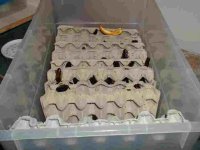
 
roaches

I started breeding roaches when I kept frilled dragons. In the last two years roaches have become a very popular feeder. They are easy to keep, easy to breed, most species have little to no smell, they have a high meat to shell ratio, and live a lot longer than crickets. More people have realized that these are not like your household pest, but a tropical roach that requires certain conditions to survive. They are a very nature feeder, and most reptiles I've tried them on jump all over them. Like anything they do have their downsides. They take a lot longer to establish a colony than most feeders and are expensive to get started. Many people jump into the hissers or lobsters which is a mistake. Hissers have a harder shell than some of the other species and unless you have monitors really are hard for anything to eat after they are two to three months old. Both the hissers and lobsters climb and are easy to contain, but harder to feed. I strongly recommend the non-climbers to everyone. Although they breed a little slower, discoids, orange spots, and death heads all make great feeders. I think roaches will continue to grow as a feeder in this business.
James
 
are the nymphs to big to use as feeders for Leopard gecko's? if not, has anyone tried to feed them to they're Leo's yet? just curious, wouldn't mind starting a colony if they would/could eat them, because i'm sure my beardies would make short work of them, and they seem alot easier to breed them crickets.
 
Happy Jack said:
are the nymphs to big to use as feeders for Leopard gecko's? if not, has anyone tried to feed them to they're Leo's yet? just curious, wouldn't mind starting a colony if they would/could eat them, because i'm sure my beardies would make short work of them, and they seem alot easier to breed them crickets.
I have had a group of orange roaches for several months now , since late last summer. The group is soem 50 adults and I've had around 200 or so babies I pulled for breeding which are no growing up, some are subadults. The nyphms are only .25'' when they are born and don't grow all too fast I heven't feed any to my leos yet do.
Xavier
 
roaches

The nymphs start out at 1/8" and can be fed off at any size to leos no problem. Roaches have way less shell content than mealworms which are a common food item for leos. The real trick with roaches is just sitting back for several months and letting your colony grow. You really have to buy them and feed them for six months before even thinking of feeding some off. In a few months I will be producing enough to sell them more to the public and have thought about selling a few of each in a package so people can try them. This is how I rate the ones I have in the order I like them. I also say fast or slow. I think this is important because some animals like the movement, and other want something easy to catch.

1. Blaptica dubia/orange spotted roach. These are good breeders and have very little to no odor. This is a slower moving roach and the nymphs often like to play dead (very easy to scoop up). The one big plus with this roach is how easy they are to sex. Males have wings and females do not. These roaches cannot climb or fly.

2. Blaberus discoidales/discoids. This roach is also reffered to as the false death head. They are good breeders and have very little to no odor. This is a fast moving roach,but they cannot climb or fly.

3. Blaberus crannifer/Death's head roach. These are good/to slow breeders and get a little larger than the other species. Very fast moving nymphs. These have little to no odor and cannot climb or fly. I like to use these and the disciods for my geckos that like a little more action.

4. Eublaberus prosticus/Orange head roach. These a good/great breeders. They are a little slower and tend to bury themselves in the substrate. This roach in group has the strongest defense odor. Singles really don't put off much and the reptiles don't mind a bit. They cannot climb or fly. These roaches are wing bitters and sometimes can chew on stuff like crickets. This roach is really good for the aggresive feeders like dragons.

5. Eublaberus distanti/6-spot roach. These guys are tanks. These roaches are slower breeders and cannot climb or fly. These are really good for large lizards especially monitors. Very heavy bodied roach that can weight several grams as nymphs.

6. Blaberus gigantues/giant cave roaches. I actually just sold this group because I don't think they make the best feeders. Very slow breeders with poor bloodlines. Tend not to live to long and just really never worked well for me.

7. Nauphoeta cinerea/lobsters. A very very coomon roach in this business. Very very fast breeders and about the size of a cricket. Sounds good, but the as very fast and can climb. Easy to keep in a container with some vaseline around the top, but kind of a major pain to dump in your reptile cage and leave. They will escape. Good thing they are not a pest and will not infest your home. If you buy these be ready to produce thousands in no time.

I have tried hissers and I really don't think they are a great feeder. I will be working with some more species soon and update the list.
James
 

Attachments

  • dubiacolony#2.jpg
    dubiacolony#2.jpg
    16.2 KB · Views: 184
roaches

Type in there name and you will find listings. I only have the Eublaberus distanti and Eublaberus prosticus ready for sale. Plus about my next thousand Blaptica dubia are already awaitng buyers, but I should have more ready soon. Look around and see what you find.
James
 
i found a few sites doing a search, most want about 25 dollars for a dozen, is this a good price?

i'm still trying to talk my wife into getting them, it's funny ebcause she handles and breeds crickets, mealworms and supers, but so fare is set againts roaches, she makes faces every time i bring it up, lol
 
roaches

I usually charge $50-$75 per 100 based on their size. My wife hates crikets and everything else reptile related, and she is OK with them. 2+ years of keeping them and not a single one in the house, and when I used crickets they where always in the house. Most people that get them email back and say they arn't as bad as they thought they would be. Just having a bug that doesn't stink is very nice. The don't make noise, easy to clean, and easy to breed. The only real downside to roaches is they breed much slower than other feeder insects. It takes some time but you keep raising your babies till you get a good size colony and then you have a great food source. I'm feeding 17 geckos with them every night. That is about 500 roaches a month. It would take me at least 2,000 cricket to do the same thing and my geckos get more nutritional value from the roaches. Being that I am sane and not stupid, I could sell these roaches for $250+ every month and buy $30 in crickets, but I think there value to my animals in worth more. One more thing, a year ago I bred frilled dragons. My three females laid 16 clutches and I hatched over 75+ babies. Very few people have had this much luck breeding frilleds. I think a lot had to do with them keeping weight on by feeding on roaches everyday. Anyway just my 2 cents.
James
 
Back
Top