• Responding to email notices you receive.
    **************************************************
    In short, DON'T! Email notices are to ONLY alert you of a reply to your private message or your ad on this site. Replying to the email just wastes your time as it goes NOWHERE, and probably pisses off the person you thought you replied to when they think you just ignored them. So instead of complaining to me about your messages not being replied to from this site via email, please READ that email notice that plainly states what you need to do in order to reply to who you are trying to converse with.

  • IMPORTANT! PLEASE READ!! About the Google Adsense ads being displayed

    =====================
    Posted 08/15/2025
    =====================


    Yeah, I know. They are a pain in the butt. But they pay the bills to keep my server running. Just a fact of life, I am afraid.

    Want to get rid of them? Simple. Just become a Contributor level member or above and they will be gone. -> Please click HERE."

    Is that too much for me to ask of you to keep this site running? Well, sorry about that. I too wish I could get everything for free. But alas.....

    =====================
    Addendum: 01/10/2026
    =====================


    Google Adsense ad revenue for December, 2025 was just $30 over the cost of the lease for the server running this site. So, in effect, the money providing the incentive for me to continue running this site is coming SOLELY from the paid memberships and sponsorships here. Which honestly ain't much....

Boa Identification Help

jconway2208

New member
Joined
Mar 5, 2016
Messages
10
Reaction score
0
Points
0
Location
Colfax, CA
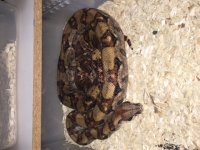
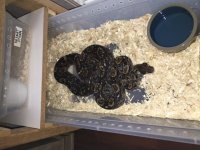
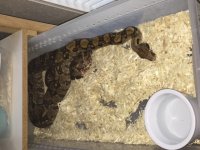
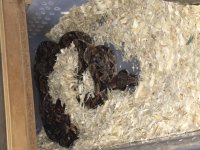
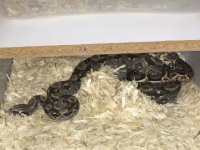
We recently inherited some boas. The owner was a widow whose husband had been collecting for over 20 years, and recently got rid of most of his animals prior to dying. We ended up with 6 boas, but she (and we) are unsure of what we have. She said she knows one is het T-pos, but not sure which one, and doesn't know what that recessive gene is or does, only that her husband was excited to know it proved out. I am hopeful somebody out there can help us identify these animals.
:shrug01:
 

Attachments

  • Boa2.jpeg
    Boa2.jpeg
    140 KB · Views: 146
  • Boa6.jpeg
    Boa6.jpeg
    145 KB · Views: 150
  • Boa4.jpeg
    Boa4.jpeg
    130 KB · Views: 150
  • Boa5.jpeg
    Boa5.jpeg
    134.1 KB · Views: 121
Ah, I see now what you were asking about. I am still not super comfortable with IDing boas but the first and third look like leopards or IMG to me. I would wait for input from someone with more experience to respond though.
 
Looks like a lot of Central Americans with some being hypo. Not IMG or Leopard, though. Some CA boas just get really, really dark as adults.
 
I agree. The second looks hypo, the rest look like normal. (no way to tell which is het at this point unless you can find some old photo id records or through breeding)
 
We recently inherited some boas. The owner was a widow whose husband had been collecting for over 20 years, and recently got rid of most of his animals prior to dying. We ended up with 6 boas, but she (and we) are unsure of what we have. She said she knows one is het T-pos, but not sure which one, and doesn't know what that recessive gene is or does, only that her husband was excited to know it proved out. I am hopeful somebody out there can help us identify these animals.
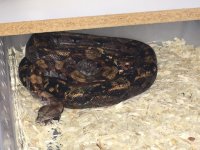
Those are some great looking snakes! I can't help with the ID's, but if the widow has access to her late husband's email account she may be able to find correspondence between her husband and the prior owners. If she finds anything hopefully they have records of what you've got.
 
Back
Top