
R. Eventide
So say we all!
Hey, everyone! Long time, no see! 
One of the questions I hear a lot from new BP owners is, "How much should my BP weigh at ** months/years?" There are lots of things I'm keeping track of with regards to my own ball pythons and FAQs, and one of them is growth rates.
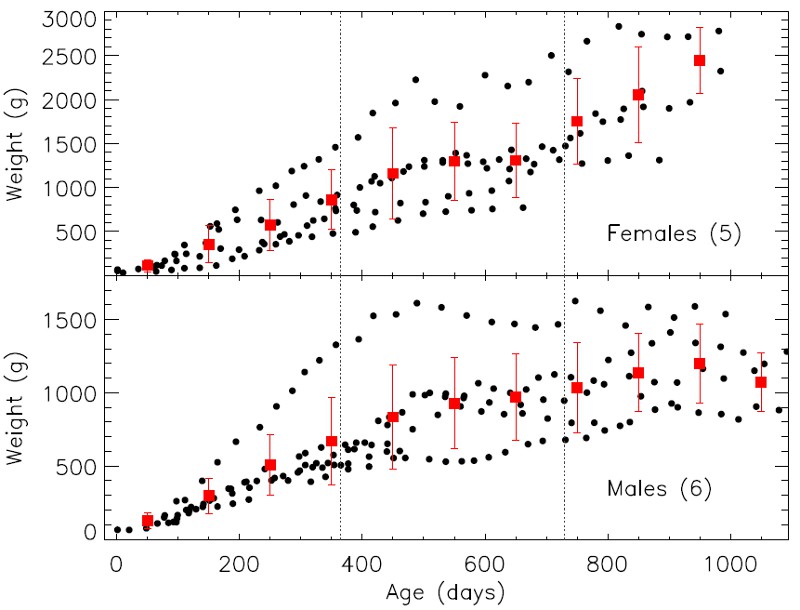
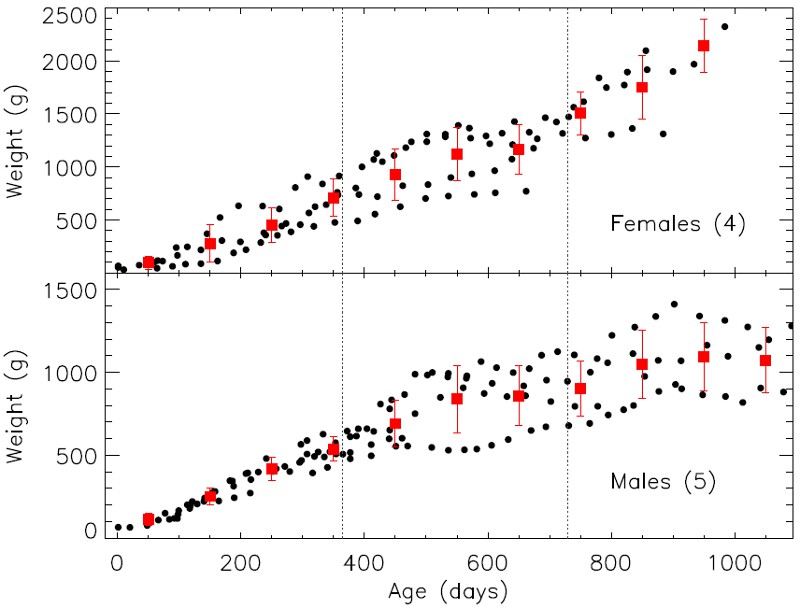
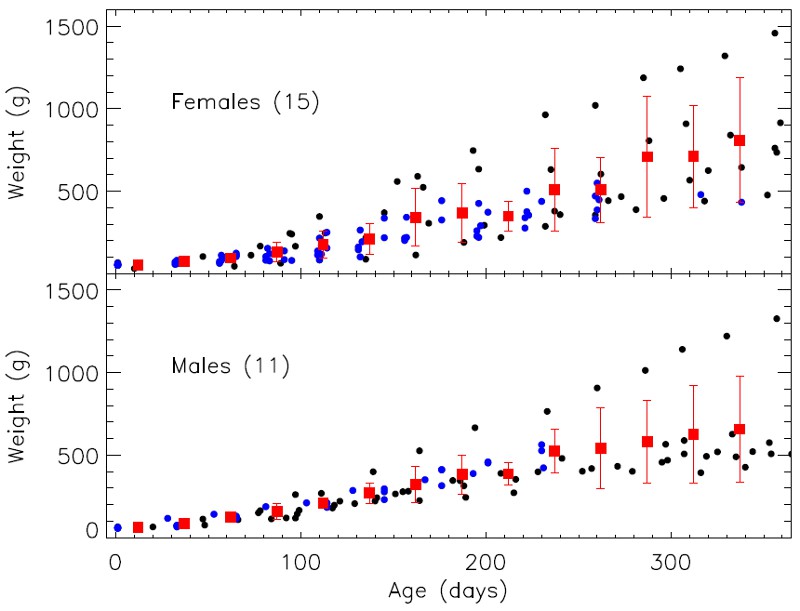
Below are plots of weight with respect to age for most of my ball pythons. (Y'all are stuck with Excel graphs for now, sorry. Once I get off my butt, I'll be plotting this in IDL with a trendline and 1-sigma error bars.) Because of the few number of snakes listed, the errors in these are going to be rather large; however, I thought I'd post 'em here for now as a reference. I will continue updating these, of course, and I'll try to re-post the charts every so often (especially when I do them properly).
I'm not saying these are the "be all, end all" of "proper" BP growth; I'm just showing what mine usually do.
Please note: Europium and Ferrum are outliers (i.e. not normal with respect to the rest of the snakes).

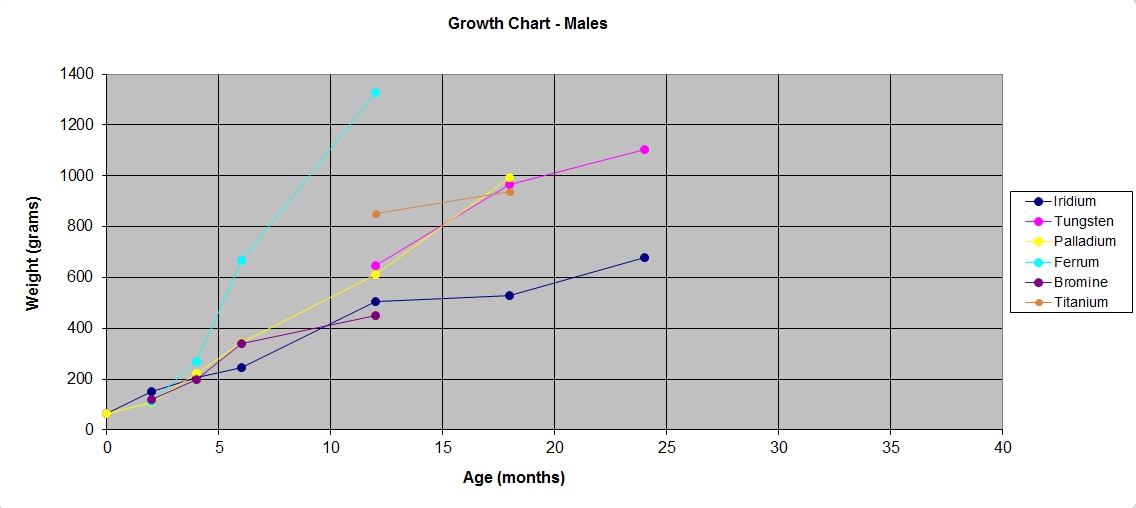
If anyone would like to include their snakes, feel free! I'd love additional data. (And yes, you will be cited...not that these data are going to be published or anything, but it's still a good practice.) However, please note the following guidelines:
1. I've broken down the time into the following bins: 0 (hatch weight), 2, 4, 6, 12, 18, 24, 30, 36, 42, 48 months for females and up to 36 months for males. Round to the nearest one, if you can. (But don't worry too much about accuracy; some of these are averaged values between weighings, so just use your best judgment.)
2. Please only include female weights up until follicle development during their first breeding season; I don't want the data contaminated by the changes that occur with breeding.
3. If you received the snake when it was, say, 6 months old, don't estimate the weight prior to then; start at 6 months and go from there.
4. If you power-feed, if a snake is a poor feeder, or if your snake has other issues that would make its growth atypical, don't include it, please. You can include snakes that eat normally but seem to grow abnormally slowly or quickly (like Eu and Fe above), but if there's obviously something wrong, then don't include those data. (For example, Xenon, my female Woma, is not here because she has a severe wobble and is a terrible eater. She's almost two years old and is still less than 400 grams.)
Other comments, as always, are encouraged and appreciated.
One of the questions I hear a lot from new BP owners is, "How much should my BP weigh at ** months/years?" There are lots of things I'm keeping track of with regards to my own ball pythons and FAQs, and one of them is growth rates.
Below are plots of weight with respect to age for most of my ball pythons. (Y'all are stuck with Excel graphs for now, sorry. Once I get off my butt, I'll be plotting this in IDL with a trendline and 1-sigma error bars.) Because of the few number of snakes listed, the errors in these are going to be rather large; however, I thought I'd post 'em here for now as a reference. I will continue updating these, of course, and I'll try to re-post the charts every so often (especially when I do them properly).
I'm not saying these are the "be all, end all" of "proper" BP growth; I'm just showing what mine usually do.
Please note: Europium and Ferrum are outliers (i.e. not normal with respect to the rest of the snakes).
If anyone would like to include their snakes, feel free! I'd love additional data. (And yes, you will be cited...not that these data are going to be published or anything, but it's still a good practice.) However, please note the following guidelines:
1. I've broken down the time into the following bins: 0 (hatch weight), 2, 4, 6, 12, 18, 24, 30, 36, 42, 48 months for females and up to 36 months for males. Round to the nearest one, if you can. (But don't worry too much about accuracy; some of these are averaged values between weighings, so just use your best judgment.)
2. Please only include female weights up until follicle development during their first breeding season; I don't want the data contaminated by the changes that occur with breeding.
3. If you received the snake when it was, say, 6 months old, don't estimate the weight prior to then; start at 6 months and go from there.
4. If you power-feed, if a snake is a poor feeder, or if your snake has other issues that would make its growth atypical, don't include it, please. You can include snakes that eat normally but seem to grow abnormally slowly or quickly (like Eu and Fe above), but if there's obviously something wrong, then don't include those data. (For example, Xenon, my female Woma, is not here because she has a severe wobble and is a terrible eater. She's almost two years old and is still less than 400 grams.)
Other comments, as always, are encouraged and appreciated.
Last edited: