• Responding to email notices you receive.
    **************************************************
    In short, DON'T! Email notices are to ONLY alert you of a reply to your private message or your ad on this site. Replying to the email just wastes your time as it goes NOWHERE, and probably pisses off the person you thought you replied to when they think you just ignored them. So instead of complaining to me about your messages not being replied to from this site via email, please READ that email notice that plainly states what you need to do in order to reply to who you are trying to converse with.

  • IMPORTANT! PLEASE READ!! About the Google Adsense ads being displayed

    =====================
    Posted 08/15/2025
    =====================


    Yeah, I know. They are a pain in the butt. But they pay the bills to keep my server running. Just a fact of life, I am afraid.

    Want to get rid of them? Simple. Just become a Contributor level member or above and they will be gone. -> Please click HERE."

    Is that too much for me to ask of you to keep this site running? Well, sorry about that. I too wish I could get everything for free. But alas.....

    =====================
    Addendum: 01/10/2026
    =====================


    Google Adsense ad revenue for December, 2025 was just $30 over the cost of the lease for the server running this site. So, in effect, the money providing the incentive for me to continue running this site is coming SOLELY from the paid memberships and sponsorships here. Which honestly ain't much....

Fun fact about Ivermectin....

WebSlave

It is what it is, but certainly not what it was.
Staff member
Staff
Joined
Feb 3, 2002
Messages
20,512
Reaction score
866
Points
113
Location
Crawfordville, FL

Ivermectin treatment in humans for reducing malaria transmission​


Background​

Malaria is transmitted through the bite of Plasmodium‐infected adult female Anopheles mosquitoes. Ivermectin, an anti‐parasitic drug, acts by killing mosquitoes that are exposed to the drug while feeding on the blood of people (known as blood feeds) who have ingested the drug. This effect on mosquitoes has been demonstrated by individual randomized trials. This effect has generated interest in using ivermectin as a tool for malaria control.

SOURCE: https://www.ncbi.nlm.nih.gov/pmc/articles/PMC8240090/

Actually the source article seems like a hatchet job on Ivermectin. Administering the drug one dose every 3 weeks is WAY, WAY under treatment to be effective for anything. But par for the course when the government has anything to say about Ivermectin, it appears.

 
Actually, the study is not a disease treatment study. It is a potential disease prevention study. It is a "kill the vector" study. The base known fact is: ivermectin in low doses kills mosquitoes. In a community (humans), mosquitoes move from one person to another - thus spreading the disease. So the question was: "if we kill enough mosquitos via low doses of ivermectin in the community (humans), might this reduce incidence of malaria because there are fewer mosquitos going from human to human?". The answer is: "such is not clear based on this small study". Seems like a fair and reasonable study with fair and reasonable conclusions. ("The study did not demonstrate an effect of Ivermectin on the cumulative incidence of uncomplicated malaria in the cohort of children over the 18‐week study" - meaning, humans continued to get malaria from mosquito vector bites.)

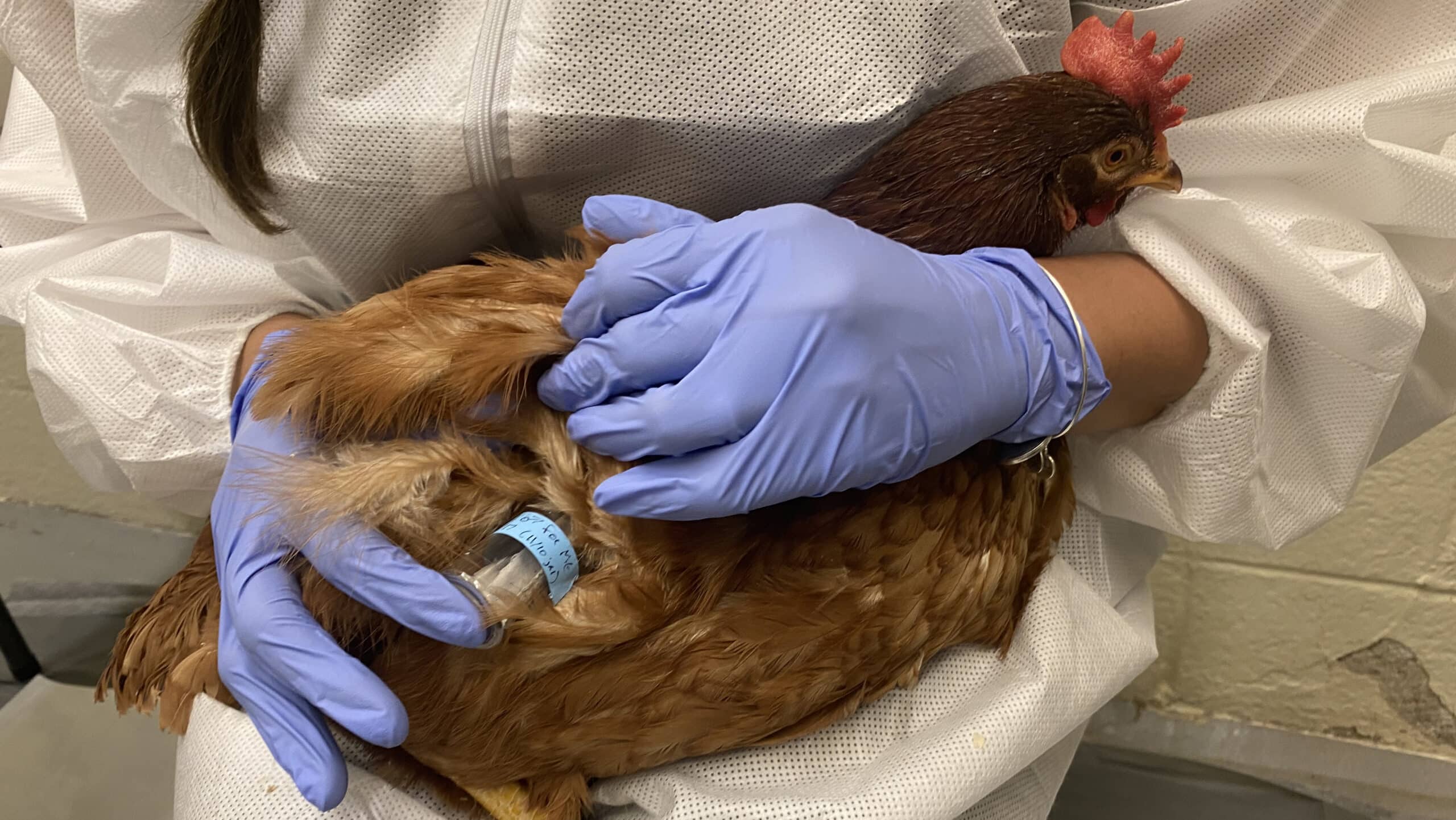
To continue, a basis of the study in humans is that veterinary medicine studies have shown that ivermectin in cattle does indeed kill mosquitos who feed on cattle / horse / etc. blood. Interestingly, since ivermectin is so commonly used in agriculture, such treated ag animals may well be at least a small value in controlling mosquito disease vectors that impact humans. Recently, ivermectin has been approved in non-U.S. countries for use in poultry as a vector control.

Other potential uses of ivermectin in terms of killing vectors include ticks, fleas, and bed bugs.

It's a clever approach to disease prevention: let the host humans (or animal) carry the agent to kill the disease carrying vector(s) and thereby offer increased protection for the community.
 
This is actually a pretty common strategy used by many insects. Eating plants that will give the insects an unpleasant taste, or even make them toxic to predators snacking on them. So I don't think it real far fetched for humanity to use such a technique to it's own advantage when it comes to tiny predators wanting to make a meal of our blood. Actually I would find it quite amusing and imminently satisfying to find myself fatally toxic to any creature that succeeded in taking a nip out of my flesh or a sip of my blood.
 
Interesting about ivermectin:


I have been taking Ivermectin for about 3 years and at some point my vision improved dramatically. A friend of mine also started taking it a little while back and he commented on his own vision improving as well. Just food for thought, I guess.
 
Back
Top