cold blood reptiles
New member
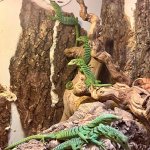
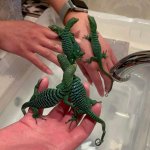
Varanus prasinus, commonly known as the green tree monitor, is a species of monitor lizard in the family Varanidae. Here's a more detailed look at this fascinating species:
Physical Description
Coloration: As the name suggests, the green tree monitor is typically a vibrant green, though the shade can vary from a bright lime green to a more muted, olive green. They also have darker markings along their bodies.
Size: These lizards are relatively small compared to other monitors, with adults typically reaching lengths of around 3 feet (about 90 cm), including their tail.
Habitat
Native Range: Varanus prasinus is native to New Guinea and nearby islands, such as parts of Papua New Guinea and the surrounding smaller islands.
Arboreal: They are primarily tree-dwelling (arboreal) and can be found in forested areas, particularly in regions with dense canopy cover. They often prefer humid, tropical environments and are known to spend much of their time in the upper parts of trees.
Behavior and Ecology
Diet: Green tree monitors are carnivorous, feeding on insects, small vertebrates (such as birds and rodents), and occasionally the eggs of other animals. Their diet can vary depending on the availability of food in their environment.
Climbing Skills: Their long tail and sharp claws are ideal for climbing, and they are very agile and fast-moving in the trees.
Reproduction
Egg Laying: Green tree monitors lay eggs, typically a few at a time. The eggs are buried in the substrate or hidden in crevices to avoid predators. The incubation period for the eggs can last several months, depending on temperature and humidity conditions.
Physical Description
Coloration: As the name suggests, the green tree monitor is typically a vibrant green, though the shade can vary from a bright lime green to a more muted, olive green. They also have darker markings along their bodies.
Size: These lizards are relatively small compared to other monitors, with adults typically reaching lengths of around 3 feet (about 90 cm), including their tail.
Habitat
Native Range: Varanus prasinus is native to New Guinea and nearby islands, such as parts of Papua New Guinea and the surrounding smaller islands.
Arboreal: They are primarily tree-dwelling (arboreal) and can be found in forested areas, particularly in regions with dense canopy cover. They often prefer humid, tropical environments and are known to spend much of their time in the upper parts of trees.
Behavior and Ecology
Diet: Green tree monitors are carnivorous, feeding on insects, small vertebrates (such as birds and rodents), and occasionally the eggs of other animals. Their diet can vary depending on the availability of food in their environment.
Climbing Skills: Their long tail and sharp claws are ideal for climbing, and they are very agile and fast-moving in the trees.
Reproduction
Egg Laying: Green tree monitors lay eggs, typically a few at a time. The eggs are buried in the substrate or hidden in crevices to avoid predators. The incubation period for the eggs can last several months, depending on temperature and humidity conditions.