-
 In case most of you have not noticed, I made changes to the donation amounts as well as the durations for all of the paid membership levels. Things are winding down here, and this seems to be the most prudent way to deal with the "end of life" period of this site.
Contributor level members - $10 per 30 days
Sponsors - Eliminated
Benefactor level members - $25 per 30 days
Endowment level members - $50 per 30 days
Account Upgrades Page -
Responding to email notices you receive.
**************************************************
In short, DON'T! Email notices are to ONLY alert you of a reply to your private message or your ad on this site. Replying to the email just wastes your time as it goes NOWHERE, and probably pisses off the person you thought you replied to when they think you just ignored them. So instead of complaining to me about your messages not being replied to from this site via email, please READ that email notice that plainly states what you need to do in order to reply to who you are trying to converse with.
You are using an out of date browser. It may not display this or other websites correctly.
You should upgrade or use an alternative browser.
You should upgrade or use an alternative browser.
For Sale Hawaiian mourning geckos
- Thread starter Jordanyukio3
- Start date
-
- Tags
- gecko
Socratic Monologue
Well-known member
Very nice.
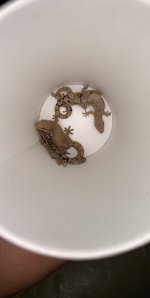
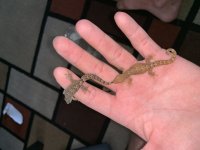
I've often wondered how a person can tell which are the 'Hawaiian'. It looks as if you have a couple different types there. Any insight into distinguishing the Hawaiian ones?
I've often wondered how a person can tell which are the 'Hawaiian'. It looks as if you have a couple different types there. Any insight into distinguishing the Hawaiian ones?
Jordanyukio3
New member
i know ive seen breeders list the hawaiians as different "types" like type a type b type c , but i do not know the criteria to classify them as if.
Socratic Monologue
Well-known member
OK. On what grounds do you call yours Hawaiian, then?
Jordanyukio3
New member
also i notice hawaiians get way lighter at night
Jordanyukio3
New member
like i said under, lighter colored and pattern

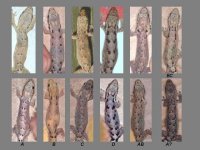
Type A mourning geckos, which are the most common variety in the hobby, also turn light at night or when kept in a dark enclosure. Although type A may or may not occur in Hawaii, they aren't what people are referring to when they say "Hawaiian" morning geckos. Types B and D, with their bold spotting, are considered "Hawaiian".
The geckos in the photos appear to be both Hawaiian and the more common type A.
The geckos in the photos appear to be both Hawaiian and the more common type A.

James L
New member
If I'm not mistaken, there are 3 "strains" of Hawaiian Mourning Geckos recognized. Theres lots of variation in each strain but a general look for each. A university (can't remember which or find link at moment) did a study on partho behavior of HMG's and part of the article talked a little about the 3 stains. If I remember correctly, A is high spot, B is med spot camo look and C is what we would all call normal or regular. All 3 strains can be found living with each other too.
Temperature and mood has a lot to do with how light in color a MG can get. Also, the look of a strain can change over just a few generations. Not too dramatically but spots increase, more or less color etc.
Temperature and mood has a lot to do with how light in color a MG can get. Also, the look of a strain can change over just a few generations. Not too dramatically but spots increase, more or less color etc.
Socratic Monologue
Well-known member
So, James and Greg, is there any distinct phenotypic differences between Hawaiian MGs and all others? Or is the distinction a matter of locale origin only without any recognizable visual markers?