• Responding to email notices you receive.
    **************************************************
    In short, DON'T! Email notices are to ONLY alert you of a reply to your private message or your ad on this site. Replying to the email just wastes your time as it goes NOWHERE, and probably pisses off the person you thought you replied to when they think you just ignored them. So instead of complaining to me about your messages not being replied to from this site via email, please READ that email notice that plainly states what you need to do in order to reply to who you are trying to converse with.

  • IMPORTANT! PLEASE READ!! About the Google Adsense ads being displayed

    =====================
    Posted 08/15/2025
    =====================


    Yeah, I know. They are a pain in the butt. But they pay the bills to keep my server running. Just a fact of life, I am afraid.

    Want to get rid of them? Simple. Just become a Contributor level member or above and they will be gone. -> Please click HERE."

    Is that too much for me to ask of you to keep this site running? Well, sorry about that. I too wish I could get everything for free. But alas.....

    =====================
    Addendum: 01/10/2026
    =====================


    Google Adsense ad revenue for December, 2025 was just $30 over the cost of the lease for the server running this site. So, in effect, the money providing the incentive for me to continue running this site is coming SOLELY from the paid memberships and sponsorships here. Which honestly ain't much....

Help With Collared Lizard's Eye!!

AdamR

New member
Joined
Apr 5, 2010
Messages
177
Reaction score
5
Points
0
Location
Fayetteville, AR, USA
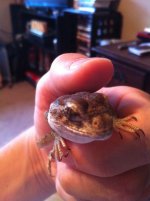
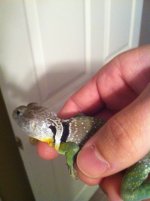
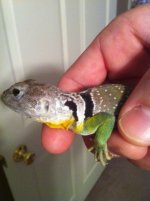
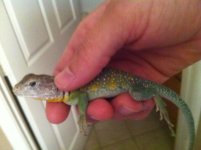
I just got back to my apartment after being gone for a few days and I noticed that my collared lizard wasn't coming out of her hide, which is strange because she always comes out when she hears a lot of noise in the room. I pulled her out of her hide and saw that one of her eyes was completely crusted over and swollen. I can't tell if the eye is still intact but there is definitely something there still (I touched it gently to see if the eye had been torn out or something). Please let me know if anyone knows anything about this or what I should do! She has been with me for over a year and has done very well until now.

Here are a couple of pics I snapped before placing her back.
324.jpg

324.jpg
 

Attachments

  • 325.jpg
    325.jpg
    268.5 KB · Views: 150
I was able to get the scab off after a warm bath. The eye is definitely still intact and working (she was moving it freely and blinking), but there seems to be pressure coming from behind the eye. The socket is swollen :(
 
Take her to a vet

One word: Veterinarian.

You need to get her to a herp vet for diagnosis and treatment ASAP. Then you need to examine your setup once the vet determines if it was an injury or illness. If it is the latter, then it is usually temperature related or could be a bad uvb bulb.

What are your ambient and basking temps? (exact, not guessed)

What type uvb bulb are you using?

What type of substrate do you have her on?

Are there other lizards in the enclosure with her?
 
She is in a 40gal Breeder tank with a Powersun UV light. The basking temps stay in between 98-102F and the cool side is usually about 85. She and her tankmate are on a soil substrate with lots of piles of rocks rocks covering about 90% of the floor and a ceramic saucer as a water bowl. The two lizards have always gotten along and seem to enjoy each other's company and I have not seen any aggressive behavior to date. I feed them calcium dusted crickets and mealworms.
Her eye is still clear but the swelling has not gone down so I have made an appointment with a vet to make sure she gets the treatment she needs. I turned off the Powersun because I noticed her with her mouth gaping open yesterday. The bulb is about 13months old so I am going to replace it today!
 
Good. It sounds like you researched and have them set up well, but I would remove the substrate ASAP. Also, if you turn off that powersun, you need to put some temporary basking bulb on. They cannot be left without those basking temps.

When you say you were gone for a few days, did someone else take care of them or do you have your lights on timers?

Also, do you remove uneaten live insects at night?

Powersun bulbs made that long ago might have had problems. They did cause health issues when they first came out, and eye issues was one. I haven't kept up with the issues with MVBs lately, but I think the newer powersuns are good.

Please update this thread after you see the vet and best of luck!
 
Reptiles opening their mouths like that usually means they are just "panting", its there way of expelling excess heat, so i wouldnt be concerned about leaving it on. Powersuns are supposed to only expel as much uv as a cloudy mid-noon day. I think overexposure of MVB is usually a result from when UVC are allowed to escape. Powersuns have a coating on the inside that filters this out. Its possible it could be a nutritional deficiency. Collard lizards are predominately lizard eaters in the wild. Eitherway a vet check goes without question. I would keep them seperate from now on regardless if they got along before or not, no way you can tell they get along all the time or if they are stressing each other out just being in each others presence 24/7.
 
Sorry for taking so long, I really was too sad to type it out but the vet told me that she has simply reached the end of her time. He believe that she was an older girl and I received her in her last year of her life. I do not like this diagnosis, especially since she was seemingly healthy 2 weeks ago. Her eye is better now and the vet did drain some viscous liquid from behind her eye and she seems to longer have trouble with it. She has slowed her eating but is still somewhat active. I moved her friend to another tank per Haden's advice just in case it may help.
I do dust their food each day with Fluker's Calcium With D3. Is this not ok?
Thanks for your help Haden and Donna!
 
Adam,
I am sorry that the vet had such little optimism. Did he say that the swelling was related to kidney or liver disease? Either of these can cause edema. That does not mean that death is eminent, just sort of the beginning of the end, but well cared for animals can live a bit longer after they are diagnosed. If it isn't edema, then what did the vet say is obvious as far as her age, state of health, etc. Also, is this vet a herp vet?

Can you post a pic of your male? I might have a female or two around here that might be a good match for him. That does not mean that you should write your female off or anything, but she should be kept alone or with another female at this point. Collareds are very social, and males and females do very well together as long as they aren't sick or compromised. Females do fabulously together.

Hagenlock,
Collareds do eat smaller lizards in the wild sometimes, but I would not say that is their predominant diet. They eat far more bugs, especially grasshoppers, and they eat greens. Mine get salad at least every other day here. Collareds do beautifully on a diet of crickets, super worms, silks and hornworms if you can afford them, all supplemented with salad and calcium and vitamins of course. Leopard lizards eat more lizards than collareds do, but even they eat more bugs.
 
He thought it was due to failing kidneys but he said he wasn't certain. As far as her age he simply examined her and said that she appeared older due to the fact that she had some old wounds and 2 lost toes. He is not a herp vet by trade and I have actually decided to get a second opinion. I am taking one of my bps (trouble laying her eggs) to another vet that was reccomended to me in the morning and I will take my collared girl as well.

I will post a pic of the male in a few min. He is doing very well and has been eating like a pig as always! Do the females do better on their own without a male? I would love to get another girl for him so that he isn't all alone!
 
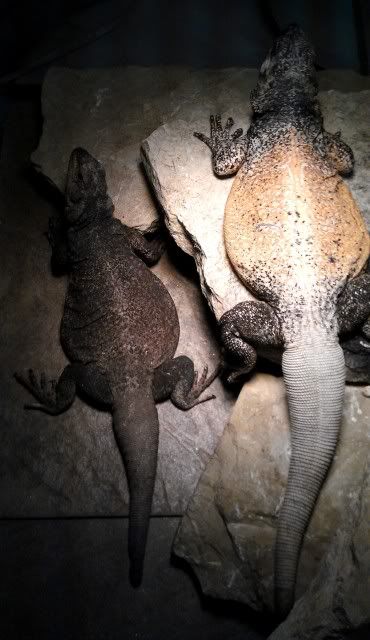
Hun, those are the WORST reasons that I have ever heard for deciding that an animal is old! OMG, collareds lose toes and tails in the wild all the time! I have a chuck here that lost a jowl in a fight and has a huge scar down his back. He is an older chuck, but probably under 10, which is pretty much the prime age for chucks. Because of the scars and our silly tendency to assess things from a human perspective, I guess he looks old too. :rolleyes: You can see the scar on his back here
LilyandBuster.jpg


I would take her to that other vet and be sure to remove the loose substrate from her viv as it can exacerbate the eye issue in addition to causing impaction, especially in a weakened lizard. Also, soak her for about ten minutes every day for awhile in warm but not hot water. If she has borderline kidney issues, that will help.
 
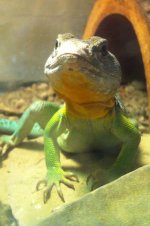
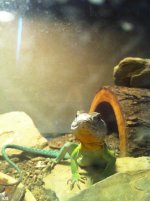
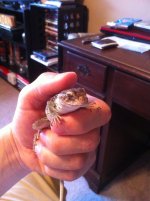
Can you take a pic from above or from the side, showing his head? Is his head whitish or yellow? If it is whitish, he is probably from the Kansas/Missouri area. If it is yellow, then he is an aquaflame, Oklahoma area.
 
A second opinion sounds justifiable. Kidney failure is an all too often death in many reptiles ( and i would say even more so in herps coming from hotter areas being kept in captivity). People forget most of these lizards, chelonians, and snakes coming from these unbearably hot areas spend most of there time in burrows or underground where the humidity is nearly 80 to 100% and the temps are much lower. I hydrate these "desert" herps just like my "tropical" herps everyday. I mist them down heavily and soak them weekly. People often tell me this will lead to bacterial and fungal infections, which is only true if the cages are filthy with feces, dead body parts, etc.... so common sense and keeping the cage clean will prevent this. all too often i see leopard geckos die because of similiar causes from being kept in these harsh conditions with no way to escape the heat.
 
Haden,
Bacterial dermatitis is only one of several problems that can occur when desert reptiles are kept in conditions that are too high in humidity. Where are you getting your information? Misting the enclosure and keeping humidiy too high in a desert lizard enclosure in general can cause respiratory illness as well. Also, if you soak a uro that often and keep it that wet, it will develop tail rot. Deep burrows are somewhat more moist than the surface in hot dry climates, and uros and some chuckwallas (Island chucks) do spend time in them, but not all chuckwallas do. Also, the humidity level in them is more like 60% or lower, never 100%. In captivity, it is not wise to keep desert reptiles wet! Providing one moist hide among many dry ones by keeping moist peat moss in it is recommended for island chucks, uros and even collareds, but their environment in general should be dry and you should not mist their enclosure even weekly if ever. The bacterial dermatitis does not just occur in dirty enclosures. It can happen in a perfectly clean one if water seeps under a shed that stays too long.

Baths are recommended for collared lizards, about once or twice per week, and maybe chuckwallas once a week, but not for uros unless you really know what you are doing and/or have an ill or dehydrated animal. Baths can be good for keeping desert and semi desert lizards hydrated, but diet is much more crucial to hydration as are proper temperature gradients.

Adam, did you see the other vet? Did he have the same answer or did he offer more hope?
 
Donna, the new vet actually did say the same thing. She wasn't nearly as convinced about the lizard being old and dying but she did think it was the kidneys. I like this vet much better and she seemed to know her stuff pretty well because she keeps iguanas so she's dealt with lizards for a long time. She told me to soak her just as you said and also to syringe feed her a small amount of calcium/water solution each day so as to give her some fluids.

On another note, I think my male misses his buddy. He suddenly is none to happy to be held. He def has white sides on his neck and I don't see any blues.

IMG_1388.jpg

IMG_1389.jpg

IMG_1390.jpg
 
Adam,
I am sorry to hear that it is an organ issue like that, but as I said, that doesn't mean that she can't still have some quality of life for awhile. I am really glad the new vet knows what she is talking about. You might ask her if a treatment called lactulose might help her. I have an old rescue Cham that has liver issues. I have a few friends who are vets, and one told me to try this in the cham. He has improved since I have been giving it to him. Once the kidneys are damaged, you can't reverse it, but you can manage it like a chronic disease. Your husbandry sounds very good, so I am guessing that the kidney issues were present when you got them. Such issues can be present for up to years before they become visible on the outside, I guess you could say. I see it all the time in rescues. We just have to try to give them as good and as comfortable life as possible when these animals find their way to us.

Your male probably is missing his tank mate. As I said, collareds are very social lizards, even in the wild. I have a friend who has observed two females using the same egg chamber in the wild and another who has observed the same male and females living as a group in the wild for years. He photographs them. Your two are Eastern collareds typical of Missouri and Kansas. I don't have any collareds from that locale. There are ads for some, including here if you want to keep your locale pure, ie, get a few females from the same area to go with your male and your female too. She would probably feel better with a tank mate or a collared neighbor that she could see.

If you need help deciding whether to purchase more Miss/Kansas locale collareds or if you don't care about preserving the specific locale, pm me. I don't might helping you. :)
 
Haden,
Bacterial dermatitis is only one of several problems that can occur when desert reptiles are kept in conditions that are too high in humidity. Where are you getting your information? Misting the enclosure and keeping humidiy too high in a desert lizard enclosure in general can cause respiratory illness as well. Also, if you soak a uro that often and keep it that wet, it will develop tail rot. Deep burrows are somewhat more moist than the surface in hot dry climates, and uros and some chuckwallas (Island chucks) do spend time in them, but not all chuckwallas do. Also, the humidity level in them is more like 60% or lower, never 100%. In captivity, it is not wise to keep desert reptiles wet! Providing one moist hide among many dry ones by keeping moist peat moss in it is recommended for island chucks, uros and even collareds, but their environment in general should be dry and you should not mist their enclosure even weekly if ever. The bacterial dermatitis does not just occur in dirty enclosures. It can happen in a perfectly clean one if water seeps under a shed that stays too long.

Baths are recommended for collared lizards, about once or twice per week, and maybe chuckwallas once a week, but not for uros unless you really know what you are doing and/or have an ill or dehydrated animal. Baths can be good for keeping desert and semi desert lizards hydrated, but diet is much more crucial to hydration as are proper temperature gradients.

Adam, did you see the other vet? Did he have the same answer or did he offer more hope?

Who said anything about keeping the enclosure wet 100% of the time? I mist the enclosures down once daily in the morning to mimic morning evaporation. And arguing bacterial dermatitis under a stuck shed is arguing a fallacy. Stuck sheds are not normal and a result of dehydration so hey pick your poison right? how can you say diet and temps are more crucial than hydration? Whats the first thing you do when you have a sick dehydrated animal come in to vet clinic or even for people who come in to a hospital?? you put them on fluids! And using lactulose for kidney issues will not solve anything for reptiles or mammals, lactulose is used only for liver disorders (and even then there are better and more effective alternatives to treating chronic liver/kidney disorders, like getting a biopsy of the organ to give you a direct answer and not just assuming the animal has ammonia absorption issues because it could be a parasitical issue as well.) This is why baytril, amoxicillin, and metronidazole are used more commonly in reptile medicine because these meds do the same thing but are more effective at treating broad spectrum problems. When your talking about real medicine, we are only using lactulose under theoretical conditions. Im not sayings your way of keeping desert reptiles is wrong and im not saying mine is the only way to follow, im just providing my experience with keeping them that i have been doing for almost a decade now, ive made a lot of mistakes with my experience and i dont want others to do the same.
 
Hagen,
An animal that is on a proper diet and kept in optimal conditions does not get dehydrated in the first place. Misting healthy desert reptiles is not recommended, period. Moist hides are recommended for uros, and you can keep a moist hide for any desert or semi desert reptile if you like, but misting the enclosure should not be necessary if your husbandry is good, and keeping a desert reptile just like you would tropicals is not wise (your own words. See below). Unhealthy animals are another matter entirely. And yes, I do soak even uros when they are dehydrated, but you have to dry their tails completely when you do that or they can get tail rot. But misting the enclosure even for a dehydrated animal is not recommended. Fluids should be administered by soaking (minimally effective for dehydration) orally or via tube or IV.

FYI, I have been rehabbing wildlife and reptiles for years. I work closely with a vet. I keep mostly desert reptiles and I have read many field studies and care sheets written by some of the most knowledgeable keepers/researchers/breeders in the US and some of them are my friends. None recommend misting the enclosure of desert reptiles heavily, as you said in an earlier post, daily if at all. Many desert herbivores don't even come out until well after any evaporation has already occurred.

I am not going to get into an ongoing argument with you here. You, yourself, said that misting was not recommended for desert reptiles, but you do it anyway, so you know better.

People forget most of these lizards, chelonians, and snakes coming from these unbearably hot areas spend most of there time in burrows or underground where the humidity is nearly 80 to 100% and the temps are much lower. I hydrate these "desert" herps just like my "tropical" herps everyday. I mist them down heavily and soak them weekly. People often tell me this will lead to bacterial and fungal infections, which is only true if the cages are filthy with feces, dead body parts, etc.... so common sense and keeping the cage clean will prevent this.
 
you say you dont want to go on with an argument yet you keep arguing. And FYI im employed under a reptilian vet. (Dr. Randon Feinsod) who works with Dr. Douglas Mader, Dr. Scott Stahl, Dr. Steven Divers. All of them are the literally the founding fathers of exotic animal medicine. I as well have access to accurate literature on the natural history and care for these animals from sources such as the IRCF foundation and the journal of herpetological medicine and surgery. I work with Sean Casey Animal Rescue where ive seen these issues multiple times. With as much experience that you have you should know that there is no one direct way to care for an animal since we still do not know everything about them, which is why i do not declare my way the right way or your way the wrong way. We learn from our mistakes and as result i am where i am now. And again as i have (and you as well) quoted from me, using common sense is what will work out in the end. Animals need to access to plenty of water to survive, this is a biological necessity, how these animals get it specifically is unknown with certain species, which is why in captivity we must leave no stone unturned when trying to create the most comfortable environment for these animals. I have found that my way works for me, it might work for others, its that simple. And i only mentioned it to be a "tropical" scenario figuritively speaking, sorry for the confusion.
 
Back
Top