• Responding to email notices you receive.
    **************************************************
    In short, DON'T! Email notices are to ONLY alert you of a reply to your private message or your ad on this site. Replying to the email just wastes your time as it goes NOWHERE, and probably pisses off the person you thought you replied to when they think you just ignored them. So instead of complaining to me about your messages not being replied to from this site via email, please READ that email notice that plainly states what you need to do in order to reply to who you are trying to converse with.

  • IMPORTANT! PLEASE READ!! About the Google Adsense ads being displayed

    =====================
    Posted 08/15/2025
    =====================


    Yeah, I know. They are a pain in the butt. But they pay the bills to keep my server running. Just a fact of life, I am afraid.

    Want to get rid of them? Simple. Just become a Contributor level member or above and they will be gone. -> Please click HERE."

    Is that too much for me to ask of you to keep this site running? Well, sorry about that. I too wish I could get everything for free. But alas.....

    =====================
    Addendum: 01/10/2026
    =====================


    Google Adsense ad revenue for December, 2025 was just $30 over the cost of the lease for the server running this site. So, in effect, the money providing the incentive for me to continue running this site is coming SOLELY from the paid memberships and sponsorships here. Which honestly ain't much....

house snakes info needed

John Cherry said:
from a couple of years ago, where the Pet Industry council ran a survey and there were more dollars worth of sales for reptiles and reptile related items than for birds or cats in the US. I find that really hard to believe, but any where close would indicate a flourishing hobby to say the least. It seems reptiles are becoming more mainstream every day.

John Cherry
Cherryville Farms :cool:

I'm not sure what I think of this hobby becoming mainstream or even popular.

My initial reaction is of course, "good." :)

We'll see how it goes. Should be interresting.
 
Dennis Hultman said:

I will be contacting Mr. Soderburg shortly to see what might be available.

Nothing available yet. I would like to pick a group of them up at N.A.R.B.C. (Anaheim) if anyone has availability.
 
Last edited:
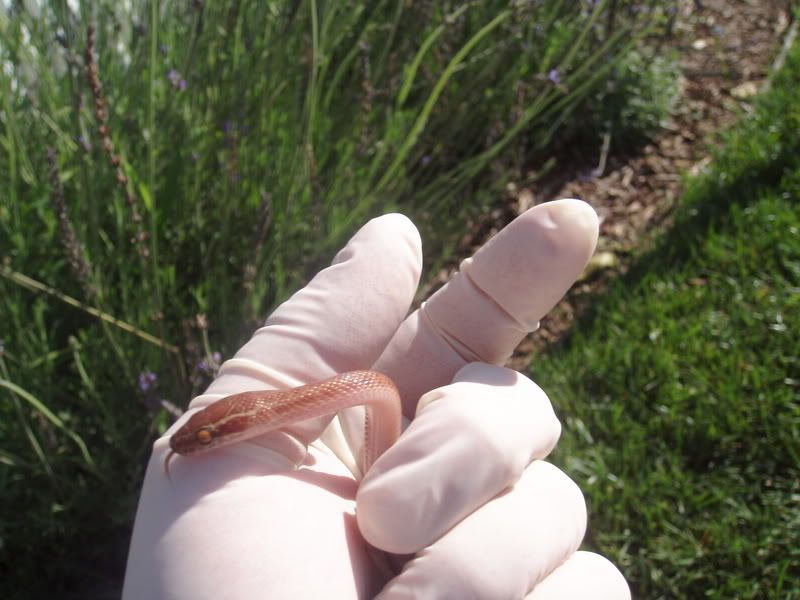
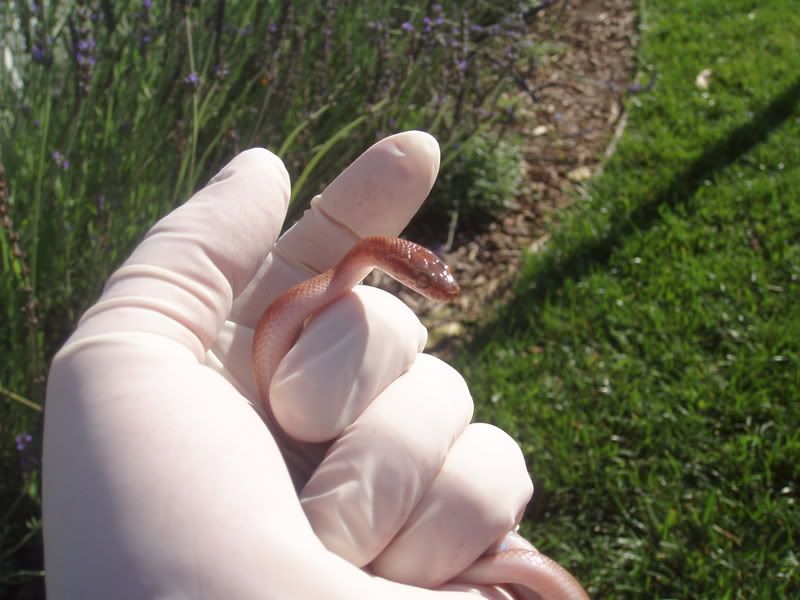
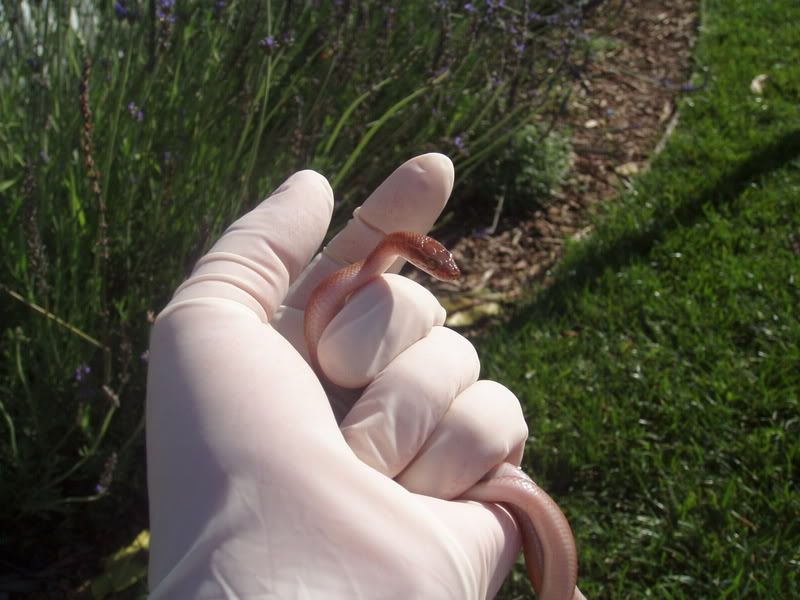
I've picked up a dozen pairs since this thread. I also received a couple as gifts this morning. Here is some quick shots as I was checking out one of my presents from my nine year old. She said, if I liked her gift, I would post it. Here you go Heather!

Picture224.jpg

Picture227.jpg

Picture228.jpg
 
Beauties, Dennis! I really do consider house snakes one of the all-time most attractive snakes out there.
 
I wrote a nice thread on house snakes here

http://www.saltwaterreptiles.com/index.php?name=PNphpBB2&file=viewtopic&t=334

its just bits of information from the book i am writing on african colubrids.

its a nice read and some nice pics of the different species of house snakes, some pics are snake thats are mine personally other are jusst pics I got form other people but I identify which snakes are not mine and which ones are mine.

I am pretty sure I have the largest collection of house snake species in north america!

Mike
 
I really enjoyed the link and found it informative.

I'm curious how much success you have had with some of the hard starters as pointed out on your thread and here by John.

Mainly, the Aurora. Has it been your experience that it's the size issue of the hatchling that contributes to them not readily feeding on pinks? I might have got the wrong impression as I read other forums.
I was under the impression that it was more of "picky eater" situation. If it's just the size of the hatchling, and they will take parts readily until they gain some size, I have learned something new.

Also, the information you posted about the female size in relation to hatchling size was informative. Have you had many clutches that most took pinks without hesitation by following this rule?

Thank you, for sharing this information.
 
In our expereince

The size of the different house snakes are basically about the same from our experience. So it is not a size thing, but rather a genetic predisposition to feed on certain prey animals. A number of years ago we were alerted to this genetic pre-disposition by Dave Barker of VPI on children's pythons. Since that time we have worked on selective breeding of females that produced only rodent feeders (90+%) on thayeri and alterna.

In both cases after a number of years of using the rule if a female did not produce the desired results she was removed from the breeding group. We are consistently producing clutches with the propencity to feed on rodents as a first meal in our breeding colony of both species.

Don Soderburg of South Mountain has a group of my thayeri and had quit breeding thayeri because of the feeding problems. But after producing over 40 hatchlings last year out of my group and having 38 of them taking unscented pinks as a first meal, he is now a believer. LOL

I suspect that the same could be done with house snakes, within our group we have several females that consistently produce rodent feeders and several that are a pain. I just have not taken the time to sort them out yet, but plan on doing so in the next year or so when things slow down a bit. I am specifically interested in doing it with Aurora and Big Eyes's they seem to be two of the worst in the bunch. :yesnod:

John
 
okay the biggest thing with all hosue snake species no matter which one it is, is the size of the female you are breeding, the biggest problem people have is, they breed to soon. Sure all house snake species are sexually mature at 6 months of age, but it doesnt mean you should breed them that age. No way.

here it is in a nutt shell, "the larger the female you use to breed the larger the eggs she will lay hence the larger the babies will be"

that is the biggest key to breeding species such as aurora, spotted, swazi, yellow belly, etc. although the only real two you will see in captvity (for now) is the aurora and spotted. I have had 3 succesfull clutches and never once had a problem with babies refusing to eat pinkies.

NEVER BREED A FEMALE AURORA UNDER 60 CM / 2 FEET!

A good size female aurora for breeding is 2 and half feet, a healthy female at 3 years of age should be around 70cm so always wait till they are at least 3 years of age before breeding and you will never have a problem with babies to small to eat pinkies.

just because she is able to breed doesnt mean she should breed.

its the same with all house snakes.

the larger species I will let the female grow over 3 feet before I introduce a male to them.

remember the key secret of successful house snake breeding

"the larger the female you use to breed the larger the eggs she will lay hence the larger the babies will be"

anybody who breeds house snakes under a year or even under 2 years of age is breeding for the wrong reasons.
 
I understand what you are saying John, but I dont think it si the same with house snake species, although ones found in drier climates are more conditioned to eat lizards then rodents because of what is available in their habitat, but I think we are refering to the size of the babies being the problem, auroras are being born just way to small to accept a pinky.
 
I am Sure

Breeding house snakes as we have learned is not a problem. But producing viable young and the health of the female is a great concern. I do not think I can agree enough with the other poster on the size and but even more so the age of the females.

As a general rule we do not breed our females till they are a full three years old, whatever type they are. By then they have the size and the physical developement (maturity) they need to produce better quality offspring, without hurting the female in the process.

There will still be feeding problems with some of the sub-species, but it can be directly improved/affected by using only physically mature females in your breeding program.


:iagree:
 
John, Perhaps thats why I have never had problems with baby auroras feeding on pinkies, I have seen other people's clutches and their babies were half the size of mine,and they were force to start them on gecko tails, but this must correlate to the condition of the female prior to breeding, just like you noted! Their females were younge under 2 years of age, while mine were like 4 and 5 years of age.

Mike
 
As far as the Auroras are concerned, I have not hatched out but about 65 or 70 of them, so I have a small group to refer to. But with that said we were sucessful getting a small percentage of them to take newborn pinks that were scented with med. gecko's. It was in the 20% range or so, I would have to check my records to know exactly. We also had some luck getting a few of them to take deer mice pinks, which are much smaller and smell completely different than a regular mouse. The balance required the normal force feeding and./or lizard routine, which is why we stopped breeding them even though they are really cool little animals.

;)

John Cherry
Cherryville Farms
 
wow thats interesting only 20% of your aurora new borns took pinkies, thats not a good number, I only had 3 clutchs, so my experience is much less then yours but all the baies accepted pinkies and I never once scented them. Maybe perhaps it is a genetic thing, do you know which area of south africa your originated from? Mine came from Johannisburg area
perhaps your came from the cape where there is a larger number of lizard and gecko and skink species and perhaps depending on the area where they originated from there are pre-disposed to eat a certain prey item.
JHB auroras are more pre-disposed to eat rodents because that is the main food item so perhaps they evolved to have larger babies so they will be able to feed on rodents?

it would be interesting to research more into this since little research has been done on the Genus.
 
animals from the same species have evolved to specialize on specific prey items.
the ferial dogs on the galopogas island as an example, they have only been there for like a 100 years or so, but there are 3 known groups and each have evolved certain traits so they can hunt a specific prey item. so perhaps we see this with Aurora's. Perhaps since JHB area has huge human population, lizards and geckos are more scarce while as we know where there is a dense human population rats and mice populations are huge, and we do know that the Aurora house snake is one of most common species of snakes found in the JHB area, so perhaps over time, they have evolved to specialized in a specific food source and rodents are their main food item, while other species found in more rural areas where rodent populations are less and lizard and gecko populations are more then those ones will feed mostly on cold blooded prey.
Maybe this is the key to the theory about how perhaps certain snakes are genetically more proned to accept one food item over another.
 
That would make sense

I don't know where the original auroras we had came from, I bought them for a dealer who got them out of a fresh shipment that went to an imprter named Strickly Reptiles out of Florida.

What you are saying though makes sense from the genetics standpoint. I can assure you that even though a lot of folks do not believe in it. It does work, everytime I deal with a new clutch of the thayeri I think about Dave telling me this many years ago and how right he was.

What hapened just for informations sake, was he had two lines of childrens, one was more expensive than the other. I ask why and he told me the genetics deal and that 85 - 90% of the hatchlings from this one line would eat pinks. I didn't really believe it, but had known Dave for many years and trusted him. I bought 3 pairs of the rodent feeders and 1 pair of the normals. Sure enough when they grew up and turned out neonates they followed suit with what he had said. Since that time I have been working on different strains of the hard to feed animals and have really been pleased with the results. I would be interested in getting some of your rodent feeding line when you have some for sale.


:yesnod: :thumbsup:

John Cherry
Cherryville Farms
 
Thank you gentleman for the discussion and contribution. It really is needed and beneficial.
Mike, you are going to have to add me to that list as well. I'm glad I asked the question. Again, I enjoyed your thread. Informative and the pictures were a bonuses.
 
Back
Top