cguarino30
Member
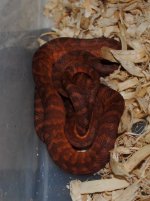
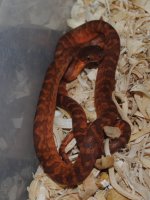
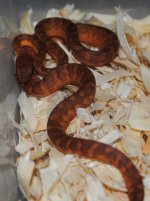
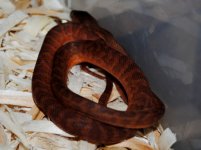
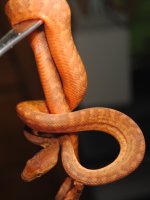
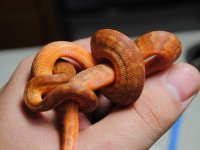
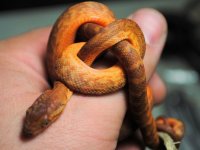
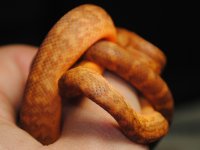
Here are some updated pics, as promised. These first four are of Escapees 1-4, in order. The shots were all taken inside their tubs with a flash, so the colors are not great, but you can get an idea of the general development.



Pretty little pretzels, lol. Aside from the size at birth, they sound pretty typical of other baby tree boas. Some will start out eating rodents, others have to be fed lizards then switched over. When they get a little larger you might try sexing them visually. Males typically have longer tails than females; though that's not 100% reliable, it's at least an educated guesstimate.


Gorgeous little things.
Love the scientific method!
1-If live anoles of appropriate size are not taken, kill the anole and leave it in o/night.
2-Slit an anole open and rub a small PM around in the guts until it is coated with body fluids. Leave the PM in o/night. Rarely fails to work and beats cutting up chicks.
3-Always save the shed from anoles-works just as well.
4-Anole soup can be used several times if frozen between feedings. Simmer 2-3 anoles in a small saucepan (when the wife is not looking). Leave PM in the soup for an hour or so and leave the scented PM in o/night. Refreeze the soup-can be used around 4 times before you discard it.
5-Wash PM to remove any scent. Leave wet and toss in a deli cup full of chick fuzz. Shake until the PM looks like a chick-it should be unrecognizable as a PM. Leave in o/night. Rarely fails.
Subflavus eat when they want to-not when you are ready to feed them. Males are notorious for refusing to eat at any age for long periods of time. Be prepared to discard any food that did not get eaten. Never offer it to another boa-a terrible habit to develop.
It sounds like they are doing very well. Your real challenge will be to decide what to do with them all. Once you saturate PA with subflavus, your options quickly dry up. After all, they are CITES I...
Good news on T3!
Maybe T2 wants a smaller one as well?