
Ipiria
New member
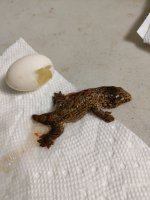
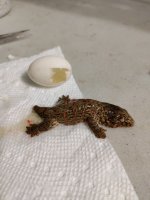
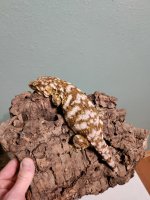
On Sunday night 12-19-21 I returned home from a weekend trip to find my second egg from clutch of eggs sweating. They were laid back on 07-08-21 from a lone female pure Nuu Ami that I had owned and raised up since she was a hatchling. She had never been in contact with a male. I recently sold her to another member here on the classifieds but before doing so she had laid me three clutches this season. Back on 12-13-21 the first egg of this clutch started sweating and never hatched. I debated on cutting the egg open upon the first signs of sweating because I was not sure it would make it out on its own. I did some web searching on this topic trying to decide if I should, but found little info or contradicting info. By Friday 12-17-21 the first egg lost some size and was starting to mold. When I returned Sunday night 12-19-21 and found the second egg sweating I knew I was going to open her up. Upon cutting a window, I noticed a small squirm and seconds later I had a partho crawl out! The eggs were incubated at room temp. I still have a couple other eggs from this female that were laid later in the season that appear to be good. Going forward I plan on cutting eggs if I don't see any breaching shortly after sweating. I regret not opening the first one. Below are pictures of the hatchling and the female that laid the eggs.