• Responding to email notices you receive.
    **************************************************
    In short, DON'T! Email notices are to ONLY alert you of a reply to your private message or your ad on this site. Replying to the email just wastes your time as it goes NOWHERE, and probably pisses off the person you thought you replied to when they think you just ignored them. So instead of complaining to me about your messages not being replied to from this site via email, please READ that email notice that plainly states what you need to do in order to reply to who you are trying to converse with.

  • IMPORTANT! PLEASE READ!! About the Google Adsense ads being displayed

    =====================
    Posted 08/15/2025
    =====================


    Yeah, I know. They are a pain in the butt. But they pay the bills to keep my server running. Just a fact of life, I am afraid.

    Want to get rid of them? Simple. Just become a Contributor level member or above and they will be gone. -> Please click HERE."

    Is that too much for me to ask of you to keep this site running? Well, sorry about that. I too wish I could get everything for free. But alas.....

    =====================
    Addendum: 01/10/2026
    =====================


    Google Adsense ad revenue for December, 2025 was just $30 over the cost of the lease for the server running this site. So, in effect, the money providing the incentive for me to continue running this site is coming SOLELY from the paid memberships and sponsorships here. Which honestly ain't much....

New to geckos

Rioko

New member
Joined
Dec 2, 2005
Messages
153
Reaction score
0
Points
0
Age
44
Location
Old Towne, FL
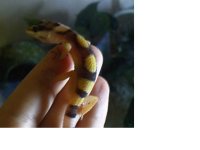
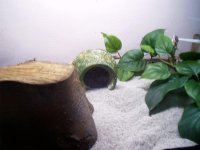
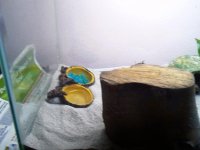
I just got a new gecko last week. Its a leopard gecko. His name is Hektor. He seems to be eating well. he has a teracota pot to hid in plants to play in (fake), a heat pad, sand, a stump to rub and hang out on, and a water sourse. Is there anything else i need to do for him?
 
Here's Hektor

This is my gecko Hektor
 

Attachments

  • Hektoredited.JPG
    Hektoredited.JPG
    18.5 KB · Views: 197
sweet a nice double cricle back. Calcium dish also. People are gonna flame u for that sand especially since your gecko is so small. What happens with sand if they ingest too much they will get impacted in their stomachs and can die if they cannot pass it. So watch out for the sand it is better to just use regualar paper towels for now. I wish I can tell you more but I have to go to work now.
 
thanx

the only time i have seen him take sand in is when the crickets jump out of the way when he goes in for the kill. And he seems to like the sand. I will get him a cal bowl. BTW i am having to crop my photos for this site so please bear with me
 

Attachments

  • hektor2.JPG
    hektor2.JPG
    42.2 KB · Views: 209
Yes the sand thing will blow up here so i would put him or her (since it is hard to tell the sex at that age)on paper towels, and a humid hide,Other than that sounds good.


John
 
Also

This is not just any sand. It is sand specificly for my gecko. it has calcum mixed in and the sand is very fine. I bought the sand when i bought Hektor. The pet store owner has gecko's at home and said that the sand is just right for Hektor. Hektor is very active and doesnt seem to have any problem moving his bowles. ( been poop cleaning ) Hektor likes to be petted. I am trying to get him used to me. I need to remeber to cal the crickets before i put them in. Oh, How often should i feed him? He seems to be hungery. I toss a cricket or 2 in to see if he is hungery and he will eat one and wait and then eat the other later. Am i feeding him too much? too little? please tell me. And is there a way i can tell what sex my gecko is? I want to be sure so that if it is a girl i can rename it.
 
what is that gel? Is that the cricket water? The local petshop will always tell you that sand is fine. Calcium sand always says its good for geckos I bought sand when I first had my geckos. But becareful with the sand ESPECIALLY because you have a young one. If he was bigger it wouldn't be as much of a deal but since he is young there may be problems. Geckos will ingest sand in all the time and lick it on their own to get calcium but they might consume too much. Just be careful. I make sure my guys always have food in their cages. Geckos know when to stop to eat not like beardies and gold fish lol. So be careful with the sand. There are pleanty of people who raised there geckos on sand fine. But alot of cases of people who had problems with sand and geckos dying on them. It really is your choice and this is just an opinion good luck!
 
Looks good, but what is that blue stuff in the food dish? Also, what temps are you keeping him at? Temps play a large role in the health of leos, and most reptiles.

Depending on the size of the crickets you are feeding him, I would say that at that size, he should be able to eat more than two appropriately sized crickets a night. The best bet with leos if you're not sure if your're feeding him enough is to feed him mealworms, as you can just leave a dish with several in there, and replenish it as he eats them. Mealworms can also keep longer than crickets, as you can put mealworms into the fridge, and they will go dormant until you take them out. Crickets on the other hand will continue to grow if you feed them well, and then they get too big, so you have to keep on going back to the store to buy more.

I hope this helps a bit.
 
Despite what your pet store says, all types of sand put your leo at rish of impaction. Even if you dont see him ingest it, he may be doing so anyway. Leos know when they need calcium and will often consume sand to fulfill that need, however when they are surrounded by it they often ingest too much. Leos are desert dwellers, however they do not live in the open sand; they live in the rocky out crops where the dirt is hard and packed down. Leos do not naturally live in two inches of loose sand as a pet store would have you think.

The first thing I would do is get your baby off sand. Then get a plastic tupperware box and cut and hole in the bottom(keep the lid on). Fill it with wet paper towel or moss. Keep this on the warm side and make sure it is always moist. This humid hide will help him shed.
 
Can't seem to find the edit option...


I would like to add that this is a question you should have cleared up before buying. I hate to be the killjoy here, but buying an animal than figuring everything out irritates me.
 
I suggest putting a heat lamp because during winter a heat pad is not enough
well it also depends on the temperature of your house.By the way at what temperature is the tank at because temperature is very important.Also i too was new when i got my first leopard gecko the store owners suggested i get calci sand so i bought it and set up my tank and guess what hapened the next day my gecko was dead.Really weird i guess my gecko thought the sand was a treat so i really suggest you use paper towels once your gecko matures you can go back to using calci sand
I hope that helps bye
 
Hektor's totally cute! And careful, leos are addictive...just you wait. Like Lay's potato chips - "you can never have just one", lol :raspberry

Warning - Graphic Photos Below

This is in no way intended to be an attack or a flame! I've seen a lot of nasty stuff at the clinic with leos that have been acquired by the local humane society. Just wanted to share this info...

As for sand...to each there own....but just to share I figure, if loose substrate poses even the tiniest chance of impaction , why take the risk?? A live gecko is better than a dead one

This gecko was housed on gecko-marketed calcium/vitamin sand...:

What's that blockage?
Image-D6E527C6E8AF11D9.jpg


Distended small intestine?
Image-D6F0A7EBE8AF11D9.jpg


Aha...it was filled with calci-sand:
Image-D6F2C520E8AF11D9.jpg


We have all heard hundreds of stories from children and pet owners about the untimely deaths of their leos due to impaction. How do we know that these hundreds of claimed first-hand experiences are valid? Misdiagnoses?

Well I've come to believe that:

1) My #1: Impaction is usually the result of malnutrition and/or improper husbandry that results in the gecko eating the substrate in an attempt to compensate. Correctly housed geckos with proper nutrition and supplements available are not prone to eat sand/substrates unless perhaps out of boredom.

2) Chronic impaction risk is higher on calcium sand than playground sand because of its consistency. If adult leos are properly cared for with essential nutrients for a well-rounded diet available, then risk of impaction on playground sand is low.

3) Feeding on loose substrate increases the risk. Especially w/hatchlings and enthusiastic juveniles still adjusting their "aim" when striking prey. Housing on sand but feeding in a separate holding area will decrease the risk of impaction.

4) Contrary to popular belief, the natural habitat of the Leopard Gecko is NOT sand!

Still, why take the risk?

Here's the only information I've ever found of interest and I think it begins to support my own ideas about impaction:


Sand/substrate Impaction:
Problems associated with the ingestion of fine gravel, sand and walnut shell often results in gastrointestinal impactions and cloacal prolapse. 31, 32, 33, 36
The condition is seen most often in juveniles and often in geckos on poor quality diets. Clinically, these geckos present depressed and anorexic with a swollen celom and cloacal prolapse. Celomic palpation usually is diagnostic, but radiographs will confirm ingestion of this foreign material (Fig 3). Mineral oil and warmed saline enemas may help in mild cases but surgery may be necessary in more severe cases. 33, 36 Removing these particulate substrates or feeding geckos in a deep bowl or dish to discourage ingestion of substrate, along with correcting any husbandry-related issues is important in preventing these impactions.

31. deVosjoli P, Viets B, Tremper R, Klingenberg R. 1998. The Leopard Gecko Manual. Adv Viv Sys, Santee, CA: 1-86
32. Bradley T, Nieves D: Leopard Gecko, Eublepharis macularius, Captive Care and Breeding. Bulletin of the Association of Reptilian and Amphibian Veterinarians 9: 36-41, 1999
33. Boyer TH: Leopard Geckos, in Boyer TH: Essentials of Reptiles A Guide for Practitioners. Lakewood, CO, AAHA Press, 1998, pp 111-117
36. Bradley T, Coelomitis secondary to intestinal impaction of calcisand in a leopard gecko, Eublepharis macularius, in 2000 proceedings, The 7 th Annual Association of Reptilian and Amphibian Veterinarians Conference, Reno, Nevada, 2000, pp. 27-28

© 2005 Stahl Exotic Animal Veterinary Services. All Rights Reserved.



__________________
 
The temp of the tank is curently at 74. I have a heat lamp. I keeps cal dusted crickets and he eats about 3 a night. I handle him offten and always look at his belly ( i have seen impacted bellies on other lizards) to see if there is any bulging. I watch him chase the crickets. Some times he is not even eating them ( I think he is playing tag) usualy because he just ate one or two. The blue gel is for the crickets that are in his tank. I dont want them to get hungry and go after Hektor. The gel has minerals and such. I use it for the crickets i give my tarantula as well. I hate to say this but if Hektor does die from the sand then i will know better next time. This is a learning experiance for me.
 
why are you willing to risk that? You are basically saying you are only experimenting with the gecko and willing to risk a geckos life. In my book that is just wrong I cannot go and thinking I will put any of my geckos at risk and say Oh well I guess it died and I'll know better for next time. The information you are getting is coming from years of experienced gecko keepers and breeders on this forum. And you have the nerve to risk the gecko's life. You know it actually ain't worth replying to this thread anymore just gets me aggrivated. Well I hope your gecko doesn't get impacted and good luck with your thick headedness. Have a nice day! :)
 
Rioko said:
I hate to say this but if Hektor does die from the sand then i will know better next time. This is a learning experiance for me.


I'm sorry but that is a terrible attitude. :nonod: You have this forum to use as a resource with very experienced people who can give you sound advice. Why not take that advice, make a simple change, and protect your gecko from a possible slow and painful death??? Don't let the poor gecko suffer for your ignorance. If you want a true learning experience, LEARN from the experiences of the people who are trying to help you and your gecko!

Jacqueline Fisher
StormGecko
www.stormgecko.com
 
lilraider said:
Yes the sand thing will blow up here so i would put him or her (since it is hard to tell the sex at that age)on paper towels, and a humid hide,Other than that sounds good.


John

That is what I was thinking exactly. My geckos love their humid hides.
I am relatively new to geckos too, I asked around here about suitable substrates and finally settled on paper towels.

That is a cute gecko you got there, btw.
 
???

??? I don't understand the hesitancy/refusal to take out the sand. Paper towels are cheaper and easier to clean. Just dump the sand and use paper towels. Criminy.
 
What i will do is watch after Hektor. If i see any sign of obstruction (no new poo or bulging) i will remove the sand. So far he is oing fine with the sand. He is eating regulerly and all.
 
Rioko said:
Is there anything else i need to do for him?

If you do not care to take the advice that has been offered, that is your choice. Just do not be surprised if your questions about what you can do for your impacted gecko, go unanswered.

You need a hot spot on the floor of your tank of about 90 degrees. You only want is temperature in about half of the tank. The other half should be 75-80. You also need a humid hide. A calcium dish, clean fresh water and appropriately sized food items. Good luck with your gecko.
 
Back
Top