• Responding to email notices you receive.
    **************************************************
    In short, DON'T! Email notices are to ONLY alert you of a reply to your private message or your ad on this site. Replying to the email just wastes your time as it goes NOWHERE, and probably pisses off the person you thought you replied to when they think you just ignored them. So instead of complaining to me about your messages not being replied to from this site via email, please READ that email notice that plainly states what you need to do in order to reply to who you are trying to converse with.

  • IMPORTANT! PLEASE READ!! About the Google Adsense ads being displayed

    =====================
    Posted 08/15/2025
    =====================


    Yeah, I know. They are a pain in the butt. But they pay the bills to keep my server running. Just a fact of life, I am afraid.

    Want to get rid of them? Simple. Just become a Contributor level member or above and they will be gone. -> Please click HERE."

    Is that too much for me to ask of you to keep this site running? Well, sorry about that. I too wish I could get everything for free. But alas.....

    =====================
    Addendum: 01/10/2026
    =====================


    Google Adsense ad revenue for December, 2025 was just $30 over the cost of the lease for the server running this site. So, in effect, the money providing the incentive for me to continue running this site is coming SOLELY from the paid memberships and sponsorships here. Which honestly ain't much....

Probably a noob question...

Most bees turn brown because most pastels turn brown. Most pastels turn brown from lack of selective breeding in the past. When pastels first got going people bred every pastel they could get to every normal female they could find, with no consideration to quality, just quantity.
The result was thousands of ugly brown pastels were allowed to make many more thousands of ugly brown offspring.
They all looked good at birth, and when sold shortly after. You had hundreds of people who had paid thousands of dollars for what was now a butt ugly brown pastel, but still wanted a return on their "investment" so the cycle expanded exponentially.

Now browned out pastels outnumber nice yellow adult pastels many times over and these are now producing bees.
You can thank the pastel mills from 7 or 8 years ago primarily, although many breeders have contributed to the lack of quality in the pastels overall.
 
Yeah Clay has the answer. I always ask for pics of the parents to see how she/he might turn out. I found a perfect bee on KS that should stay pastel if you are looking. I was gonna buy her but $$$ and weather = :ack2:

Nevermind, looks like it sold. It was white from like the 2 o'clock position all the way to the 10 o'clock and had pure clean yellow from 10 to 2 :(
 
So if that is the case, is there a trick to picking a good baby/juvie pastel that will have a good chance of growing up to be yellow? Or is there a certain breeder to go to?
 
Can do.. let me find a pic. Yes, and no on the browning. He is not Solid yellow anymore, but a very light yellow/grey on the top section ( 10-2 oclock ). and nice yellow on the bottem sides, and VERY high white!! MAy be because it is mine, but I think it is one of the best I've seen.. :) I'm very happy with mine!
 
JerryandPiper.jpg

One of my bee and pastel doing the deed...
Pastel1Fpic1.jpg

A Baby from him and my normal
Photo0056.jpg

My boy saying hi


Let me know what you think.. Not the best pics, but you get the idea of my boy!
 
Unfortunately, it isn't always as simple as looking at the parents. I've produced pastels from a nice looking blonde that I wasn't even a little impressed with. I've produced bees from two different pastel males....the first had a fair amount of brown out, but the remaining yellow was very vivid. Both bees from that clutch have stayed quite yellow. The other male was nothing to right home about, but the babies look pretty good so far.
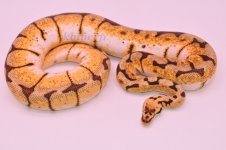
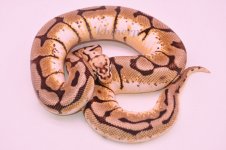
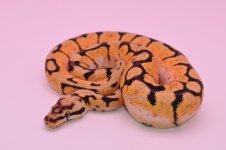
Here are a few pics:
The first is from the first group mentioned, and is fairly well known here - the "keeperbee" (her sibling, initially designated the spotted bee, was recently in the classifieds; and he, too, retained a lot of his yellow).
The second is a bee I purchased - he never had bright yellow coloring, but it really hasn't changed much, either.
The third is one of last years babies (Janet, if you see this, that is your boy)
 

Attachments

  • 003.jpg
    003.jpg
    123.2 KB · Views: 111
  • 004.jpg
    004.jpg
    135.3 KB · Views: 111
  • 024.jpg
    024.jpg
    97.5 KB · Views: 114
Actually, many of the smaller breeders produce quality animals and have excellent customer service.... just saying.:shrug01:

It's not the BREEDER but the quality of the animals that one has.

Ditto. I have seen some ugly animals from some of the larger breeders. It all comes down to whether someone is breeding for quality or quantity. To truly get some A+ animals, you need to breed VERY selectively and refine that trait. Some people, including large breeders, just throw animals together without really looking at all the fine characteristics. Some say the look of the normal doesn't affect how the babies come out, but I believe otherwise, and saw it within my own animals that I had produced.

I am a strong believer in only working with the best, the cream of the crop. I wait MONTHS if not YEARS to find "the one" -- the perfect version of a particular morph that I want. Then I stop at nothing to get it. I waited 2 years to buy a clown, until a found one with extremely light golden coloration, a beautiful solid burgundy back with just tidbits of pattern but not much. No brown, no black. Just gold and burgundy. I wanted the best clown I could find and looked everywhere. Same went for the other morphs I had. This time around, I waited months to find the perfect high contrast albino with reduced pattern. I passed by quite a few, because they just weren't quite what I wanted. Some of them were 99% close, but they just didn't give me that feeling of "Holy CRAP, I absolutely HAVE to have that snake!!!!!". That's what I wait for. If you want to breed nice animals, develop a scrutinizing eye and some patience, and you will come out with some really great projects.
 
You do have to do alot of research to find the smaller breaders with very nice snakes.. You can very easily end up with a below average morph if you do not know... I do agree that smaller breaders can have VERY nice snakes, but like posted above everyone and there mom bread pastels just to have pastels and not worried about the quality.. so we have TONS of breaders with sub par pastels out there..

Best advice... research research research... and ask around!!
 
Back
Top