• Responding to email notices you receive.
    **************************************************
    In short, DON'T! Email notices are to ONLY alert you of a reply to your private message or your ad on this site. Replying to the email just wastes your time as it goes NOWHERE, and probably pisses off the person you thought you replied to when they think you just ignored them. So instead of complaining to me about your messages not being replied to from this site via email, please READ that email notice that plainly states what you need to do in order to reply to who you are trying to converse with.

  • IMPORTANT! PLEASE READ!! About the Google Adsense ads being displayed

    =====================
    Posted 08/15/2025
    =====================


    Yeah, I know. They are a pain in the butt. But they pay the bills to keep my server running. Just a fact of life, I am afraid.

    Want to get rid of them? Simple. Just become a Contributor level member or above and they will be gone. -> Please click HERE."

    Is that too much for me to ask of you to keep this site running? Well, sorry about that. I too wish I could get everything for free. But alas.....

    =====================
    Addendum: 01/10/2026
    =====================


    Google Adsense ad revenue for December, 2025 was just $30 over the cost of the lease for the server running this site. So, in effect, the money providing the incentive for me to continue running this site is coming SOLELY from the paid memberships and sponsorships here. Which honestly ain't much....

Reptile Basics SIM incubation box

dustinNMpythons

New member
Joined
Aug 2, 2009
Messages
1,545
Reaction score
91
Points
0
Location
Sacramento, CA
I'm real curious as to how well these would work. The concept is to suspend the eggs instead of burrying them in medium. They say it will speed up hatch times by having more stable humidity and possibly better oxygen consumption. I may buy one to test it out, I was wondering if anyone has bought one and tried it out already. Heres the web site:

http://www.reptilebasics.com/sim-incubation-box.html
 
Keep in mind Reptile Basics is only a distributor of this product, as is several other companies. Your title seems to imply it is their product, which may be misleading to some. The container has been around for a while now and more info can be found just by using Google. I am sure Greg will come on and provide more info but the container seems to have been designed around the "no substrate" method of incubation which has been used very successfully by breeders. I acquired a couple over the summer at a discounted rate and will be trying them with chondro eggs in about a month (hopefully). They definitely work because this concept of incubation has been around for quite some time.
 
As Bart stated, the concept of substrate-less incubation has been around for a long time, someone just finally made a product for the masses so you don't have to make your own containers. They're slick looking, but for the price of one of those I can get egg crate to make at least 10 larger shoebox size substrate-less incubation containers myself. For the small hobbyist I think they'd be great, but for me, it would be completely unrealistic...I'd have to purchase 30 of them just to get through the Ball Python clutches (that's not counting Cornsnake, Hognose and Leopard clutches!).
 
Yeah they are a little steep, how do you guys feel about substrate-less incubation. I was under the impression everyone just uses pearlite and vermiculite. If this is a better way of incubation why don't more people do it? Could there be problems with the eggs drying out? Sorry for all the questions but I'm pretty new to breeding and I should have around 10 clutches this year so I'm trying to get some good advice from different people.
 
I've switched all the species I worked with to it last year (previously I only did it for Ball Pythons). As far as humidity, you still have to put water in to keep it up. You can also still use your substrate beneath the grids if you're worried (I use a thin layer of SuperHatch underneath because it holds water so well).

I wouldn't go as far as saying it's a better way of incubation, just a different way. I've used substrate-less, vermiculite, superhatch, organic soil and orchid moss successfully. My top two are substrate-less and orchid moss. Orchid moss is pretty expensive considering the amount I would need. Substrate-less, once the boxes are made (or purchased) can be reused year after year.

What works for one person won't necessarily work for another. Household temperatures, humidity and elevation will effect your incubation needs.
 
This year I used the SIM for my crested gecko eggs, and only one hatched.

One day it would be too dry and I'd find shriveled eggs, and if I added more water, they would mold.

When I first saw the SIM, I thought-"WOW!! No more hatchlings coated in vermiculite!!"

Next season, it's back to boxes with coated hatchlings.
 
This year I used the SIM for my crested gecko eggs, and only one hatched.

One day it would be too dry and I'd find shriveled eggs, and if I added more water, they would mold.

When I first saw the SIM, I thought-"WOW!! No more hatchlings coated in vermiculite!!"

Next season, it's back to boxes with coated hatchlings.

Wow, that is the first I have ever heard of an issue with rhacs... Should have contacted us... You could have got one of the containers with a faulty lid... We did put the info up on our site to let people know if the lid was too ridged or didnt fit well, we would send a replacement... Thats the only reason I can see it getting too dry in the container... Unless you are using a hoverbator???
 
Also the faulty lid was only an issue with aprox 2 cases and that was 2 shipments ago, there has been no issue since...

For results from SIM users you can check

www.geckoforums.net
www.varanus.nl
www.superconda.com
www.jmgreptiles.com

They have shortend incubation times in most species and in some quite considerably...
A very well known zoo here in the North East got a 100% hatch rate on their Chuckwallas (9out of 9) which is unheard of with this species... The best chuck breeders get maybe a 25% to 30% hatch rate...

It may be more expensive than glad containers, but to me, its money well spent if you are looking to hatch strong, robust neonates...

With many side by side tests, animals hatched in the SIM have been better developed and hatched earlier...
 
It may be more expensive than glad containers, but to me, its money well spent if you are looking to hatch strong, robust neonates...

With many side by side tests, animals hatched in the SIM have been better developed and hatched earlier...

I don't think implying that any other method of incubation won't produce strong, healthy hatchlings is a good marketing tactic. That simply isn't true. You can get the same results from a multitude of other methods (if done correctly, of course). Everyone does things differently, their is no one, perfect way to incubate everything. :thumbsup:
 
I don't think implying that any other method of incubation won't produce strong, healthy hatchlings is a good marketing tactic. That simply isn't true.

I am not implying anything... Just reporting our findings and the findings of our customers...

Our container takes many variables out of the equation like proper water to substrate mixes which affects the humidity the eggs get or do not get... The eggs are not sitting in a substrate so death from over sturation is not a factor...

Besides, you have a long history of trying to knock the product so what you say, does not matter one bit... Our product works well and does exactly what it is supposed to do... Well over a thousand customers and the tons of great feed back and pictures from reputable breeders and hobby breeders alike speaks volumes... Your single closeminded opinion means nothing... Until you have used the product, there is really nothing you can say that can retain water...

Care to explain how a zoo got a 100% hatch rate on a species that has never had a hatch rate past 30% no matter who they are or what incubation method they used???
 
Wow, that is the first I have ever heard of an issue with rhacs... Should have contacted us... You could have got one of the containers with a faulty lid... We did put the info up on our site to let people know if the lid was too ridged or didnt fit well, we would send a replacement... Thats the only reason I can see it getting too dry in the container... Unless you are using a hoverbator???


Thanks for the reply, Gregg!!

It wasn't an issue with the lid though.

I'd purchased the SIM from Matt Parks at Pange, and even for the extra grids when they became available.

I just couldn't get the H2O/SuperHatch ratio right for the SIM. And I just used room temperature without an incubator. It was just a bad year for my crew with the heat and everything else working against me.

I'm going to be trying the ThinkGeek.com Deluxe Mini Fridge/Heater this year, because my main problem is the fact that my house gets too hot in the summer. Like 92 degrees on bad days. NOT beneficial to developing gecko embryos.

http://www.thinkgeek.com/homeoffice/gear/6ad2/

I may try vermiculite in the SIM & vermiculite in a regular deli cup, splitting the clutches between the two, to see what happens.

I still love the IDEA behind the SIM, so I'm gonna give it another try.

Thanks again!!
 
Even though you got the container from Matt, you can still contact either John or myself with any questions... We stand behind our product and would love to help anyone using it...

Again, if you have any issues or questions at all, please contact us...

Gregg
1-347-898-8728

John
1-917-741-2019
 
Our container takes many variables out of the equation like proper water to substrate mixes which affects the humidity the eggs get or do not get... The eggs are not sitting in a substrate so death from over sturation is not a factor...

Yes, I understand the concept, use it myself...I also said it was one of my top incubation methods, provided other examples of what I have used successfully and said your container was slick and would be great for the small hobbyist like the OP. I think you need to reread what I've said in this thread and quit while you're ahead. I'd hate to see another good thread get deleted because you again misinterpreted something in a thread and took it to heart.

Besides, you have a long history of trying to knock the product so what you say, does not matter one bit... Our product works well and does exactly what it is supposed to do... Well over a thousand customers and the tons of great feed back and pictures from reputable breeders and hobby breeders alike speaks volumes... Your single closeminded opinion means nothing... Until you have used the product, there is really nothing you can say that can retain water...

Wow, that's a lie. We had one conversation on another forum that was deleted because you took constructive criticism by myself and one other individual too personally. One conversation that spanned maybe two days does not equal a "long history" and discussion on your product hardly came up again in my life until questions popped up in the past week here.

Care to explain how a zoo got a 100% hatch rate on a species that has never had a hatch rate past 30% no matter who they are or what incubation method they used???

I'm not sure why you're asking me this? Firstly, I haven't the faintest idea on anything involving the Chuckwalla species...Secondly, if that's true statistics, awesome! It's a shame they didn't think of using substrate-less in the past.
 
So how do you do the substrateless method with these? I'm still a little confused. You just put water in the bottom and put the eggs on the rails?
 
Stephanie, You are right I am sorry... Still not sure how you can form an opinion on our product or compare it to other methods when you have never used it... Our own findings and reports from our users seem to say the exact opposite of what you say...
I am also unsure how you come to the conclusion that this container is only good for small scale breeders... There are many large scale breeders using the container and some of them converted completely to using the S.I.M...
I would like to know where you are getting the info you need to come up with these assumptions...

So how do you do the substrateless method with these? I'm still a little confused. You just put water in the bottom and put the eggs on the rails?

Hi Dustin,
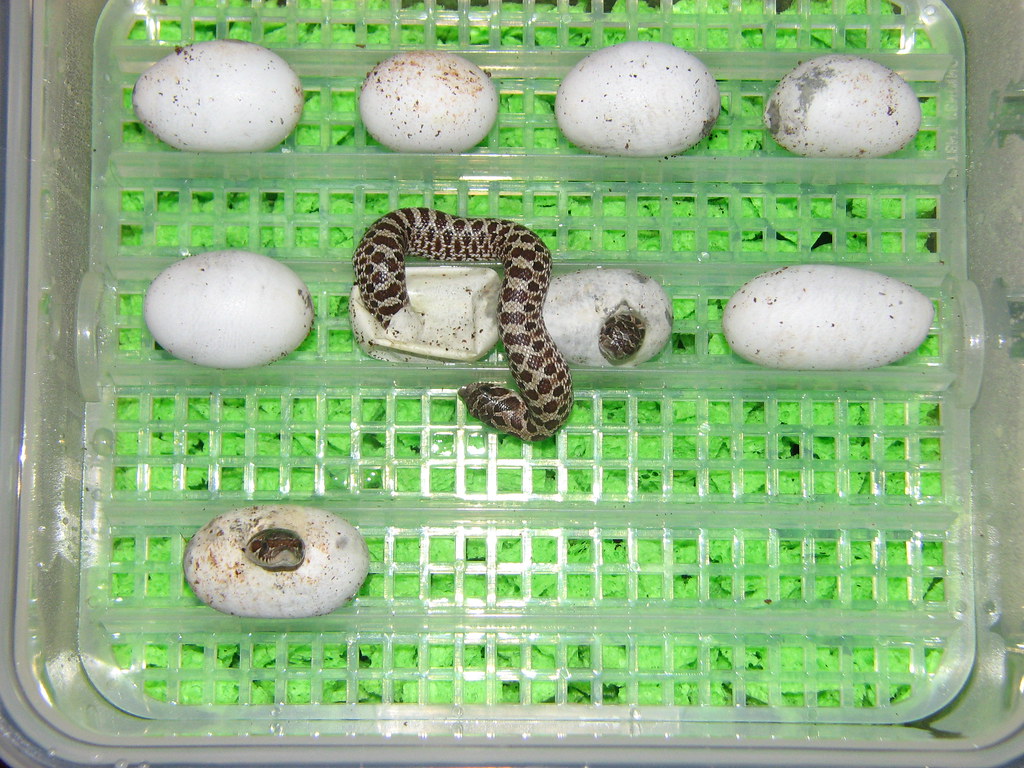
The substrateless part has to do with the fact that the eggs are not sitting in a substrate... They sit on top of a plastic grid and are held in place by adjustable triangular rods that keep the eggs from rolling... You need to use something bellow to maintain the humidity level in the container... You can use wet perlite, vermiculite, hatch rite, super hatch, water crystals, and straight water...
My personal favorite is cellulose sponge material... This has worked great and many people are using it as a medium... Just soak the sponge, ring it out, and you have the perfect amount of water in your container...

Again, this container take out many variables and has improved hatch rates and health in hatchlings in many cases...

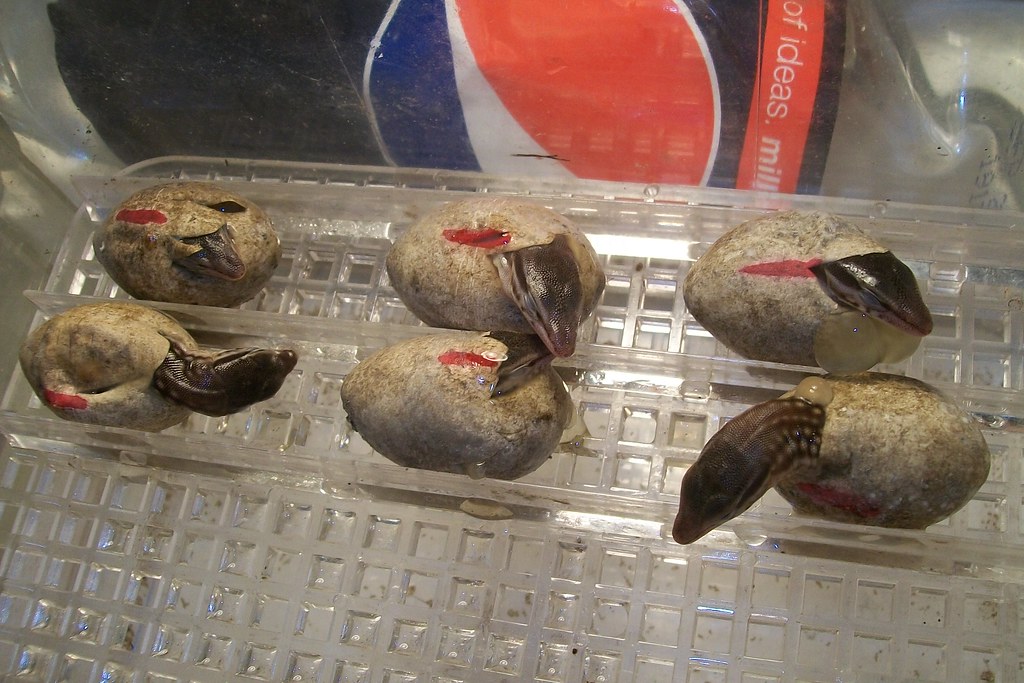
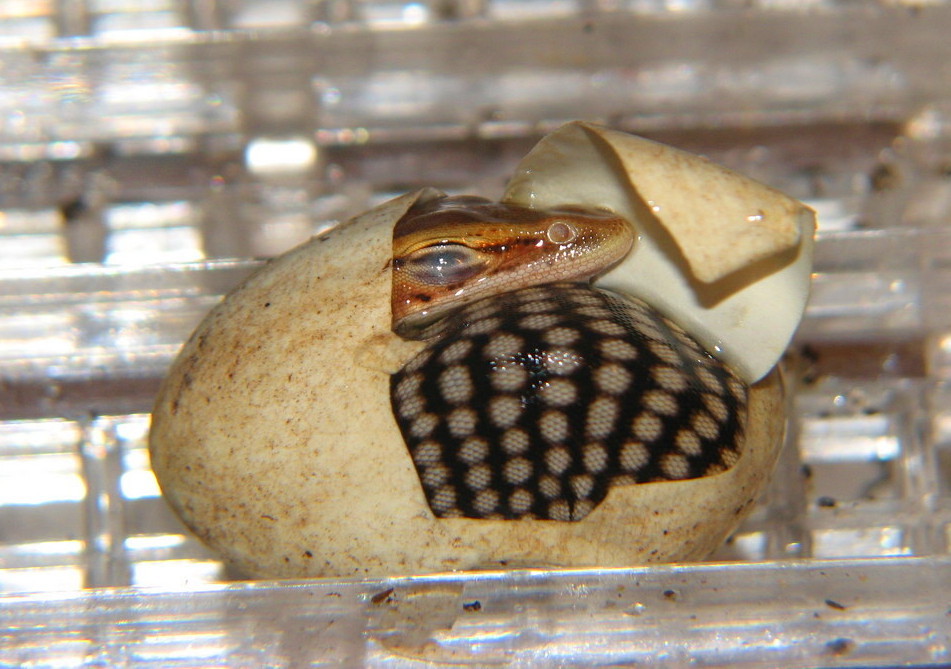
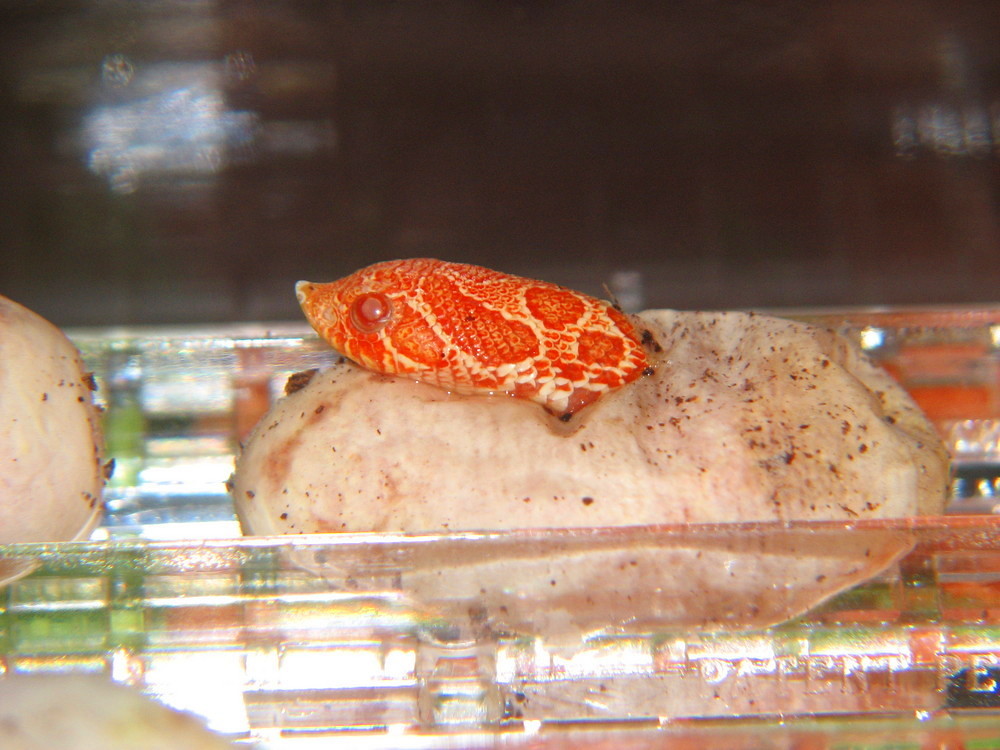
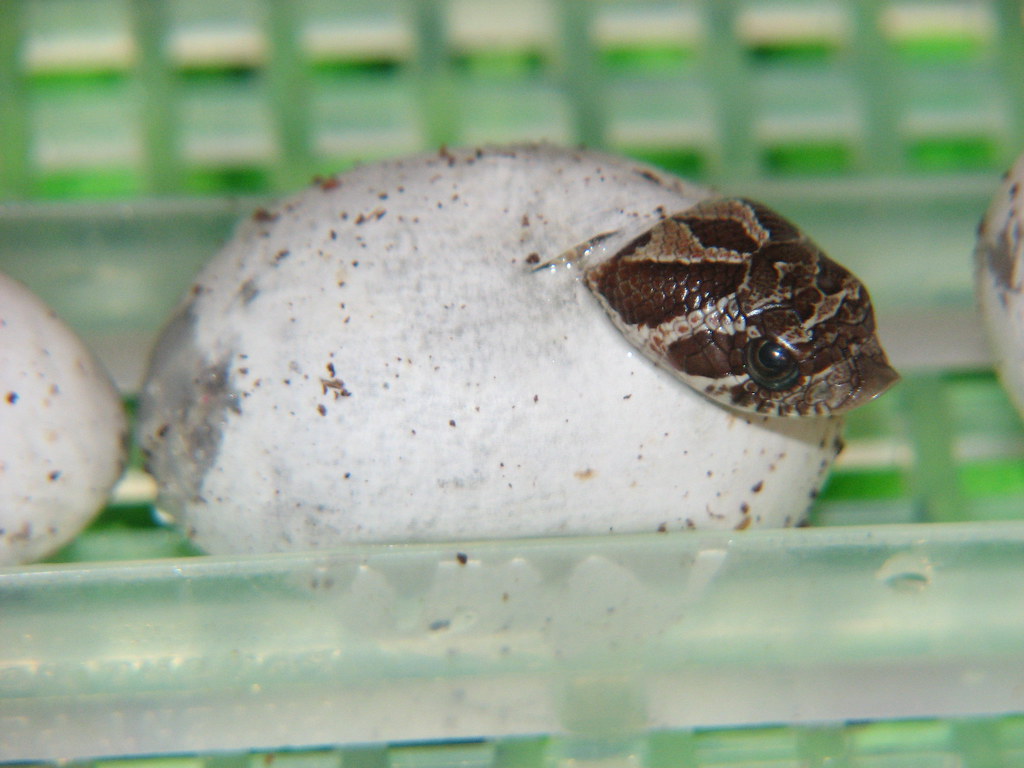
Here are just a few of the hundreds of photos of the S.I.M. container in action....

Ackies
5199851871_e6464a4e06_b.jpg


Varanus Tristis
5063165498_6241efbb13_b.jpg


Hognose snakes using the cellolose substrate...
5025834097_259bc2676c_b.jpg


4888492585_3cf695d40c_b.jpg


4892530576_88db79654e_b.jpg


Chuckwalla
5026198178_9ee4ef791a_b.jpg
 
Dustin-there is actually substrate involved-in the bottom part of the chamber, and the eggs are suspended over the substrate on a plastic grid, so they never come in contact with the substrate.

That keeps the eggs from drowning in substrate which might be too moist, and also keeps the eggs/hatchlings clean.
 
Thanks for posting the pics. I've been trying to visualize it's use. Have you received feedback yet on anyone that couldn't separate the eggs? BP eggs stick together a lot (from what I understand) so would there be a way to secure a cluster? How many "railings" do you get and are they easy to cut without shattering? Like if I wanted to make a box instead of a row to hold a cluster. Can you raise and lower the tray to clear the lid? I really like the concept.
 
Thanks for posting the pics. I've been trying to visualize it's use. Have you received feedback yet on anyone that couldn't separate the eggs?

The triangular rods are fully adjustable and removable so clumped clutched can easily be incubated...

Here is a photo of a large clumped King Snake clutch hatching out...

4749954351_650cd7b9eb_b.jpg
 
Back
Top