

• In case most of you have not noticed, I made changes to the donation amounts as well as the durations for all of the paid membership levels. Things are winding down here, and this seems to be the most prudent way to deal with the "end of life" period of this site.

    Contributor level members - $10 per 30 days
    Sponsors - Eliminated
    Benefactor level members - $25 per 30 days
    Endowment level members - $50 per 30 days

    Account Upgrades Page
  • Responding to email notices you receive.
    **************************************************
    In short, DON'T! Email notices are to ONLY alert you of a reply to your private message or your ad on this site. Replying to the email just wastes your time as it goes NOWHERE, and probably pisses off the person you thought you replied to when they think you just ignored them. So instead of complaining to me about your messages not being replied to from this site via email, please READ that email notice that plainly states what you need to do in order to reply to who you are trying to converse with.

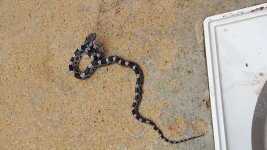
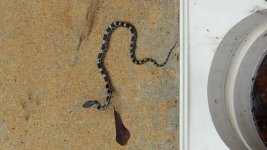
What kind of snake is this??

alea0210

New member
Joined
Oct 4, 2015
Messages
1
Reaction score
0
Points
0
Location
Cedartown, GA
My cousin has a swimming pool but also has some woods surrounding his house.. We were outside and found this little guy. We were curious as to what kind of snake it is. He was rattling his tail like a rattlesnake but there was absolutely nothing there. From what I've read, baby rattlesnakes have a "button". I know absolutely nothing about snakes although I should because I have a boy who is not afraid of the woods at all or snakes!!
 

Attachments

  • 20151002_172310.jpg
    20151002_172310.jpg
    227.1 KB · Views: 217
  • 20151002_172206.jpg
    20151002_172206.jpg
    330.4 KB · Views: 210
Yep, looks like a baby black rat snake to me as well. Rat snakes will sometimes 'rattle' their tails when frightened or agitated; if there are dead leaves near it can sound like a rattler.
 
This is a toughish one since the species in your particular region of Georgia aren't easily delimitable and are probably hybridizing to some degree, but generally, west of the Appalachians and the Apalachicola River, you have the central / grey / black ratsnake, Pantherophis spiloides. They come in many colors and patterns, many identical to those east of the Appalachians. East of the mountains and river and in the FL peninsula you get lots of additional color patterns for the species Pantherophis alleghaniensis (eastern ratsnake), and west of the Mississippi River, the western/texas ratsnake Pantherophis obsoletus picks up.
 
Back
Top