• Responding to email notices you receive.
    **************************************************
    In short, DON'T! Email notices are to ONLY alert you of a reply to your private message or your ad on this site. Replying to the email just wastes your time as it goes NOWHERE, and probably pisses off the person you thought you replied to when they think you just ignored them. So instead of complaining to me about your messages not being replied to from this site via email, please READ that email notice that plainly states what you need to do in order to reply to who you are trying to converse with.

  • IMPORTANT! PLEASE READ!! About the Google Adsense ads being displayed

    =====================
    Posted 08/15/2025
    =====================


    Yeah, I know. They are a pain in the butt. But they pay the bills to keep my server running. Just a fact of life, I am afraid.

    Want to get rid of them? Simple. Just become a Contributor level member or above and they will be gone. -> Please click HERE."

    Is that too much for me to ask of you to keep this site running? Well, sorry about that. I too wish I could get everything for free. But alas.....

    =====================
    Addendum: 01/10/2026
    =====================


    Google Adsense ad revenue for December, 2025 was just $30 over the cost of the lease for the server running this site. So, in effect, the money providing the incentive for me to continue running this site is coming SOLELY from the paid memberships and sponsorships here. Which honestly ain't much....

WV Exotic Animal Ban List

bcr229

Snakes Are Cool
Staff member
Staff
Endowment
Joined
Mar 29, 2013
Messages
3,568
Reaction score
381
Points
83
Location
Inwood, WV USA
According to the article the proposed animals on the "dangerous wild animal list" is expected to be made public this week.

After reading the article I now understand why my state is considered the least educated state in the US. I can't recall the last time I knew of someone who kept a dolphin or whale in a swimming pool.

I won't even comment on the first word in the article. :rolleyes:

http://www.charlestondailymail.com/article/20140609/DM01/140609217/1298

Experts continue deciding what animals ‘dangerous’

Airing on the safe side, a group of West Virginia health and animal experts concluded Monday it’s probably best to recommend residents can’t keep pet whales in their pools.

“Hope we get that rich in this state where he have to worry about people putting porpoises in their backyards,” said James Crum, a biologist with the state Division of Natural Resources. Opting against allowing backyard dolphins was a small part of a lengthy discussion as to what animals should be considered dangerous and wild in accordance with a new state law.

Lawmakers passed the Dangerous Wild Animal Act this year, citing concerns after the 2011 release of lions, tigers and other exotic animals from a private facility in Zanesville, Ohio.

The West Virginia law outlines parameters for ownership of certain animals. While the law suggests a few animals that could be prohibited without a license, it creates a Dangerous Wild Animal board and instructs its members to actually create a comprehensive list.

A subcommittee — comprised of officials from the DNR, state Department of Agriculture and Bureau for Public Health — assigned the task of creating the list took “comprehensive” to heart. The five board members discussed classifications for animals ranging from the Tasmanian Devil and short-nosed bandicoots to elephant shrews and pygmy three-toed sloths.

“I thought today went really well, I was really pleased with the progress the committee made,” said Jewell Plumley, state veterinarian for the West Virginia Department of Agriculture.

Initially the committee considered creating an “inclusion” list, or noting all the animals people could keep legally. Crum said such a list could help them from having to predict if “dancing frogs” or other seemingly obscure animals would become the next trendy pet.

However, the committee eventually opted for a mixed list, noting some animals could be kept while others should not.

“The subcommittee is carefully and purposefully looking at the class, order, family and genus of mammals, birds, reptiles, amphibians and aquatic animals, including hybrids that are dangerous to humans, other animals or the environment due to their inherent nature and capability to do significant harm,” said Dr. Letitia Tierney, state health officer, member of the committee and former member of the snakebite treatment team during her tenure at Charleston Area Medical Center.

The Daily Mail could not obtain a copy of the final list created by the committee. At about 3:30 p.m. Plumley, who sat in on the meeting but is not officially a member, said she thought the group had finalized the list. A spokeswoman for Tierney said at 4:30 p.m. she didn’t think the group had finished the list yet.

Earlier in the day though, several on the committee saw some animals that could create a stir.

“You’ll get a fight on prairie dogs and sugar gliders,” Plumley said, after the group decided to ban both as of early Monday. Prairie dogs can carry several diseases, Crum said, and sugar gliders — something that resembles a small flying squirrel — are considered exotic pets that are banned in numerous other states. Plumley and Crum emphasized they have document justification for each animal they considered banning. State DNR Biologist Kieran O’Malley also noted the law’s definition of animal did not include insects or similar creatures, seemingly allowing a loophole for animals like tarantulas, scorpions or black widow spiders which could be considered dangerous and wild. Owners of large snakes, primates and other animals have voiced concerns about the bill.

However, the law allows for some exemptions for current animal owners and those with appropriate federal research or display permits. The committee will present the list it created Thursday to the full board, which has the authority to change the list as it sees fit. The board’s final list will then go before the Legislature for approval as a rule.
 
Opposition is being organized through several FB groups, and USARK has also put out alerts. I personally have been in contact with my own delegate and the nominee from the district north of me (she's new); my delegate voted correctly, and the new nominee opposes the law but in the primary she beat someone who also voted correctly so that doesn't change the voting numbers.

The problem is that no one who opposed the bans knew about the meetings that had been held; I don't know if they were public, if/where they were announced, if any Sunshine Laws were violated or not, etc.
 
WV should have an agency on rule review (In Ohio it is called JCARR- The Joint committee on Agency Rule and Review) that would has to approve specific wordings and mae sure the law and ts rules meet constitutional provisions. We were able to make headway through JCARR to at least get a seat at the table when the rules were being made.
 
I've contacted people before. Spoke with state vet jewel plumley. I asked if she could tell me when the public meetings were and she had no idea. She wasn't sure if they were going to hold any. Anyway I've been contacting whoever I can. I'm not speaking just for myself like a lot of people are doing but for everyone. I agree with regulations but not bans. Regulations just for the animals sake tbh. Anything I can do to help please let me know. Also could someone put me In the right place for the groups who are against this? I haven't been able to find any. Thanks! Good luck to all of you!
 
One other thing. When I began my calls/emails the only person I spoke with was jewel plumley, and she knew nothing. Somebody from the dnr was supposed to be in this group of people coming up with the list. Of course she didn't know the persons name. I called every dnr in the state and nobody knew anything. I kind of took that as odd. How did nobody know anything? Idk. Just thought I'd put that out there.
 
Got it, apparently Google Drive is needed for the link to work.

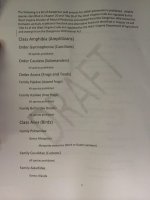
Class Amphibia (Amphibians)
Order Gymnophonia (Caecilians)
All species
Order Caudata
All species (native species which are covered by Chapter 20)
Order Anura (Frogs and Toads)
Famiy Pipidae (African clawed frogs)
All species
Family Hylidae (tree frogs)
All species (Native species are covered by Chapter 20.)
Family Bufonidae (cane toads)
All species (Native species are covered by Chapter 20.)
Justification
The listed amphibians present threat of disease introduction
(chytridiomycosis, ranavirus) and/or possess invasive characteristics.
Some animals also secrete toxins harmful to humans.
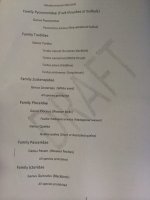
Class Aves (Birds)
Monk or Quaker parakeet (Myiopsitta monachus)
Cuckoo (Family Cuculidae)
Sky lark (Alauda arvensis)
Fruit thrushes or bulbuls (Family Pycnonotidae)
Red-whiskered bulbul (Pycnonotus jocosus)
European blackbird (Turdus merula)
Mistle thrush (Turdus viscivorous)
Fieldfare (Turdus pilaris)
Song thrush (Turdus philomena)
White eyes (Genus Zosterops)
Weaver birds (Genus Ploceus)
Madagascar weaver (Foudia madagascariensis)
Weaver finches (Genus Passer)
Dioch or Red-billed quelea (Quelea quelea)
Cowbirds except native species (Genus Molothrus)
Blackbirds except native species (Genus Quiscalus)
Yellowhammer (Emberiza citronella)
Java sparrow (Padda oryzivora/Lonchura oryzivora)
Spotted munia (Lonchura punctulata)
Starlings (Family Sturnidae)
Pink starling (Sturnus roseus)
Justification
These are social species that easily adapt to new environments and
become nuisances by developing large populations, outcompeting native
species, and causing agricultural damage.
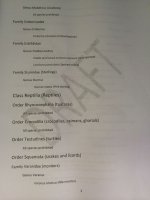
Class Reptilia (Reptiles)
Order Tuatara (Rhyncocephala)
All species
Order Crocodilia (Crocodiles, caimans, gharials)
All species
Order Testudines (Turtles)
All species (Native species are covered by Chapter 20.)
*Refer to Title 21 CFR 1240.62 (Public Health Services Act) for carapace size restrictions
Justification
Turtles are restricted because they present the threat of disease to
humans and introducing disease in to the natural environment and for the
welfare of the animals.
Order Squamata (snakes and lizards)
Family Varanidae (monitors)
Nile monitor (Varanus niloticus)
Komodo dragon (Varanus komodoensis)
Family Elapidae (Cobras, mambas, sea snakes,etc.)
All species
Family Viperidae
All species except timber rattlesnake (Crotalus horridus)and copperhead (Agkistron contortix) which are covered by Chapter 20.
Family Colubridae
Genus Rhabdophis (keelback snakes)
All species
Genus Boiga (cat snakes)
All species
Genus Thelotornis (twig snakes)
Genus Dispholidus (boomslang)
Boomslang (Dispholidus typus)
Family Atractispididae (mole vipers)
All species
Family Boidae
Genus Eunectes (anacondas)
All species
Genus Python (Pythons)
Burmese (Indian) python (Python molurus)
North African Rock python (Python sebae)
South African Rock python (Python natalensis)
Reticulated python (Broghammerus reticulatus) P. reticulatus
Genus Morelia
Amethystine python (Morelia amethystine)
Justification
These snakes possess venom and/or extreme size and strength and present a threat to humans and pets.
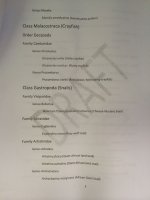
Class Malacostraca (Crayfish)
Order Decapoda
Family Cambaridae
Genus Orconectes
Virile crayfish (Orconectes virilis)
Rusty crayfish (Orconectes rusticus)
Genus Procambarus
Red lobster, Red swamp crayfish (Procambarus clarkii)
Justification
Virile and Rusty crayfish are highly invasive and currently established
in West Virginia. Red swamp crayfish are very highly invasive and
established in NW Ohio and the C&O canal but not yet in WV. All
species are sold to schools through biological supply companies.
Class Gastropoda (Snails)
Family Viviparidae
Genus Bellamya
Chinese Mystery Snail (Bellamya (Cipangopaludina) chinensis)
Family Spiraxidae
Genus Euglandina
Rosy wolf snail (Euglandina rosea)
Family Achatinidae
Genus Achatina
Giant African land snail (Achatina fulica)
Gian African land snail (Achatina achatina)
Genus Archachatina
African Giant Snail (Archachatina marginata)
Family Hydrobiidae
Genus Potamopyrgus
New Zealand Mudsnail (Potamopyrgus antipodarum)
Family Bithyniidae
Genus Bithynia
Faucet snail (Bithynia tentaculata)
Justification
These snails are introduced through pet stores, biological supply
companies, and in ship ballast. They present health risks to humans,
threaten wildlife habitat, and potentially threaten aquatic life.
Class Bivalvia (Bivalves)
Order Veneroida
Family Dreissenidae
Genus Dreissena
Zebra mussel (Dreissena polymorpha)
Quagga mussel (Dreissena rostriformis)
Family Corbiculidae
Genus Corbicula
Asiatic clam (Corbicula fluminea)
Justification
Zebra mussels, Quagga mussels, and Asiatic clams invade, occupy, and
degrade vast areas of aquatic habitat. They colonize and impair
navigation structures, water control structures (e.g. locks), and water
intake pipes.
Class Actinopterygii (Ray-finned fishes)
Order Cyprinodontiformes
Family Poeciliidae
Genus Gambusia
Mosquito fish (Gambusia affinis)
Order Tetraodontiformes (trigger fish, file fish, puffer fish)
All species
Order Perciformes
Family Gobiidae (Goby family)
All species
Family Channidae
Genus Channa (snakehead fish)
All species
Order Cypriniformes
Family Cobitidae
Genus Misgurnus
Oriental weatherfish (Misgurnus anguillicaudatus)
Order Characiformes (piranha fish, tiger fish)
All species
Order Siluriformes (candiru catfish, walking catfish)
All spec ies
Justification
These species present health (toxin) and safety risks to humans or have
invasive abilities that threaten native fish populations.
Class Mammalia (Mammals)
Order Primates
All species except those in family Hominidae
Order Edentata (sloths, anteaters, armadillos, etc.)
All species.
Order Didelphimorphia (marsupials or pouched mammals)
All species.
Order Insectivora (shrews, moles, hedgehogs, etc.)
All species.
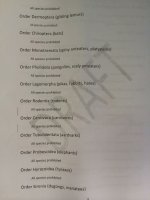
Order Dermoptera (gliding lemurs)
All species.
Order Chiroptera (bats)
All species.
Order Monotremata (spiny anteaters, platypuses)
All species.
Order Pholidota (pangolins, scaly anteaters)
All species.
Order Lagomorpha (pikas, rabbits, hares)
All species, except domesticated races of rabbits and those subject to Chapter 20
Order Rodentia (rodents)
All species, except domesticated golden hamsters, also known as Syrian
hamster, Mesocricetus auratus; domesticated races of rats or mice (white
or albino; trained, dancing or spinning, laboratory-reared); and
domestic strains of guinea pig (Cavia porcellus).
Order Carnivora (carnivores)
All species except domestic dogs (Canis familiaris) and domestic cats
(Felis catus) and species subject to Chapter 20. Hybrid crosses between
two species in Order Carnivora (including domestic species) are also
prohibited.
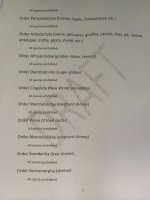
Order Tubulidentata (aardvarks)
All species.
Order Proboscidea (elephants)
All species.
Order Hyracoidea (hyraxes)
All species.
Order Sirenia (dugongs, manatees)
All species.
Order Perissodactyla (horses, tapirs, rhinoceroses, etc.) except domestic horses, mustangs, donkeys, and mules.
All species except those of the family Equidae.
Order Artiodactyla (swine, peccaries, giraffes, camels, deer, elk,
moose, antelopes, cattle, goats, sheep, etc.) All species except:
domestic swine of the family Suidae; except elk, deer, American bison,
which are subject to Chapter 20 and domestic cattle, sheep and goats of
the family Bovidae;
Order Afrosoricidae (golden moles, tenrecs)
All species
Order Diprotodontia (sugar gliders)
All species
Order Cingulata (New World armadillos)
All species
Order Macroscelidae (elephant shrews)
All species
Order Pilosa (3 toed sloths)
All species
Order Macroscelidae (elephant shrews)
All species
Order Scandentia (tree shrews)
All species
Order Soricomorpha (shrews)
All species except those species addressed by Chapter 20.
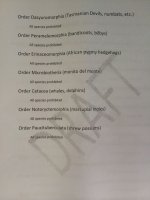
Order Dasyuromorphia (Tasmanian Devils, numbats, etc.)
All species
Order Peramelemorphia (bandicoots, bilbys)
All species
Order Erinaceomorphia (African pygmy hedgehogs)
All species
Order Microbiotheria (monito del monte)
All species
Order Cetacea (whales, dolphins)
All species
Order Notoryctemorphia (marsupial moles)
All species
Order Paucituberculata (shrew possums)
All species
Justifications
Mammals of the orders Primates, Edentata, Didelphimorphia,
Insectivora, Dermoptera, Chiroptera, Monotremata, Pholidota,
Tubulidentata, Proboscidea, Perissodactyla, Hyracoidea, Sirenia and
Carnivora are restricted for the welfare of the animals, except animals
of the orders Lagomorpha, Rodentia, and Artiodactyla, and of the
families Viverridae and Mustelidae in the order Carnivora are restricted
because such animals are undesirable and a menace to native wildlife,
the agricultural interests of the state, or to the public health or
safety.
 
The next meeting to finalize the rules for this law is Scheduled for 1:00pm JUNE 19
at the West Virginia Dept of Agriculture extension building #2
255 Gus R Douglass Lane
Charleston WV 25312
 
Updated List

Updated draft is more disturbing than the last one!
 

Attachments

  • 1.jpg
    1.jpg
    70.9 KB · Views: 202
  • 2.jpg
    2.jpg
    60.8 KB · Views: 203
  • 3.jpg
    3.jpg
    59.3 KB · Views: 212
  • 4.jpg
    4.jpg
    56.7 KB · Views: 203
Say goodbye to those exotic Carnivorans sometimes known as "cats" and "dogs".
My heart also goes back to all the sperm, humpback, and beluga whale owners in WV.
But hey, apparently you can still keep humans, which is pretty cool!
 
The public comment period started today and ends July 31th

USARK posted the official proposed rule/regulation listing dangerous wild animals for WV on their web page for easy access. There has been no change for reptiles and amphibians from the previous list set forth in the WV USARC post on June 29 below (query why they noted the 4" Federal turtle rule).

http://www.usark.org/wp-content/uploads/2014/07/WV-DWA-List-and-Comment.pdf

http://www.ronedmedia.com/wvaquarium/WV_reptile2014.html is mirroring info from the WV_Reptile Watch Facebook forum, for those of you who don't do Facebook.
 
We have a Facebook group - WV_Reptile Watch - where we're sharing information, talking points, etc. One member got a quote for the liability insurance mandated by the law. She could only find one company that even offers that insurance (Lester Kalmanson Agency in Florida).

The mandate is for liability coverage of at least $300,000 with a maximum deductible of $250 per incident. The premium she was given was $705 per year... for two sugar gliders.
 
Update: Thanks to public comments received so far PLUS complaints made to elected officials, the original broad list was tossed out and the DWA Board is now working on a new list. They are starting with Ohio's list and expanding/fitting it to match WV law.

The problem is that the new list isn't published anywhere as it's a work in progress. So, please keep sending in comments!

http://wvmetronews.com/2014/07/17/proposed-banned-animals-list-will-be-revised/
 
The WV Chapter of USARC posted this on their Facebook page today:

PLANNING SESSIONS Re Proposed Rule 61-30 (DWA Rule)
The West Virginia Chapter of USARC is hosting planning sessions for anyone opposed to the Proposed Rule. Our lawyer, some biologists, hobbyists and breeders will share information. We will discuss strategies. Participation is not limited to owners of reptiles and amphibians as many of the issues we have raised in our comments apply to any animal currently on the list. If you would like to participate, please send us your contact information here at FB or via [email protected] as soon as possible. Once we know the number of interested individuals, we will plan our method of communication accordingly.
 
Back
Top