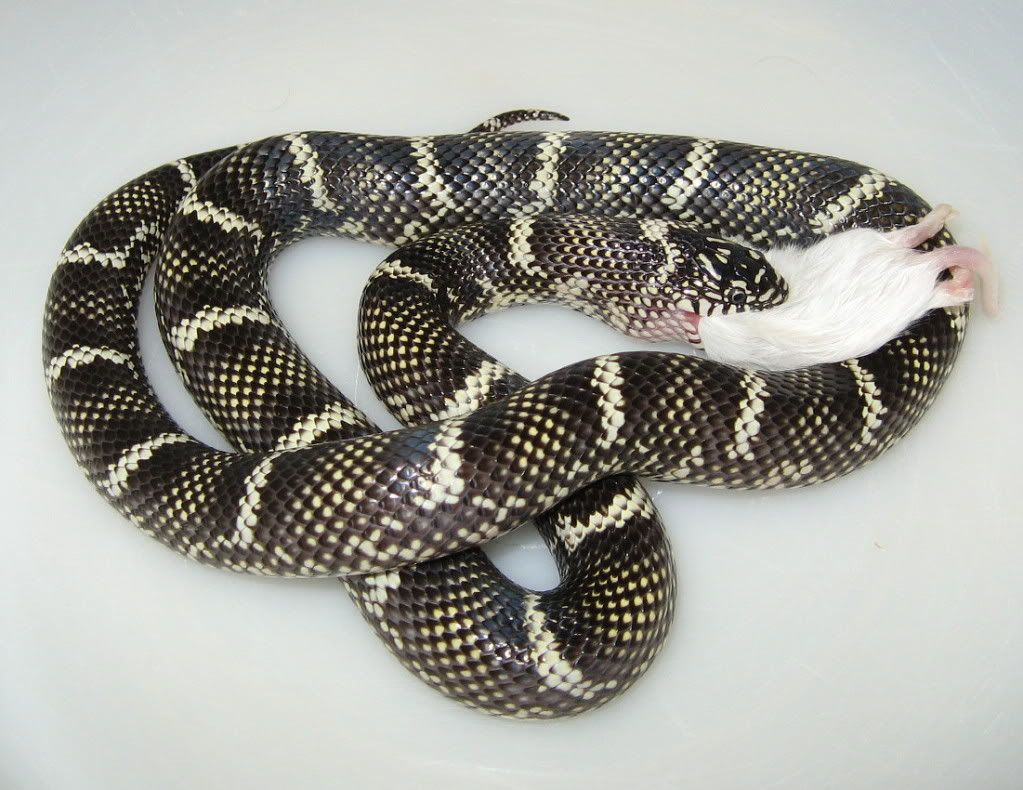
So-called "high-white" Cal. kings are derived from years of line-breeding. It is NOT a simple recessive gene like amelanism, or hypomelanism in colubrids. Boa and python genetics can be worlds apart from the way culubrid genetic mutations are inherited.
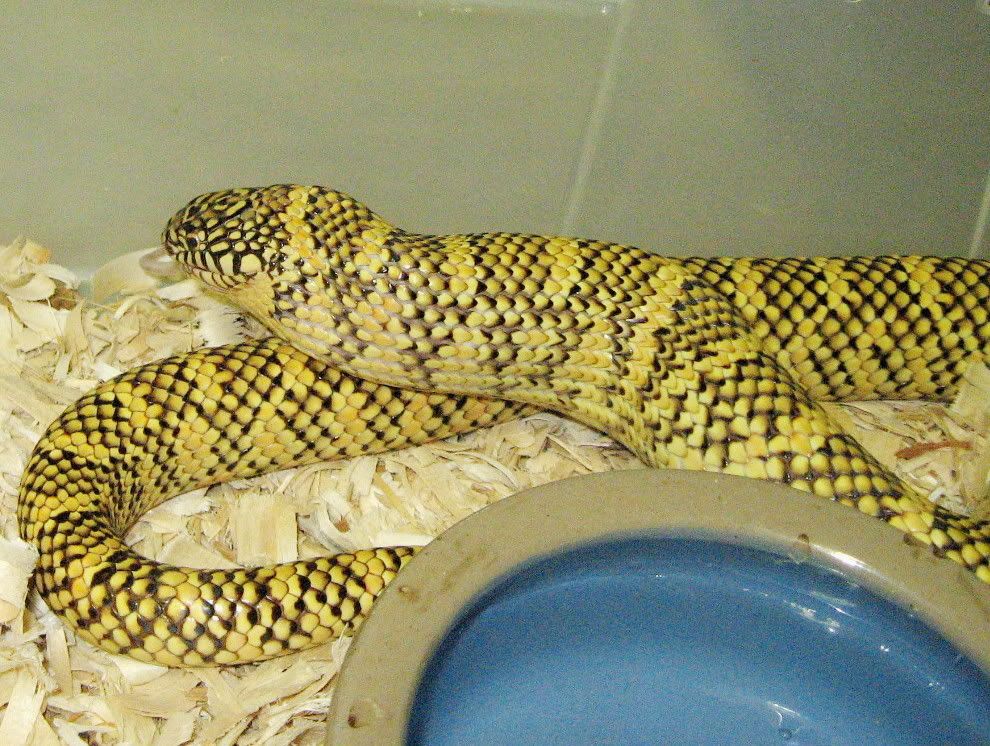
"high-white's" originated years ago from breeding the naturally aberrant patterns of the Newport-Long Beach coastal locality kings that were more yellow and brown into the pure black & white 50-50 Desert phase type Cal. kings, then selectively and continually bred to the most reduced black patterned offspring over the years to create more patternless animals with more white background coloration as well. High-white x high-white can give you some very white offspring. This process was originally similar to how the "banana" Cal. kings became popular that also many times had the San Diego striped gene involved too, except they originally had less(or no) black and white influence and more extreme yellow influence from the coastal Newport-Long Beaches. Over time, alot of the "banana" kings today display far more white influence from the desert phase forms than they originally did, as they were VERY yellow. You can still find some very yellow individual too however.
Your odds for producing more higher-whites will surely be with breeding to another very high-white individual, but with so much variable influence that floats around in them today from all the different types that have gone into their composition, you can still get some surprises, just as you would MOST ANY types of Cal. king breedings. You can breed two banded types and get striped, aberrant, bandeds, or anything in between too.
Anyway, all the high-white, high-yellow kings in the market are all line-bred to display more of that particular color, and not an automatic and predictable simple recessive trait like if you bred a high-white to a normal stripe, or even a banded, and you would get normal looking "hets". It doesn't work that way with the Cal. kings you are referring to.
cheers, ~Doug