Breeding Jamaican Boas
Introduction
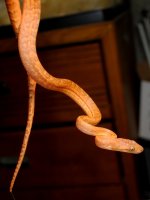
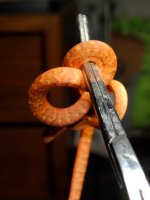
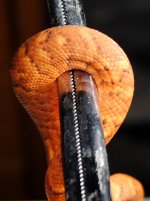
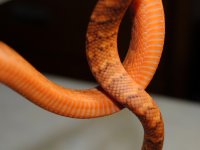
Jamaican boas are arguably one of the most beautifully colored species available in the reptile hobby. Their intricate dappling of blacks and colors makes them a consistently eye-catching addition to any collection, and their rarity, both in the wild and in the hobby, makes them great conversation pieces as well. Their scales can be Black, Gold, Red, and Olive-Green, but even amongst animals of the same phase, a great deal of individuality is present in their coloration. Whether it comes from the degree of color, the prevalence of black markings, or even the blending of two or more colors of individual scales interspersed throughout the body, every Jamaican Boa is a gorgeously unique specimen. Care for Chilabothrus subflavus is relatively simple and can be achieved by even novice keepers. Some individual specimens are too aggressive to be considered “pets,” but there are many specimens that are more than docile enough to handle. These animals make excellent pets or educational animals, all the more so considering their highly endangered status.
Adult Care- Housing
Jamaican Boas can be housed in either terrestrial or arboreal enclosures. Arboreal enclosures make great showpieces, as the combination of a brightly colored Boa perched on a branch among green foliage or photogenic rocks and logs can be quite striking. However, for those more concerned with simple husbandry, terrestrial enclosures are equally adequate to the needs of the animal. A 4x2x1 enclosure is the minimum size enclosure that I would recommend for a fully grown adult. The ambient temperature should range from 70-85F with a hotspot as high as 95F. Humidity should be at least 60%, with a range of 65-75% being ideal. A water bowl large enough for soaking should be provided at all times. Substrate can be virtually any safe material, including aspen, topsoil, carefresh, newspapers, coconut husk, etc. Ideally, multiple hides (and/or perches in an arboreal enclosure) should also be provided, though this is not as necessary as with younger specimens. Jamaican Boas tend to prefer tighter hides that they can wedge themselves into, so a cereal box only a few inches high will usually be preferred to a larger, more open cave. For practical reasons, these snakes should be kept individually unless for breeding purposes. However, many reports exist regarding success with communal keeping of groups of subflavus in large display situations.
Adult Care- Handling
Contrary to popular belief, many adult Jamaican Boas will be perfectly docile, with no work or handling required. Many more will become tame with regular handling. Some will remain aggressive regardless of handling or security. Ensuring proper temps and providing ample hiding places will help with anxiety and insecurity, and thus help with aggression, but miracles should not be expected in the case of a high-aggression animal. The attempt at taming an adult that is exceptionally aggressive may cause it more stress than the taming is worth. If a handleable animal is of significant importance, one should take that into consideration prior to purchasing an aggressive adult and seek a tamer individual or a juvenile if possible. Juveniles can be somewhat more defensive at first, but are more receptive to handling over time. It is my belief that the vast majority of animals can become handleable if properly worked with as juveniles.
Adult Care- Feeding
Adults in captivity are generally fed either birds (chickens of appropriate size, quail, etc) or rodents (usually “small” rats). Most adults, in my experience, will switch back and forth readily between the two, but seem to prefer bird prey items. While Jamaican Boas are capable of swallowing disproportionately large prey, feeding several, smaller prey items makes for easier digestion and fewer complications. I generally feed between 1 and 6 chicks at a feeding, with 2-3 being the average.
Adult Jamaican Boas tend to be quite individualistic in their feeding habits as well. Some will only eat when left alone with their food overnight. Others will strike even f/t or p/k prey items with unparalleled enthusiasm. Many animals, especially males, gravid females, and during the winter, will go off feed readily. This period can last as little as a single, refused feeding, or can go on for months. In some instances, a successfully impregnated female can go almost an entire year without feeding. This is normal and should not cause alarm. The environmental specifications should be checked and the animal monitored for excessive weight loss, but in almost all cases, the animal will go back on feed when ready.
Adult Care- Breeding
Jamaican boas usually reach adulthood between 4 and 7 years. Females should be given more time than males to mature, as the breeding process can be considerably more taxing to them, and premature breeding of females can cause numerous health complications. Under normal conditions, ambient temperatures range from 70-85 and the hotspot is generally around 95F. Light is provided by automatic timer for 12 hours per day. I start the breeding process in the fall, when I shut off the heat source for the hotspot and begin to gradually decrease photoperiod by two hours per month until it reaches 8 hours per day. Ambient temperatures between 70-80F are still maintained, but the hotspot disappears entirely. Animals will usually go off feed during this period, but not always. Food can still be offered in small amounts if the animal is still eating, but large meals should be avoided.
After a month at 8 hours of light per day, I begin increasing the photoperiod by the same rate as it was decreased in the fall and introduce the animals that I intend to breed. I usually add the male to the female’s cage, but this does not appear to be necessary. Little activity is expected at this stage. In order to generate breeding drive from the male, I remove him from the female and place him with another male every couple of weeks. This introduction of competition stimulates the male to begin courting the female. I stop putting them males together when I see courtship and mating behaviors with the females, which usually occur around March or April. I offer food to the females when they are alone, though they usually decline. Females who were bred the previous year should be given the year off, as breeding is exceptionally taxing for females.
If all goes according to plan, the female will become gravid. Gravid females generally stop eating early, or never eat at all. Toward the end of the process, gravid females can become noticeably larger and even lumpy toward the lower third of their body. Within a week or two of parturition, the female will begin spending half of her time obsessively roaming the cage and the other half in her nesting box. It is important to keep in mind that the babies will be quite small, so any holes or gaps in the cage should be filled in with foam or another barrier to prevent escape. I have had newborn babies escape from a cage with no discernible weaknesses, save the quarter inch gap between the two sliding doors at the front. Jamaican Boas can give birth to as many as 46 babies, though litters in the twenties are more common. Still, 20-30 Jamaican boas can be quite the workload, so it is best to prepare in advance for their arrival.
Hatchling Care- Introduction
Newborn Jamaican Boas are disproportionately small, fragile, and temperamental. Jamaican Boas, unlike many other large boids, subscribe to a breeding strategy of producing many, smaller offspring as opposed to producing fewer, stronger ones. For this reason, care must be taken for the first few weeks to provide them with ideal conditions. Neonates less than 3 months old are particularly prone to go off feed due to stress, so it is best to make sure that all habitat requirements are being met on Day One and to disturb them as little as possible. This can be difficult for a keeper that has worked so hard to finally produce them, but it will greatly increase the success of the newborns.
Hatchling Care- Housing
Like adults, subflavus hatchlings can be kept in arboreal and terrestrial setups. I have had equal success in keeping one hatchling each in a 5”W x 18”L x 3”H tub as I have with a 9”W x 12”L x 20”H screen cage. Neonates will climb and perch on branches as happily as they will coil up inside ground hides, and show no discernible difference in appetite or stress levels between the two setups. I prefer terrestrial enclosures for practical reasons. Temperatures and humidity requirements are the same for babies as for adults, but erring on the side of their fragility is recommended. 70-80F ambient range with 85-90 hot spot and 65-75% humidity. Because the babies are so fragile and temperamental, special care should be taken to avoid extremes, as they may not be as likely as their elders to choose a less secure hiding spot for its optimal temperature or humidity.
Terrestrial enclosures can be spartan. Hides can be made from toilet paper or paper towel tubes, cut into lengths of approximately 2-3 inches, and squashed flat. Like adults, baby Jamaican boas prefer their hides to be tight. Multiple hides are an absolute necessity for neonates and juveniles. A hide must be present on both the warm and the cool side of the enclosure, as some of the more high-anxiety animals may be prone to hiding at the back of the tub. This can cause overheating, and in some rare cases, even spontaneous death. When multiple hides are available, the animal feels more secure and is less prone to expose itself to harsh conditions out of fear.
Arboreal cages need to have various branches and other climbing apparatuses. The width of these branches is not of particular importance, as Jamaican boas are especially good climbers and can easily perch on any branch. However, I would recommend a large number of climbing options, as the animal will have more opportunities to find a perch to its liking. I also highly suggest the implementation of bunches of plants (real or artificial) in which the animals can hide. I have noticed on multiple occasions that the snakes often prefer to perch nestled amongst the plants, presumably for added security. I have had limited success with larger screen cages (18W x 12L x 20H), but have noticed a slightly lower readiness to feed in these cages, especially when using live food. My assumption is that cages of this size make it harder to seek and catch prey items. However, they can still be used with success, especially with f/t or p/k prey items or with especially robust individuals.
Hatchling Care- Feeding
Babies may begin feeding as early as 2 weeks post parturition, but many may not begin eating for a full month. Ideal first foods include day old chick thighs (cut as close to the chick’s body as possible and with the foot removed) and anoles. I have not heard of any animals taking f/t pinkies as a first meal, but I also have not heard of any keepers offering pinkies to Jamaican Boa neonates that have not yet started to feed. I have had tremendous success with chick thighs, not only as a first food, but as a sole diet for the first 6 months. Many other keepers have had the same success with anoles.
By far the most successful method of feeding is to place a single food item into the cage at the end of the day, and check back in the morning to see if it is gone. Checking on the snakes before they finish eating is a mistake. Any interruption of the feeding process will most likely cause the already insecure neonate to regurgitate its meal, and in many cases, also cause it to go off feed for an extended period. If the animal goes of feed, which it may do, for little or no reason, the best course of action is to leave it alone and continue to offer food weekly until it decides to eat of its own accord. Reasons that I have noticed that an animal will go off feed include shedding, interrupted eating process, brief handling, and even minor spot-cleaning of the enclosure. Some specimens will go off feed rather readily, but will generally start eating again of their own accord if left alone. Do not make changes in an attempt to get the animal to feed again unless you are sure a correction needs to be made to the husbandry, as change to the enclosure could cause more stress and only prolong the fast.
Neonates will consistently eat on a weekly regimen. In experimental conditions, I have observed babies eating as much as one meal item per day when given constant access to food for short periods. This, however, is not recommended under normal circumstances. Reports of fatty liver disease in overfed animals are prevalent, and overfeeding should be avoided at all costs. Growth rates with weekly feedings are more than sufficient, and later health issues resulting from power feeding are well documented.
Any animals that have not taken food by the age of 6 weeks should have their husbandry reevaluated, and special steps taken to encourage feeding. At no point would I recommend force feeding. Most cases of inappetence stem from stress and/or pickiness, and force feeding will only exacerbate these issues. Make sure that all vivarium stats are optimal and continue to offer various food items until they finally choose one. The most stubborn feeders will usually come around for very small, live, anoles. However, it is important to keep in mind that individual snakes will have individual preferences. I have personally witnessed Jamaican Boas going as long as 3 months before finally eating with no ill effects, so patience is key.
Most keepers will want to wean their snakes onto some form of rodent as soon as possible. While anoles and chick thighs are perfectly viable food items for the long term, many keepers, including those waiting to acquire babies from the breeder, would prefer to deal with rodents for practical reasons and familiarity. For this reason, weaning the animals onto pinkie mice may be appropriate. I highly recommend making these attempts after the 3 month mark, and only with established animals who are eating properly. It sometimes requires a few refused feedings and this kind of stress should not be placed on newborn or unestablished snakes. Keep in mind, as well, that some animals simply will not switch over on the keeper’s timetable, and may require bird or lizard prey items for a considerable time. If no success is seen within a month of attempts, I recommend going back to the original feeding regimen for another month or so before trying again. Most, if not all animals, though, are willing to switch over to rodents by adulthood.
The easiest, and often one of the most effective, methods for switching an animal onto pinkies is to place the usual food item (chick thigh, anole, etc.) in the cage in the usual way, but to add a small pinkie next to it as well. Many snakes will eat the usual item, then take the pinkie as a bonus since they are already in eating mode. After a few feedings of this method, the pinkie alone can be offered. If this method does not get the snake switched onto pinkies, scenting is the next best option. Scenting a pinkie with anoles is most effective when the entrails of the anole are used for scenting. I use f/t anoles, cut open in the chest and belly region, then stirred in a cup with the pinkie(s). Scenting with chicks is best done using the brain matter and/or fuzz of a chick. Combining the above methods (scented pinkies added with original food item) can also result in success with the more stubborn feeders.
Conclusion
Keeping and breeding Jamaican Boas, while sometimes labor-intensive, is a tremendously rewarding experience. Their appearance is striking and unique, their care requirements are easily attainable with a reasonable amount of work, and their endangered status makes their husbandry all the more important to both the world ecology and the hobby. Adult care is similar in difficulty to many of the more common boids, and while newborn specimens can be somewhat temperamental and fragile, it only makes the eventual success of raising them that much more rewarding.