deborahbroadus
HARD CANDY
I had a tortoise when I was a child and decided to get one again not too long ago. I made some mistakes along the way, but one mistake I did not make was ignoring people that gave me good advice on his health. Being that it was sooo long since high school, I admit that I had forgotten the rudimentary information about UVB and glass (duh). However, I did read some books on their dietary needs and habit/heat/humidity requirements. With so many people beginning to get into tortoises because it's "cool" it's important to know their diet and health requirements.
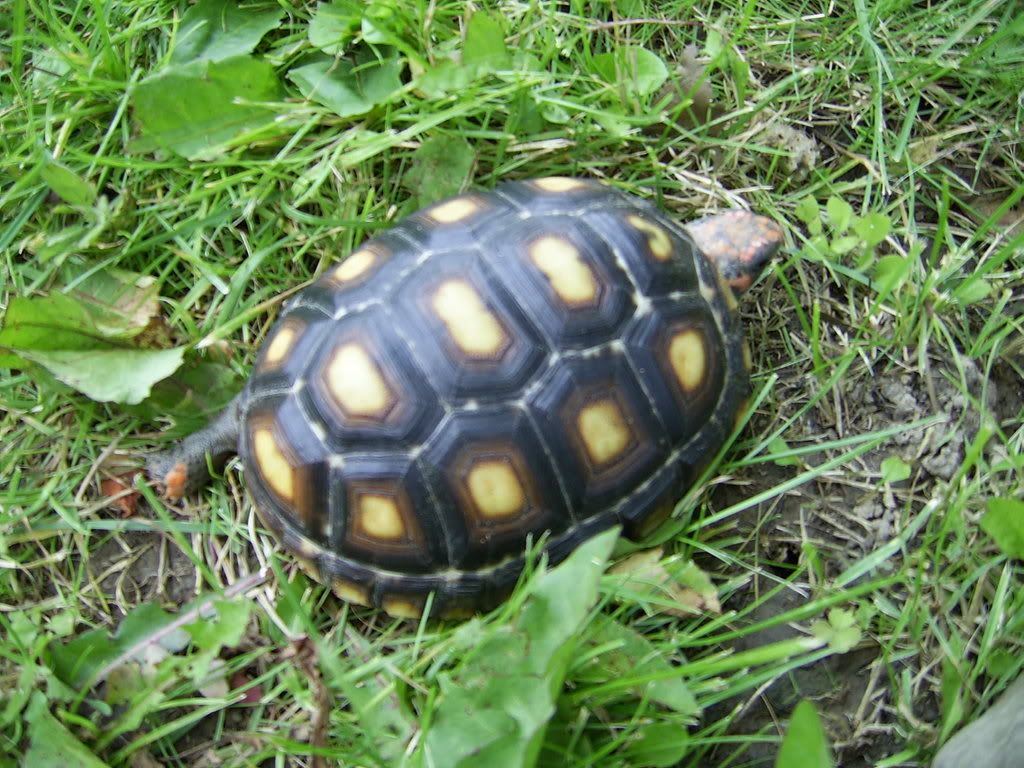
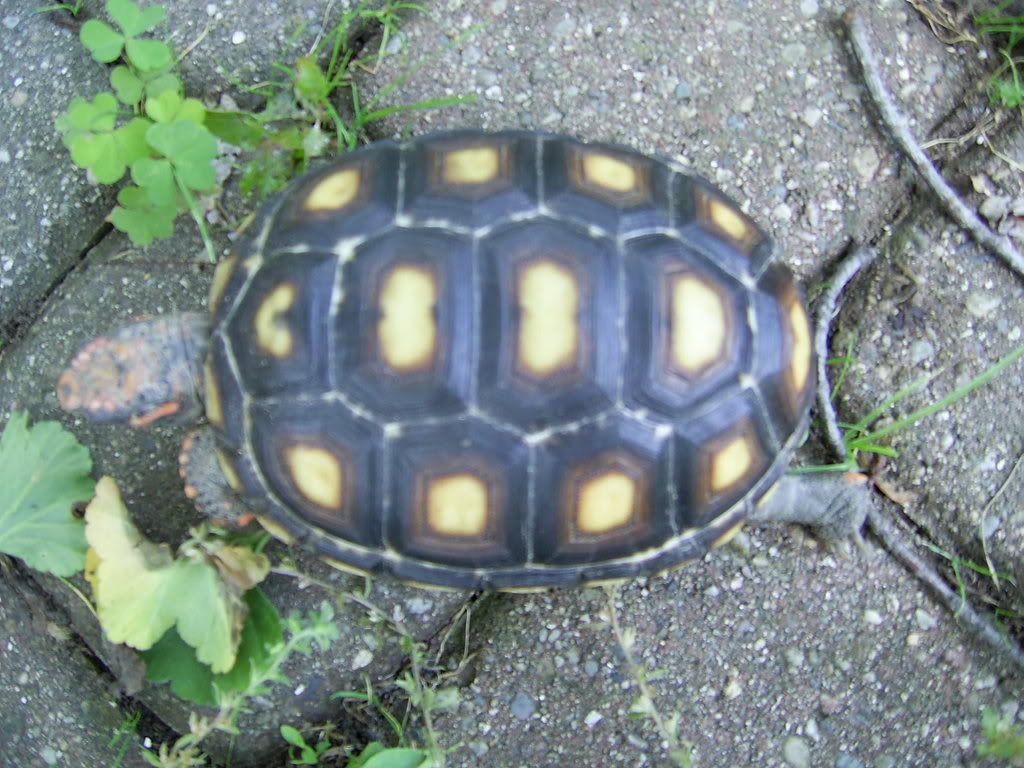
Many people have seen pyramiding shells on turtles and some have begun to think that it's natural for their shells to grow like this, but it is NOT. One thing that we need to recall when taking care of these awesome animals is that they need calcium, and some foods/unavailability of UVB interfers with their ability to absorb or use calcium.
A turtle whose shell is not smooth but a series of pyramiding (this is excessive Keratin growth (bumps) of the scutes is suffering from excessive consumption of dietary protein (too much protein in the diet). In actually, as I learned, no high protein veggies: peas, beans alfalfa or meat should be in their diet. As a matter of fact, some veggies commonly thought to be ok are not. For instance..while potato is ok, the leaves are toxic (The Tortoise and Turtle Feeding Manual, A.C. Highfield, 2000 p. 15). some books also say that some greens are not good. Research can ensure that we are taking care of these animals correctly.
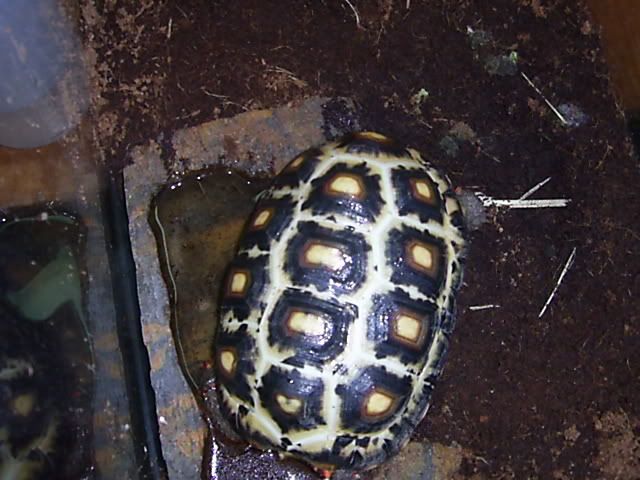
Notice the clear healthy eyes and smooth shell (he did have the beginnings of pyramiding when I brought him). He has lived outside all summer and due to circumstances out of my control, will be wintering in the house. I have set up his environment as closely as possible to the requirements. There are two UTHs underneath, and I open the cage daily for 2 or 3 hours of UBV lighting. He eats turtle food mashed with the fruit of choice (no seeds) and gets a veggie to chomp on. There is also a cuttlebone in the cage with him.


Many people have seen pyramiding shells on turtles and some have begun to think that it's natural for their shells to grow like this, but it is NOT. One thing that we need to recall when taking care of these awesome animals is that they need calcium, and some foods/unavailability of UVB interfers with their ability to absorb or use calcium.
A turtle whose shell is not smooth but a series of pyramiding (this is excessive Keratin growth (bumps) of the scutes is suffering from excessive consumption of dietary protein (too much protein in the diet). In actually, as I learned, no high protein veggies: peas, beans alfalfa or meat should be in their diet. As a matter of fact, some veggies commonly thought to be ok are not. For instance..while potato is ok, the leaves are toxic (The Tortoise and Turtle Feeding Manual, A.C. Highfield, 2000 p. 15). some books also say that some greens are not good. Research can ensure that we are taking care of these animals correctly.
Notice the clear healthy eyes and smooth shell (he did have the beginnings of pyramiding when I brought him). He has lived outside all summer and due to circumstances out of my control, will be wintering in the house. I have set up his environment as closely as possible to the requirements. There are two UTHs underneath, and I open the cage daily for 2 or 3 hours of UBV lighting. He eats turtle food mashed with the fruit of choice (no seeds) and gets a veggie to chomp on. There is also a cuttlebone in the cage with him.
 Great he is getting daily sunlight outside. I hope that he keeps on improving for you.
 )
) .
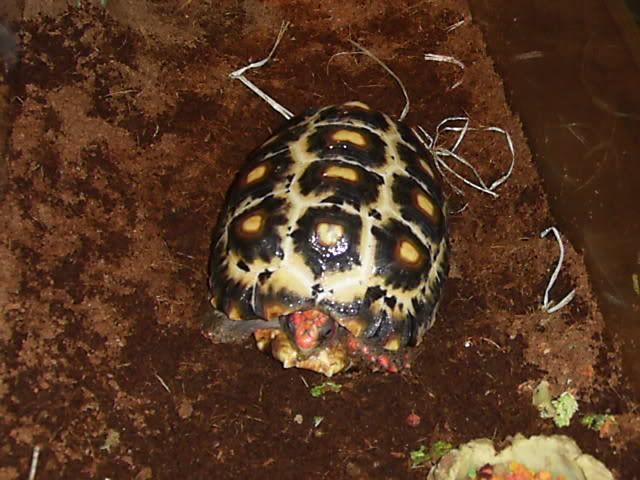
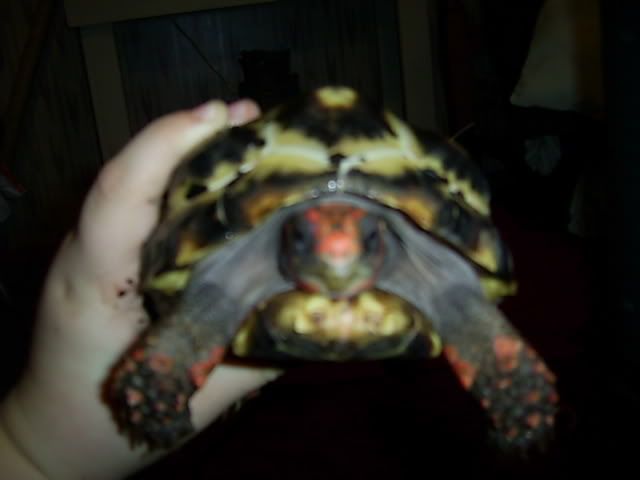
.  . I know i can stop the pyrimiding but can i reverse some of the damage thats been done? Also If i have a uvb bulb going during the day and i have a redbulb during the night to keep it warm and toasty. is this adiquit lighting? thanks
  Sorry about my previous post it didnt seem to post the pictures corectly. i cant copy and paste so how should i post them