• Responding to email notices you receive.
    **************************************************
    In short, DON'T! Email notices are to ONLY alert you of a reply to your private message or your ad on this site. Replying to the email just wastes your time as it goes NOWHERE, and probably pisses off the person you thought you replied to when they think you just ignored them. So instead of complaining to me about your messages not being replied to from this site via email, please READ that email notice that plainly states what you need to do in order to reply to who you are trying to converse with.

  • IMPORTANT! PLEASE READ!! About the Google Adsense ads being displayed

    =====================
    Posted 08/15/2025
    =====================


    Yeah, I know. They are a pain in the butt. But they pay the bills to keep my server running. Just a fact of life, I am afraid.

    Want to get rid of them? Simple. Just become a Contributor level member or above and they will be gone. -> Please click HERE."

    Is that too much for me to ask of you to keep this site running? Well, sorry about that. I too wish I could get everything for free. But alas.....

    =====================
    Addendum: 01/10/2026
    =====================


    Google Adsense ad revenue for December, 2025 was just $30 over the cost of the lease for the server running this site. So, in effect, the money providing the incentive for me to continue running this site is coming SOLELY from the paid memberships and sponsorships here. Which honestly ain't much....

Wild Fiji Boas photos posted

My young Candoia bibroni bibroni certainly display changing colours apparantly due to time of day or mood...

The first two used both to be pink in the morning and brown later in the day, but gradually settled into usually distinct preferences. One of them, (who has grown to be the larger) staying mostly pink, the other, smaller, usually darker brown. Friends of mine have a pair from another litter displaying the exact same pattern of size and colouration.

Now I have another, possibly from thie same litter (the owner is not certain as this one was lost in the adults' tank where two females gave birth, and only discovered some time later). This one seems to prefer to be grey. However, al three can become indistinguishably brown/pink at times, usually when sleeping.

Adults I have seen do not appear to change this dramatically. Maybe they settle into a fixed pattern after youthful experimentation? In particular the two black individuals I have seen appear to be permanently and deeply black with red belly. I haven't seen any black babies so far, but have only seen two litters from brown / grey females (who had 20 - 30 pups each, of the brown / grey colouration described above)

It's interesting. I'm going to see if we can get the black mated and maybe we'll be able to asnwer this in the future. Any 'How to" breeding advice welcomed.
Thanks,
Helen
 
Helenthereef said:
Any 'How to" breeding advice welcomed.

Boas do not have pups. That's a start. :>poke2<: (sorry, couldn't resist :D )

Only advice i can give is keep them as close to their natural environment as you can, (which shouldn't be too hard given your location). It's my belief that snakes will do what snakes will do when you put them together. I don't buy into all the settings changes, and feeding changes that many seem to think necessary to succeed.

But I'm also rather new to actually letting my snakes breed, so I am sure I have a lot to learn. Candoia are completely outside My expertise anyway. LOL

Good luck!
Rick
 
OK what DO they have? Goslings? I am an ignormaus in the terminology - I claim isolation! :eek: :D

What I read on Candoia breeding was that it requires quite a lot of snakes - the males seem to form a bundle around the female and egg each other on... or maybe that's an effect not a cause :shrug01:

So, snake bundle required or just some intimate one-on-one action?

Cheers,
Helen
 
Neonates is the term I use. Don't really know if there is a more technical term for baby Boas or not. :shrug01:

That Boa bundling sounds interesting. I've heard of Garter snakes doing this too. By the hundreds in some places. :yesnod:
 
SNAKES WILL DO WHAT SNAKE WILL DO !!
(my favorite saying btw)

People have been conditioned to believe there is some kind of trick(art) to breeding snakes.
Snakes have been reproducing since no telling when and some clowns think they have the exclusive method to this natural occurrence.

Snakes have always adapted with without human interference,why does such a simplistic thing evade logical thought ?

1 boy snake + 1 girl snake = baby snakes ! :rofl:
Its really that simple....... :yesnod:
Boa can and will reproduce healthy litters without basking spots,brumation and any other trendy human induced condition to/of their captive environment.

Just let the Boa handle all the scientific stuff,they are in fact the real experts :eek:


crotalusadamanteus said:
Boas do not have pups. That's a start. :>poke2<: (sorry, couldn't resist :D )

Only advice i can give is keep them as close to their natural environment as you can, (which shouldn't be too hard given your location). It's my belief that snakes will do what snakes will do when you put them together. I don't buy into all the settings changes, and feeding changes that many seem to think necessary to succeed.

But I'm also rather new to actually letting my snakes breed, so I am sure I have a lot to learn. Candoia are completely outside My expertise anyway. LOL

Good luck!
Rick
 
How about babies lol works for everything else..

Helen, the animal I posted above is about as nice a one as I've seen. Most are colored like the youngsters you posted though some will have stripes.

Breeding the Solomons I just bred them in 1.2 groups, they were not hard to breed just feeding the babies was difficult as Solomons are rather small as adults and the babies are tiny.
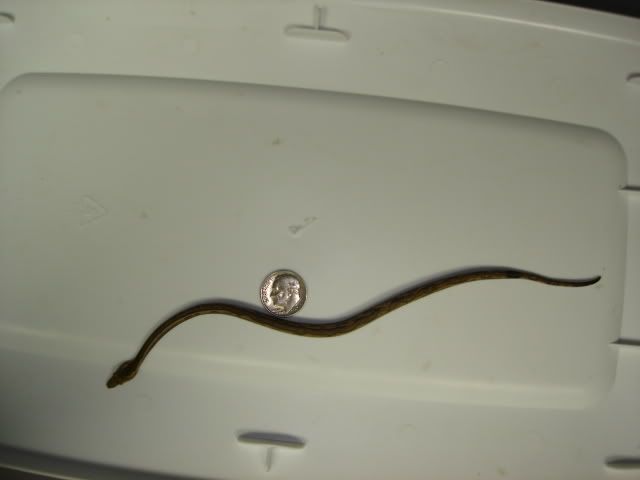
Here's one a few weeks old. Randy
DSC03859.jpg
 
yeah no doubt. ;)

Point is snakes are able to work around human intervetion(captivity) and continue doing what snakes do.
They dont need a $300 cage w/ $300 Temp regulator and pristene aspen sub,muchless filtered water :rofl:

Granted there is nothing wrong with a Honeymoon Suite from AP :eek:
They dont need basking spots for digestion or even gestation(providing ambiant temps are constantly above 80-85*F) many snake forms thrive under conservitive husbandry because they dont have the natural extremes to deal with.

Therefore people shouldnt fear what they obvioulsy dont control.


crotalusadamanteus said:
Yup! Same with cats and dogs. Hell, stick me in a cage with a beautiful woman and see what I try and do. :dgrin:
 
Great, thanks for the encouragement - Keeping It Simple is always good news as far as I'm concerned.

OK, I'm going to give this a go and get the black female into a tank with the grey male and see whether we get (any) babies that are black, brown or pink with blue spots. (That one might be worth having!)

Obviously this will take a while - if we get any results I'll post again.

Cheers,
Helen

PS - I got my fist two "neonates" when they were very tiny as seen in Randy's pic, luckily we have a full range of geckos running around and we got them onto newly hatched ones immediately. One way is putting gecko eggs into the tank and letting them hatch there - a bit hard on the geckos who don't get much of a day in the sun., but a great source of perfectly sized snacks for hatchling boas...
 
Hi Kevin,

Apparantly so, but we don't see them much until people start clearing forest to build stuff - then suddenly they are being found all over the place (usually moving pretty fast as their tree comes down). In some area the locals eat them, in all places they kill them when found - there are superstitions about them. I'm considered a bit suspect for wanting to keep them.

Fiji has nore than 300 islands, so far I know they've been found on all the larger ones.
 
Fiji sea snake

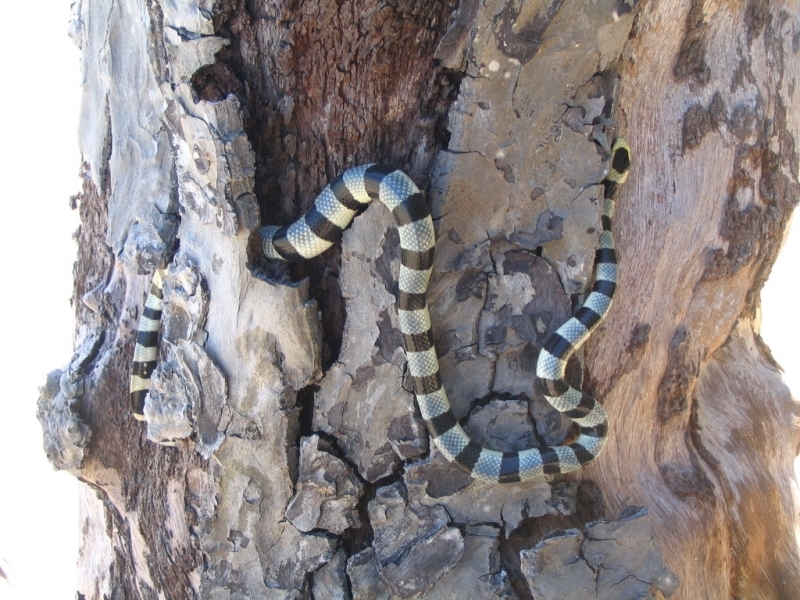
I know this isn't really the right place to post this, as this is not a boa, but while we're on the subject of wild snakes in Fiji, here's a shot of the sea snake we see quite a lot on dives. This is the White-lipped Banded Krait, Laticauda colubrina.
Quadrats_4_Sept_07_23_.JPG


We see them underwater a lot, and on land usually at night, when they come up to digest meals, shed, and lay eggs. They also sometimes climb up our outboard engines to bask on the boat when we're out at sea, and this freaks divers out considerably... :rofl:

They are (extremely) venomous, but small mouthed, back fanged and very docile, having no use for a strike reflex underwater, and having no natural predators. I handle them regularly (and with respect) when encountered. Note the flat tail which is adapted to be used as a paddle underwater.

As I said, no real relevance to a boa group, but I just think they are very beautiful, and hope you enjoy the photo. Can't think of a way to keep them without an olympic sized swiimng pool at my disposal though..... ;)

Helen
 
Fiji Boas rock!

Hi,

Thanks for the great photos of your Fiji Boas. I have two Fiji Boas also. I live in Suva. Send me a message direct and maybe we can meet?

thanks,
Peter :yesnod:
 
Boas in Suva

Hi Peter, I've sent you a private message via the site link, your profile doesn't allow emailing. call or email me when you get it.
Maybe it's time for a Suva snake group - I know other keepers here.

Cheers,
Helen
 
Final Fiji non-boa snake thang

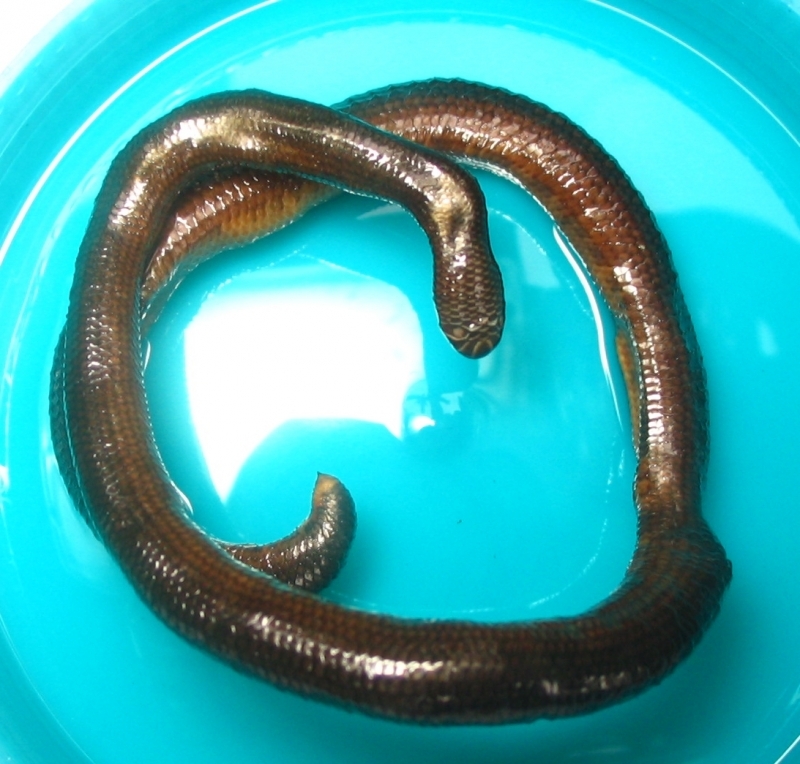
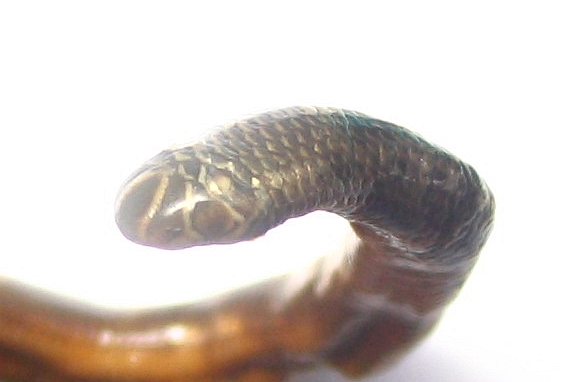
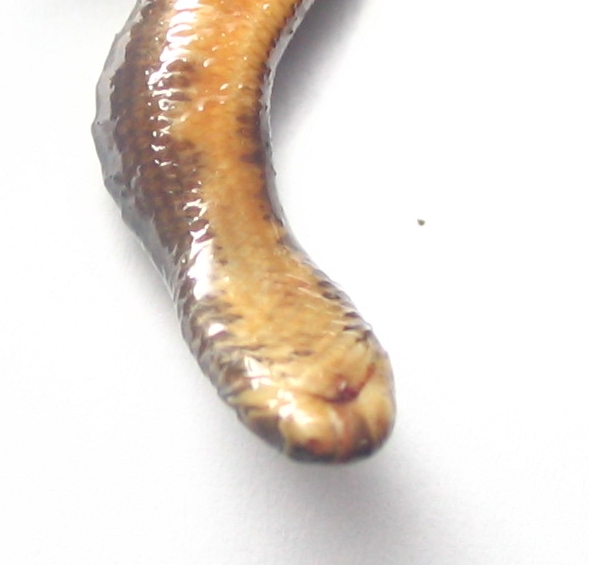
There is one other peculiar critter here I thought I'd briefly share - this is an as-yet unconfirmed species of blindsnake - they are very small (max 6 inches long) and look very much like earthworms. The are found underground, and eat ants and termites. This is a dead specimen collected for identification purposes. We don't know whether these are very rare or just rarely seen.....

Whole snake, around six inches long
Fiji_Blindsnake.jpg


Snake head - eyes reduced to smal black dots under scales
Fiji_blindsnake_head.jpg


Snake mouth - adapted to eat ants and termites
Fiji_blindsnake_mouth.jpg


That's the end of my non-boa section. Thanks for tolerating the deviation from the thread! :D
Helen
 
I'm curious what specie of gekko do you feed your boas and what are the most common lizards on Fiji (and on Solomon Islands if you know)????
 
Just wondering if there'd be any grant $ available for your attempted breeding- might be worth looking into, good luck!
 
Back
Top