• Responding to email notices you receive.
    **************************************************
    In short, DON'T! Email notices are to ONLY alert you of a reply to your private message or your ad on this site. Replying to the email just wastes your time as it goes NOWHERE, and probably pisses off the person you thought you replied to when they think you just ignored them. So instead of complaining to me about your messages not being replied to from this site via email, please READ that email notice that plainly states what you need to do in order to reply to who you are trying to converse with.

  • IMPORTANT! PLEASE READ!! About the Google Adsense ads being displayed

    =====================
    Posted 08/15/2025
    =====================


    Yeah, I know. They are a pain in the butt. But they pay the bills to keep my server running. Just a fact of life, I am afraid.

    Want to get rid of them? Simple. Just become a Contributor level member or above and they will be gone. -> Please click HERE."

    Is that too much for me to ask of you to keep this site running? Well, sorry about that. I too wish I could get everything for free. But alas.....

    =====================
    Addendum: 01/10/2026
    =====================


    Google Adsense ad revenue for December, 2025 was just $30 over the cost of the lease for the server running this site. So, in effect, the money providing the incentive for me to continue running this site is coming SOLELY from the paid memberships and sponsorships here. Which honestly ain't much....

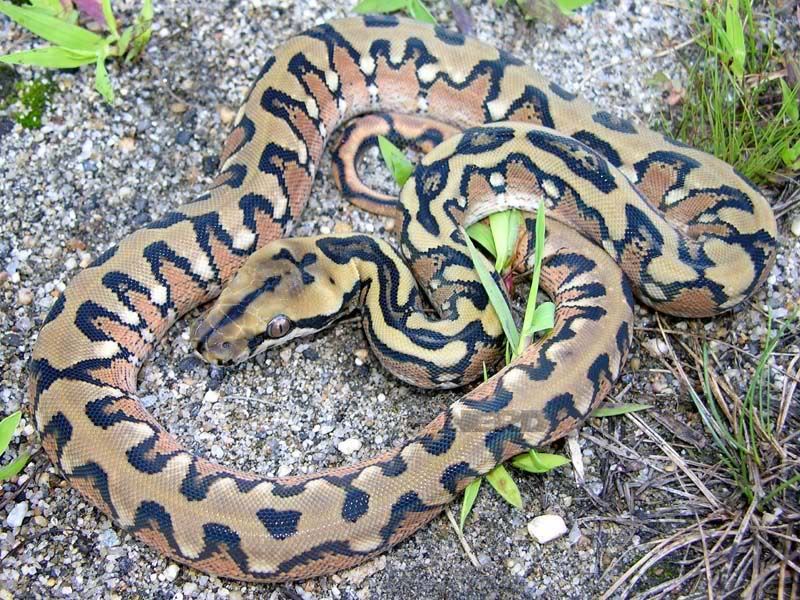
worlds first spider carpalls

No offense to OP, as this is an absolutely gorgeous snake-- but IF I recall correctly, morphs do not cross species (ie an albino retic to an albino burm will not net you albino Bateaters, or even het Bateaters), so in all likely the spider trait was not expressed and this is simply a Ball JCP hybrid

Someone please correct me if I have my genetics wrong here

I'm not a genetics genius but I looked at a few other normal ball x jcp pics and the OP's hatchling definitely appears to look different (head pattern and striping). This could all be coincidence but I guess we will have to see the rest of the clutch.
 
Not a fan of Hybrids at all. I view them as mutts...don't think it is cool, or inavative, and view it as a waste of a good Spider male and Carpet female.

Dave
 
Original quote by David Reid,

Not a fan of Hybrids at all. I view them as mutts...don't think it is cool, or inavative, and view it as a waste of a good Spider male and Carpet female.

Dave


This is a classified ad, not a thread in the forums. If you don't like it or agree with it don't look at it.

These are beautiful hybrids and I can't wait to see what the whole clutch looks like. They sure do appear to carry some spider traits from what Im looking at. Great job, keep up the good work:thumbsup:
 
I'm going to move this thread into the Genetics, Taxonomy, Hybridization forum.

Everything posted thus far has been on topic to this thread, but I'm not sure if this thread should have been posted in the classifieds :shrug01:. It seems that you're exhibiting this animal, giving people a foretaste of the sale to come. This type of preliminary "ad" will inherently solicit opinions more-so than customers.

I'll let one of the site-wide mods know that I've moved this, and if they feel it should be moved back, then they'll do so.
 
I would agree that simple recessive traits between species will most likely not work out but with the spider being a codom pattern mutation I would assume that it would pass on it has been a while since I saw the original carpalls but these do look different if my memory serves me right but as the clutch hatches I am sure we will find out.
not a big fan of hybrids my self but congrats those guys look awesome.
 
The reason an albino retic crossed to an albino burm do not produce albinos is that, since they are different species, the gene for amelanism is different (or in a different location). When there is only a single copy of a recessive gene, the dominant phenotype is expressed.
I would suspect that if one of these albino x albino hybrids were to be bred to another albino burm or retic, you would produce albinos about 50% of the time. (If the hybrid is capable of reproduction that is, and in reality the odds would likely be under 50% due to recombination).

In the case of a dominant gene, I see no reason why the hybrid wouldn't have the mutant phenotype. If the gene is present it is likely to be expressed.

I am personally not a huge fan of hybrids... But I must admit they are pretty. Are carpalls capable of reproducing?
 
The reason an albino retic crossed to an albino burm do not produce albinos is that, since they are different species, the gene for amelanism is different (or in a different location). When there is only a single copy of a recessive gene, the dominant phenotype is expressed.
I would suspect that if one of these albino x albino hybrids were to be bred to another albino burm or retic, you would produce albinos about 50% of the time. (If the hybrid is capable of reproduction that is, and in reality the odds would likely be under 50% due to recombination).

In the case of a dominant gene, I see no reason why the hybrid wouldn't have the mutant phenotype. If the gene is present it is likely to be expressed.

I am personally not a huge fan of hybrids... But I must admit they are pretty. Are carpalls capable of reproducing?

I totally agree with you. Seems like any dominant gene would be just that and would be expressed. I would say the clutch would have both spider carpalls and regular carpalls. I have wondered the same thing about them being able to reproduce. I plan on producing some Fire carpalls next year. I am interested to see if I breed the hybrids together and produce lucy carpalls. It seems to me that if you breed the hybrids themselves together you would be able to. I guess I will find out in a few years.
 
I totally agree with you. Seems like any dominant gene would be just that and would be expressed. I would say the clutch would have both spider carpalls and regular carpalls. I have wondered the same thing about them being able to reproduce. I plan on producing some Fire carpalls next year. I am interested to see if I breed the hybrids together and produce lucy carpalls. It seems to me that if you breed the hybrids themselves together you would be able to. I guess I will find out in a few years.
I would have to agree as well. With a recessive gene the offspring would not have any visual morphs, now it would be interesting to see if an albino ball to an albino carpet would produce any visual offspring. Or would the offsping be double hets as in if you breed the offspring to a het albino carpet or ball would you get visual morphs? Kinda interesting, makes me wanna research genetics alot more.
 
Co-dominant and dominant traits can be passed onto a hybrid... Although these are the first Carpall morphs, just take a quick look at NERD's Platinum Jungle Retics (75% Retic/25% Burmese) and you'll see that it is possible. Check em out:

platjungle.jpg


As someone else said, recessive traits might not work because they are on a different allele in different species. Some might work but only time will tell.

Congrats on those beautiful babies, and keep us posted! :)
 
The reason an albino retic crossed to an albino burm do not produce albinos is that, since they are different species, the gene for amelanism is different (or in a different location). When there is only a single copy of a recessive gene, the dominant phenotype is expressed.

I am sorry but this is not a correct assumption

The gene for "amelanism" (tyrosinase, tyr) is not different, there is only one gene for tyr in any given species, it is the same gene, structurally and functionally, between snake species (and even between genera, the tyr gene extends down to insects and up into humans). So if you breed a T- Albino ball to a T- Albino carpet you will get all T- Albino carpalls.

It is quite simple, you get one defective tyr gene from the ball parent and one defective tyr gene from the carpet parent so the offspring will have the two defective tyr genes and, therefore, the mutant phenotype. And the genes need not be located at the same locus. Since the offspring get half their chromosomes from one parent and half from the other parent then they would still get the mutant gene regardless of which gene it was located on. So if the tyr gene in balls is on chromosome 1 but on chromosome 7 in carpets if you look at the offspring it will have one of each chromosome from each of the species (i.e. one ball chromosome 1 and one carpet chromosome 1, one ball chromosome 7 and one carpet chromosome 7) which gives you two copies of the try gene despite the the fact that they are "distant" from each other

As far as other recessive traits... It would depend on the gene. If the Hypo gene is one that is shared between species then the hybrids could express Hypo. Same would apply to Axanthic or Pied or whatever.

 
so what was the total number of eggs? and what was the total number of hatched? and number of spiders?

that one looks sick man would luv to see how the others look.
 
I am sorry but this is not a correct assumption

The gene for "amelanism" (tyrosinase, tyr) is not different, there is only one gene for tyr in any given species, it is the same gene, structurally and functionally, between snake species (and even between genera, the tyr gene extends down to insects and up into humans). So if you breed a T- Albino ball to a T- Albino carpet you will get all T- Albino carpalls.

It is quite simple, you get one defective tyr gene from the ball parent and one defective tyr gene from the carpet parent so the offspring will have the two defective tyr genes and, therefore, the mutant phenotype. And the genes need not be located at the same locus. Since the offspring get half their chromosomes from one parent and half from the other parent then they would still get the mutant gene regardless of which gene it was located on. So if the tyr gene in balls is on chromosome 1 but on chromosome 7 in carpets if you look at the offspring it will have one of each chromosome from each of the species (i.e. one ball chromosome 1 and one carpet chromosome 1, one ball chromosome 7 and one carpet chromosome 7) which gives you two copies of the try gene despite the the fact that they are "distant" from each other

As far as other recessive traits... It would depend on the gene. If the Hypo gene is one that is shared between species then the hybrids could express Hypo. Same would apply to Axanthic or Pied or whatever.


Is it in fact documented that the gene is the same? If so, how is it possible that there are different strains of albino... for example, Sharp/Kahl albinos in boas. Also, how would that account for a simple organism such as the filamentous fungus Neurospora crassa, which has a number of genes that when knocked out produce albino strains of the fungus?

If the genes are in fact the same, how would you explain why the breeding of an albino burm and an albino retic does not produce an albino hybrid? (If that has in fact been attempted)
 
Is it in fact documented that the gene is the same?

Do you mean between balls and carpets? Or the tyr gene itself? IF the latter then yes it is documented. The
gene is near universal and its structure and function are not radically changed between genus/species. There have been experiments done where the tyr gene from one organism has been swapped into another organism to show no change in function

If so, how is it possible that there are different strains of albino... for example, Sharp/Kahl albinos in boas.

The pathway for melanin production is a many step process. The first step is wholly dependent on tyr so if you knock that out the whole path to synthesis is stopped dead. However, it is possible to mutate other genes that effect other parts of the pathway thereby giving rise to a different type of albino, hence the term T+ albino. There can be only one type of T- albino but there can be numerous types of T+. Depending on where in the pathway the mutation is and how extreme the mutation, a T+ albino can look very similar to a T-. Kahl and Sharp are a great example of this. Sharp strain is a T+ type albino which is why it produces the Paradigm when bred to one of the "caramel" strains. The Sharp and the "caramel" are alleles of the same gene but it is not tyr. The same situation exists with the Clarke line of retics.

Also, how would that account for a simple organism such as the filamentous fungus Neurospora crassa, which has a number of genes that when knocked out produce albino strains of the fungus?

Same situation as above. Different genes in the pathway, when knocked out, will give rise to types of albinos.

If the genes are in fact the same, how would you explain why the breeding of an albino burm and an albino retic does not produce an albino hybrid? (If that has in fact been attempted)

Has an albino retic been bred to an albino burm? If so, which strain of albino retic was used? And which strain of albino burm. That is why I was very explicit when I said that both parents had to be T- for the hybrid to display the phenotype. If you are crossing different types of T+ or T- x T+ then you will not see a phenotype.
 
My apologies, the first part of my reply should have read:

Do you mean between balls and carpets? Or the tyr gene itself? If the latter then yes it is documented. The tyr gene is near universal and its structure and function are not radically changed between genus/species. There have been experiments done where the tyr gene from one organism has been swapped into another organism to show no change in function.

I accidentally hit "quote" rather than "italics"
 
My apologies, the first part of my reply should have read:

Do you mean between balls and carpets? Or the tyr gene itself? If the latter then yes it is documented. The tyr gene is near universal and its structure and function are not radically changed between genus/species. There have been experiments done where the tyr gene from one organism has been swapped into another organism to show no change in function.

I accidentally hit "quote" rather than "italics"

If the albino phenotype is caused by a defective tyr gene as opposed to a gene within the pathway, then I suppose you would be correct. But is it documented that it is in fact the tyr gene itself that is responsible for the albino phenotype in both carpets and balls, or simply a gene involved in the tyr pathway?

I suppose I cannot argue that it is absolutely impossible that the hybridization of an albino x albino of two different species CAN occur, I just think the likelihood of it easily occurring in a single generation is slim, taking into account the number of genes/regulatory elements that could easily result in a mutant phenotype when disrupted.
 
If the albino phenotype is caused by a defective tyr gene as opposed to a gene within the pathway, then I suppose you would be correct. But is it documented that it is in fact the tyr gene itself that is responsible for the albino phenotype in both carpets and balls, or simply a gene involved in the tyr pathway?

I do not believe that any of the reptile albinos have been absolutely documented as being T-, it is just assumed that they are as T- is one of the most "common" mutations that spontaneously occur.

A quick PCR test would work to give you the answer, would not cost more than a few dollars to make up the primers and find someone with a thermocycler to run it...

I suppose I cannot argue that it is absolutely impossible that the hybridization of an albino x albino of two different species CAN occur, I just think the likelihood of it easily occurring in a single generation is slim, taking into account the number of genes/regulatory elements that could easily result in a mutant phenotype when disrupted.

I understand and I did caveat my initial post to that effect (i.e. depending on what we are talking about what are the odds of two different organisms being related.) But I believe that with T- it could quite easily be done if someone had the gumption.
 
Well... yes, of course, PCR is inexpensive (about $7.45 per primer [30nt]) and effective... however... DESIGNING primers is EXTREMELY difficult, considering that the genomes of these species have not (to my knowledge) been sequenced at this point in time. While the protein sequence of the tyr gene is likely highly conserved in eukaryotic organisms, this does not in fact mean that the nucleotide sequence is conserved... (degenerative genetic code, codon bias, etc). In addition, you would need to design primers specific to each species, since they will not be the same.

You clearly have a fairly decent understanding of molecular biology... just out of curiosity, are you a student/graduate?
 
hi every one i cant go back and forth with every q & a , but the proof is in the pudding.
i proved them out , and will be doing albinos in the future.buy the way 10 eggs, 7 hatched,5 spiders,and 2 reg, 2 infertall, and 1 not fully formed.
thanks,
gus & adam
GLexotics
 
Back
Top