• Responding to email notices you receive.
    **************************************************
    In short, DON'T! Email notices are to ONLY alert you of a reply to your private message or your ad on this site. Replying to the email just wastes your time as it goes NOWHERE, and probably pisses off the person you thought you replied to when they think you just ignored them. So instead of complaining to me about your messages not being replied to from this site via email, please READ that email notice that plainly states what you need to do in order to reply to who you are trying to converse with.

  • IMPORTANT! PLEASE READ!! About the Google Adsense ads being displayed

    =====================
    Posted 08/15/2025
    =====================


    Yeah, I know. They are a pain in the butt. But they pay the bills to keep my server running. Just a fact of life, I am afraid.

    Want to get rid of them? Simple. Just become a Contributor level member or above and they will be gone. -> Please click HERE."

    Is that too much for me to ask of you to keep this site running? Well, sorry about that. I too wish I could get everything for free. But alas.....

    =====================
    Addendum: 01/10/2026
    =====================


    Google Adsense ad revenue for December, 2025 was just $30 over the cost of the lease for the server running this site. So, in effect, the money providing the incentive for me to continue running this site is coming SOLELY from the paid memberships and sponsorships here. Which honestly ain't much....

Selective Breeding - Pastels

rabernet

New member
Joined
Jul 8, 2005
Messages
672
Reaction score
61
Points
0
Location
Marietta, GA
I was reading this thread:

http://www.faunaclassifieds.com/forums/showthread.php?p=636720#post636720

and WingedWolf was stating that it wasn't possible for a small breeder to selectively breed as effectively as a larger breeder.

I happen to disagree with that point of view. I took my time picking my animals, both normal females and morphs - choosing only the best quality - to me! And I spent two and a half years raising my girls. Some were ready to go, some needed another year - didn't matter to me that some didn't go last year, they'll go this year and be even more prepared with their weight and body condition. I didn't rush into breeding by purchasing just any breedable weight female.

With my first season under my belt, I had just three clutches (two lemon pastel clutches and one possible het clown clutch). The odds gods weren't with me, out of 10 pastel eggs (between the two clutches) I got 2 pastels out of one clutch and all normals out of the other. And 3.1 on the possible het clown clutch.

BUT, I hatched healthy, beautiful animals, and I'm thrilled with that!

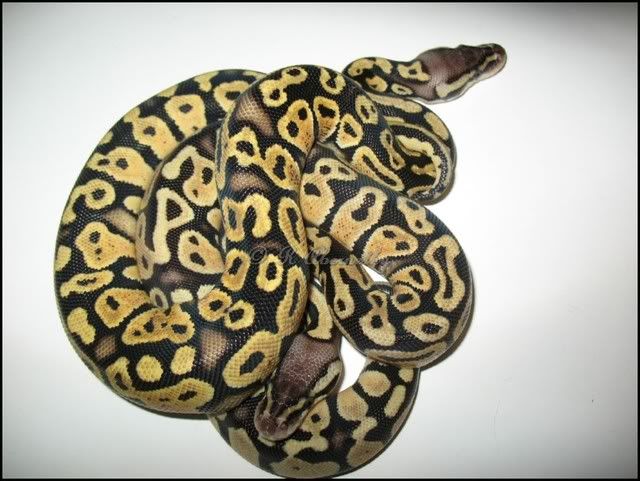
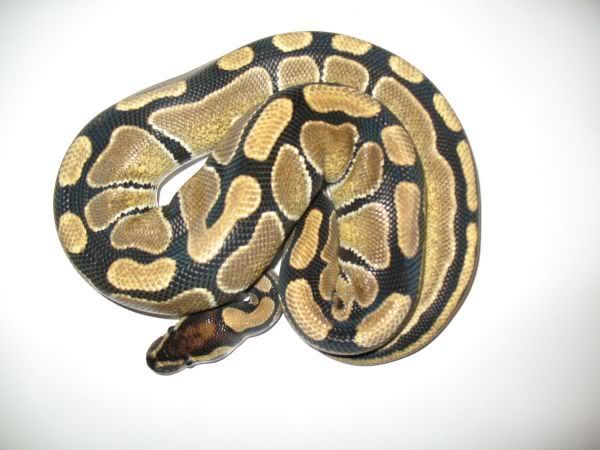
Tonight I took some pictures of the only pastels that I hatched. I started with an exceptional male lemon pastel and a nice light female:

WinstonandPandora3.jpg


WinstonandPandora5.jpg


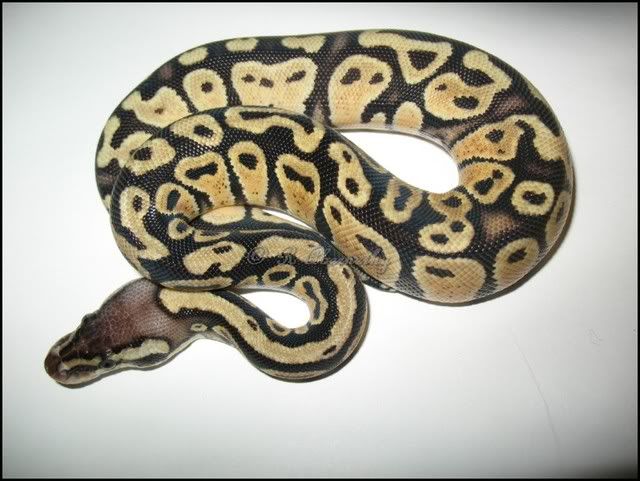
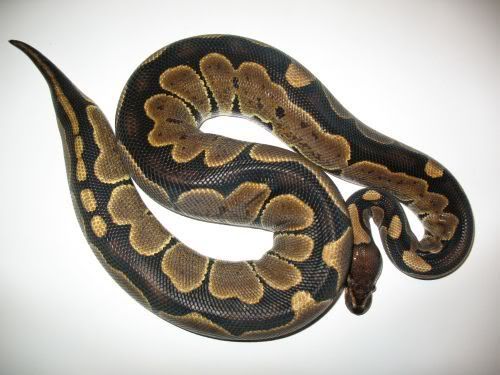
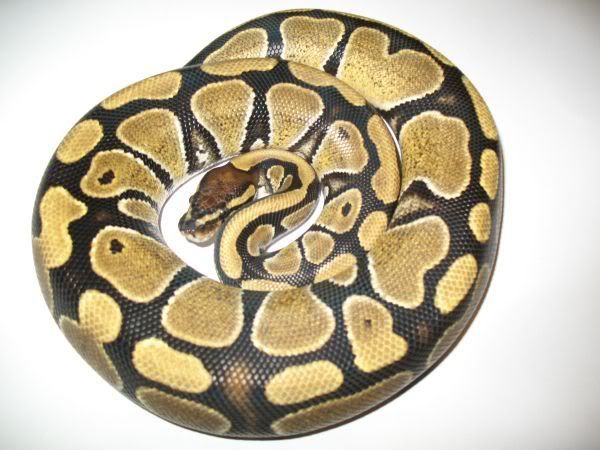
And I produced this 1.1 pair of pastels

IMG_4601.jpg


IMG_4604.jpg


IMG_4609.jpg


The male:
IMG_4621.jpg


IMG_4622.jpg


The female:
IMG_4617.jpg


IMG_4618.jpg


I would love to hear your opinions on these two. Am I just being an extremely proud momma? Or would you agree that they illustrate that a small breeder/hobbiest CAN selectively breed and produce nice quality animals? Sadly, the lighting doesn't show them off as well as it could if I had a light box. :(

These two have been through three sheds so far.
 
I agree Robin! I am also a small time breeder/keeper But , I think I'm doing pretty good selecting witch(haha) morph to put with a select normal. Your pastels are looking Great!:thumbsup:

010-6.jpg
 
Thanks John! But you're big time, compared to me! :D

BTW, Murphy's up to bat this year! :thumbsup:

Oh Yea? Cool! I saw the thread on bp.whatevras. and you wanted to know who to put on your reduced girl (dont remember her name) I'd say Murphy, She has some granitey stuff there. and he is a granite mojo. Just Sayin.. God I love MEME.. She makes me type all funky and stuffs..
 
You CAN selectively breed IF you get quality stock to start with.
It doesn't matter how large or small your breeding operation is.
You can produce nice animals by breeding nice animals.

If you went cheap on quality for your breeders, then the offspring will show it.

BTW, those are nice pastels Robin!
 
You CAN selectively breed IF you get quality stock to start with.
It doesn't matter how large or small your breeding operation is.
You can produce nice animals by breeding nice animals.

If you went cheap on quality for your breeders, then the offspring will show it.

BTW, those are nice pastels Robin!

I agree, Steve! That's why I was just shaking my head at Donna's arguments about it. Granted, my "test pool" was small, but I feel it came out in my favor! LOL

Thanks for the compliment!
 
Oh Yea? Cool! I saw the thread on bp.whatevras. and you wanted to know who to put on your reduced girl (dont remember her name) I'd say Murphy, She has some granitey stuff there. and he is a granite mojo. Just Sayin.. God I love MEME.. She makes me type all funky and stuffs..

This girl, Pretzel? Great John - just when I thought I'd made up my mind to pair her with my YB! LOL

PretJune19.jpg
 
Those are primo pastels in comparison of what is typically offered on the market these days. I really mean that. I also think it would be a shame for those animals to be a mere $100 like the sub-standard pastels. The pair you produced should be considered more valuable since they are the in the " cream of the crop " region.

How bout some pics of the normal sibs. I ask since finding the yellow normals seems to be harder these days and I'd like to see if any of yellow rubs off on non pastels.
 
Thanks Bryon! Your opinion means a lot to me! :D

Actually, their siblings weren't as bright yellow as I had hoped. Especially when compared to this girl, who I picked up two years ago from a friend's pastel clutch.

Well, I take that back - two boys were very pretty (figures). I've found good homes for all the normals, and they'll be going out to their new homes soon.

Here's Sophie (a pastel sibling), who my friend offered to me, because she looked so much like her mother who I coveted! LOL

SophieJune6.jpg


She's in her third winter this season, and about 1800 grams, so I'll probably be breeding her to my lemon pastel and see if she also enhances the offspring!
 
OH YEAH !!!! That's what I'm talking about. Before I got burnt on the BPs I had a female so yellow its was insane. As hard as I've tried I can't track her down.

I got 5 CH from Gib that I'm raising to see who makes the cut. I know 2 are going to another project , 1 for damn sure is Pastel worthy and another has possibilities.

That girl of yours should throw some screamers.
 
Haha! Yeah, she's pretty hot, and she just gets better as she ages!

Here's another yellow girl of mine (CH), I don't think she'll be going this year, and this picture isn't a current one. She's starting to dull a little bit, but she's still pretty close to this:

BaileeJune1.jpg


This is the girl (another CH) that I can't wait to breed this season. I'm just trying to decide if I should run the pastel or the mojo through her:

MacK5.jpg


Good luck with YOUR projects this year! Can't wait to see what you do!
 
Those are some nice pastels--you'll want to see how they grow up, of course, but they're definitely exceptional. Their dad is excellent.

I just wanted to clarify, I never said it was impossible for a smaller breeder to selectively breed their animals--only that it was a lot more difficult. One pairing is not selective breeding after all--it takes more than just 'selecting 2 animals and breeding them together' (Not aimed at the post starter, just at some of the folks who have been commenting). Starting with EXTREMELY high-end, (and thus expensive) animals will definitely put you ahead of the game, but it's still going to take many generations to ensure a consistant look in your bloodlines.

That's the entire goal of selective breeding--to consistantly produce better and better looking animals--at least in your eyes. I suppose you can do that by just buying better and better looking animals to combine with your current ones, but that can still be a bit of a crapshoot--you don't know as much about them, or their lineage. That's what makes it more difficult. It's also letting others who do have larger collections do most of the 'work'. With a small collection, you have to keep bringing animals in from outside, or you'll be doing too much inbreeding. (Occasional line-breeding or inbreeding doesn't appear to do any harm, as long as the genetics of both animals are sound, but more than a generation or two gets pretty risky).

The first ball python pairing we did, this past season, was with a fairly ordinary pastel (but certainly not an ugly one) who had very nice yellow washing from his belly, and good blushing. We bred him to a very high gold light female in hopes that the resulting offspring would be superior to their father--one them may actually be, but the rest were only about as good, and some were inferior. Them's the breaks, as they say. If the superior baby had been a female, we'd be ahead of the game, but breaking even isn't so bad. We got quite a mixed bag. Luck plays into it a lot--you can't really predict what the genetics of any random normal will do when paired with a morph. Your female was very light, but her offspring didn't necessarily have to be. My female was light and high yellow, and some of her offspring weren't as bright/light as either parent.

Dad is retired as a pet, the best girls were held back as future breeders, and a very high-end pastel is on the list for purchase next year, so we can bring in some of that extreme high yellow. Why keep pastels that will be brown as adults? Because I'm extremely curious to see what different looks can be achieved when you combine them with other dark morphs. Obviously a high yellow pastel will lighten the resulting offspring. A pewter produced using an extreme high yellow pastel should look radically different from one produced using a very dark pastel. There is a potential to produce some animals that look pretty neat that way. Light/yellow isn't always what you are going for.

There are questions to be answered, and some of the established breeders aren't necessarily sharing all they know (who can blame them?). Orange turns to brown in pastels, but what happens if you add the ghost gene? Or the caramel albino gene? There is no standard right now for what makes a good pastel, because we don't know yet how the different color variations in pastel will combine with everything. Pastels range in color from screaming high yellow, to super-blushed pale yellow-tan, to almost normal in coloration with a jungle pattern--the difference between 'lemon' and 'Graziani' pastels is pretty radical. Every one of those is going to react differently when combined with other genes, so there is a use for every one of them in a selective breeding program--depending on what your end goal is.

What about the possibility of breeding pastels deliberately to be darker--as dark as possible?

I think it's far too early in the game not to keep an open mind--there are too many surprises left. But it would perhaps be beneficial if a few names were put to various goals--if standards of appearance were created for different lineages based on morphs or even on normals, since people are finally starting to selectively breed them as well.
 
Selective breeding is not always about how something LOOKS as opposed to the strength of the bloodline, and that needs to be included.

I think, personally, THAT is the main goal overall, and looks come secondary. Who wants something that looks consistant with the next, if the bloodline is riddled with deformities, Seen and unseen? This can be done by EVERYONE if they put some effort into it/researching their animals from the get go. Even with only a couple animals.

My caulker cay boas, for example.

I wont breed siblings together. Not ever.The animals in the states are already limited as is, genetically, and may have even been in the wild too. Im trying to be careful about who is bred to who, and who will be bred to who, and keeping tabs on who is related to who in my collection, closely, or not. But that leads me to DNA testing. I dont know how much DNA tests are, but trust me when i say, im highly considering it for them regardless of price. I want to have the most stable/varied bloodlines i can absolutely get with these animals, and to see who is related to who, and to make sure that everything is as varied as i can possibly get.

Is this a long term goal, yup! Will it be insane to undertake? Yep. Will it be worth it???? Absolutely!!!! Is it for everyone? Probably not, but i think it is a good goal, and im personally Determined to get there.
 
I wont breed siblings together. Not ever.The animals in the states are already limited as is, genetically, and may have even been in the wild too.

Inbreeding or line breeding, whatever you want to call it, can't actually cause problems. It doesn't add anything new or unique to the genetics of the resulting offspring, it just exponentially reinforces everything that's already present; if there is nothing negative burried in the genetic makeup of the parent animals, nothing negative will be expressed in any of the offspring. The difficulties arise when something subtle is reinforced until it's expressed, having already permeated the entire line.

Further, the pressures of natural selection tend to encourage line breeding, rather than discourage it. Individuals posessing unsuccessful traits aren't as likely to make it to a breeding age or manage to compete with other members of their species for avaliable pairings. When an animal is successful or posesses superior traits, it tends to live longer and breed more- and it's offspring carry those successful traits and are more likely to end up breeding themselves... in that same area where the initial successful animal is still functioning. The larger the population or the less signifigant the physical barriers within a population are, for non-harem breeding species, the less likely line breeding is. The smaller the population or the greater the physical barriers, the more likely it is- which also functions to explain the relatively rapid evolution of unique traits in isolated populations.
 
Small quick addition- the breeding tendencies are reinforced behaviorally too, to varying degrees depending on the manner in which the species competes for mates. Animals that are closely related tend to express similar behaviors and have breeding triggers that are compatible.
 
Can you honestly be any farther behind the power curve?

Those are some nice pastels--you'll want to see how they grow up, of course, but they're definitely exceptional. Their dad is excellent.

I just wanted to clarify, I never said it was impossible for a smaller breeder to selectively breed their animals--only that it was a lot more difficult. One pairing is not selective breeding after all--it takes more than just 'selecting 2 animals and breeding them together' (Not aimed at the post starter, just at some of the folks who have been commenting). Starting with EXTREMELY high-end, (and thus expensive) animals will definitely put you ahead of the game, but it's still going to take many generations to ensure a consistant look in your bloodlines.

I agree with some of this but starting with hand selecting animals , even if its only 2 , does fit the description of selective breeding provided the animals picked are selected due to visual traits and not by breeding weight or egg numbers in previous clutches.

That's the entire goal of selective breeding--to consistantly produce better and better looking animals--at least in your eyes. I suppose you can do that by just buying better and better looking animals to combine with your current ones, but that can still be a bit of a crapshoot--you don't know as much about them, or their lineage. That's what makes it more difficult. It's also letting others who do have larger collections do most of the 'work'. With a small collection, you have to keep bringing animals in from outside, or you'll be doing too much inbreeding. (Occasional line-breeding or inbreeding doesn't appear to do any harm, as long as the genetics of both animals are sound, but more than a generation or two gets pretty risky).

Not sure why buying from a larger or smaller breeder that has been selectively breeding is being insinuated as a bad thing here. We ourselves have selectively bred animals from another breeder that were picked to go with other animals that were selectively bred to increase and further the visual traits of the two. No one is expected to buy the most expensive nor the crappiest , cheapest animal out there to begin a project. Buying the best you can afford and taking the time to actively look for the best you can afford is a good step toward selective breeding.

The first ball python pairing we did, this past season, was with a fairly ordinary pastel (but certainly not an ugly one) who had very nice yellow washing from his belly, and good blushing. We bred him to a very high gold light female in hopes that the resulting offspring would be superior to their father--one them may actually be, but the rest were only about as good, and some were inferior. Them's the breaks, as they say. If the superior baby had been a female, we'd be ahead of the game, but breaking even isn't so bad. We got quite a mixed bag. Luck plays into it a lot--you can't really predict what the genetics of any random normal will do when paired with a morph. Your female was very light, but her offspring didn't necessarily have to be. My female was light and high yellow, and some of her offspring weren't as bright/light as either parent.

Ordinary + High gold isn't selectively breeding. Calling it " Luck " or " Thems the breaks " is a cop out for starting a project with less than the best to begin with. If you haven't followed pastels for the past few years then you have no idea what the " big deal " is when it comes to properly picking out breeding stock.

Dad is retired as a pet, the best girls were held back as future breeders, and a very high-end pastel is on the list for purchase next year, so we can bring in some of that extreme high yellow. Why keep pastels that will be brown as adults? Because I'm extremely curious to see what different looks can be achieved when you combine them with other dark morphs. Obviously a high yellow pastel will lighten the resulting offspring. A pewter produced using an extreme high yellow pastel should look radically different from one produced using a very dark pastel. There is a potential to produce some animals that look pretty neat that way. Light/yellow isn't always what you are going for.

Sounds to me like someone is trying to justify breeding substandard animals. If you knew anything about the pastel gene then , YES , light / yellow is what you should be shooting for.

There are questions to be answered, and some of the established breeders aren't necessarily sharing all they know (who can blame them?). Orange turns to brown in pastels, but what happens if you add the ghost gene? Or the caramel albino gene? There is no standard right now for what makes a good pastel, because we don't know yet how the different color variations in pastel will combine with everything. Pastels range in color from screaming high yellow, to super-blushed pale yellow-tan, to almost normal in coloration with a jungle pattern--the difference between 'lemon' and 'Graziani' pastels is pretty radical. Every one of those is going to react differently when combined with other genes, so there is a use for every one of them in a selective breeding program--depending on what your end goal is.

What about the possibility of breeding pastels deliberately to be darker--as dark as possible?

I think it's far too early in the game not to keep an open mind--there are too many surprises left. But it would perhaps be beneficial if a few names were put to various goals--if standards of appearance were created for different lineages based on morphs or even on normals, since people are finally starting to selectively breed them as well.

Are you serious or just high? Have you done any research to support this? Most of the morphs have been described by the breeders who produced them. Breeding trials were used to determine the way the gene works and in the process the best recipes were found that would increase or maintain at the very least, the original look / color.

While crossing morph to morph will change aspects of both genes , deliberately using substandard animals to " play with " is a detriment. Why would someone buy a Pastel Mojave that was produced with a crap brown pastel? Or a Pewter than spits out substandard babies? The crosses your referring to have already been done for the most part and the answers are in the end result.

For the bolded section , thats already happening from lack of selective breeding. Its not a new thing , folks have been selective breeding for awhile now. The folks who jumped in on the morph market buying females buy the hundreds to run morph mills have provided an exceedingly high detriment to not just the looks of the animals but increasing the frequency of defects in some.

Hope you got something better to argue next time. Your dog ain't got no hunt in this one.
 
Robin, those are some great Pastels..I am aiming for more blushing and a lighter head, but those are great.

Jas, I am not sure I like the look of that Mojave..perhaps I am ruined by the substandard and don't know what they are "supposed" to look like. Can anyone show some historical Pastels, and Mojaves..just so the newbies (me) can get an idea of how they are supposed to look?

I am getting discouraged with the Pastel gene. I popped out this Pastel boy:

PastelM200802.jpg


This Mojave:
hatchlingpastels2008013.jpg


This is a few other hatchlings:
2008AssortedHatchlings006.jpg


I think this is the best of the bunch?
BumbleandPiper001.jpg
 
Last edited:
Thanks for the compliment, Deb! Mine are lemon line pastels, and they don't tend to "as a rule" have as much blushing as other lines. You produced a very nice pastel as well - is he Graziani line?

As for Jas' mojo - I think it's the photographer, not the snake! ;)

Here's Murphy, my mojo that I got from John:

Murphy18.jpg
 
Thanks for the compliment, Deb! Mine are lemon line pastels, and they don't tend to "as a rule" have as much blushing as other lines. You produced a very nice pastel as well - is he Graziani line?

As for Jas' mojo - I think it's the photographer, not the snake! ;)

Here's Murphy, my mojo that I got from John:

Murphy18.jpg

Yes. I have one Gaz line from Ozzy and one Lemon from MorphMakers, and a Super from RCreptiles. (I was trying to get both lines so I could experiment. The Gaz line came out with lot of blushing..all the animals have a bit of blushing. The lemon line came out more black and yellow (I don't like it) I can't get the colors to show up well on cam..so I absolutely understand when others can't!

Your yellow CH with the very reduced blushing has the look of a Woma, very nice. I am really liking her color and pattern:yesnod:. I think some yellows were proven to have a "surprise" gene..have you followed up on this?

What are Mojaves SUPPOSED to look like, cause mine are much lighter than the one that you show above. (not scarastic nothing..just trying to find out).
 
Back
Top