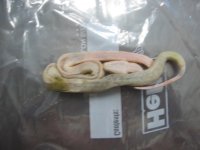
If he does have other Boas, and they are all thriving, why would this Boa, a picky feeder, that never ate, be the only dead Boa?
None of this will be new for you, I just hope to phrase it in a way that addresses that question.
In order to get a snake to eat voluntarily, we need to present prey items that fit the food shaped hole in their brains and provoke a feeding response.
The triggers for what constitutes food can vary. Different snake species have slightly different triggers, mostly based on their natural prey items... individuals within a single species can have different triggers as a result of genetic drift... individuals can have slightly different triggers at different ages, when kept in different conditions or based on some really subtle sensory clues that we may not always notice, different health conditions and different environmental conditions can all shift the target, especially around the edges of what provokes the responses.
A picky feeder that's sold with the disclaimer that it needs more attention to get it to eat should have had those variables checked and rechecked. A five degree temperature shift, feeding with the lights out, fresh killed versus live versus thawed prey items, the angle the prey items are introduced at, the time of day the feed attempt happens, the humidity, the number and type of hides, the species of the prey item, the color of the prey item, various scenting techniques, the temperature of the prey item... Anything could have been off and prevented feeding behaviors from kicking into gear.
Not eating for 130 days at that age pretty well means a dead animal. They haven't got the same fat reserves as an adult and their caloric needs are pretty high relative to the mass of the animal in order to fuel normal growth.
If this boa had a narrower or shifted range of things which provoked a feeding response- which some animals will have, and the animal was being kept in a way or the food was presented in a way that didn't trigger those responses, it can fail to eat without actually having any illnesses as a cause.
The other boas have a range of instinctive responses that provokes a feeding response under the conditions they're being kept in and as a result aren't having an issue.
Now the opinion portion.
A dealer doesn't have a responsibility to do anything except represent their animals honestly. Most will take some time to help a potential customer make the best choices but ultimately the consumer is left deciding if what is presented is something they can handle. A picky feeder that's honestly represented is no different than a species that gets very large or has extremely precise environmental requirements. The buyer chooses to take on a project after considering their own abilities.
Sounds like the animal was honestly represented and that the buyer just overestimated their own skill at manipulating feeding triggers. It wouldn't have lived as long as it did if it was a complete non-feeder, it had some meals in it at some point. I don't think anything is owed to the buyer under the circumstances. Dealers should not be responsible for a buyer that was unprepared for the animal they were assuming ownership of.
Further, given that an offer was made well
well outside of the stated guarantee period (although I agree that the guarantee is not one I would choose to make a purchase under) to return the animal for a refund or replacement and this was declined... What else should a dealer do? Four months down the road they have almost nothing to do with the condition of an animal they sold. It's ridiculous to hold them responsible for the conditions the animal was subjected to on the buyer's end, even conditions that include mishandled attempts at feeding (and forcefeed?!).